

What Is a Clean Energy Supplement? Your 2026 Guide
TL;DR:
- Clean energy supplements use minimally processed ingredients to promote sustained, jitter-free energy and focus. They rely on low-dose organic caffeine, adaptogens, and third-party certifications to ensure quality and transparency. These formulas differ from traditional energy drinks by avoiding artificial additives, high sugar, and synthetic stimulants.
A clean energy supplement is a dietary product formulated to boost energy, focus, and performance using minimally processed ingredients, lower stimulant levels, and no artificial additives. The term itself is primarily a marketing designation rather than a government-regulated category, which means the burden falls on you to evaluate what “clean” actually means in any given product. Brands like Ancient Nutrition and certification bodies like the Clean Label Project have helped define real standards in this space. The core promise is sustained, jitter-free energy through high-quality natural energy boosters rather than the heavy stimulant loads found in traditional energy drinks.
What is a clean energy supplement, really?
The phrase “clean energy supplement” describes products built around three principles: minimal processing, high-quality ingredient sourcing, and the absence of artificial colors, flavors, and fillers. These are not FDA-approved claims. Under U.S. law, dietary supplements can make structure and function claims like “supports energy” or “promotes focus” with a required disclaimer, but no regulatory body verifies those claims before the product hits shelves. That gap is exactly why ingredient transparency and third-party certification matter so much.

What sets clean energy supplements apart from standard energy products is formulation philosophy. A clean product uses recognizable, purposeful ingredients at disclosed doses. You will not find a proprietary blend hiding 12 undisclosed compounds. You will find things like organic coffeeberry, beet root, coconut water, adaptogenic herbs, and B vitamins, each serving a defined role in cellular energy production or stress resilience.
The clean energy sources in these formulas are designed to work with your body’s natural biochemistry. Adaptogens like ashwagandha and rhodiola help regulate cortisol, which directly affects how stable your energy feels across a full day. Superfoods like beet root support nitric oxide production, improving blood flow and endurance. This is how clean energy works differently from a standard caffeine hit.
What ingredients define a clean energy supplement?
The ingredient list is the clearest signal of whether a product is genuinely clean or just marketed that way. Clean supplements feature minimal processing, simple labels, no preservatives, and no artificial dyes. Here is what you should expect to see in a well-formulated product:
- Organic caffeine sources: Coffeeberry, green tea extract, or guayusa deliver caffeine alongside natural antioxidants. Ancient Nutrition’s Clean Energy formula contains 74 mg of caffeine per serving, compared to 95 mg or more in a standard cup of coffee. That lower dose produces smoother energy without the spike and crash.
- Adaptogens: Ashwagandha, rhodiola, and holy basil are the most studied. They reduce cortisol response to stress, which keeps your energy more stable throughout the day. You can learn more about how these compounds work in this adaptogens for stable energy guide.
- Superfoods and minerals: Beet root, coconut water, and magnesium support hydration, blood flow, and mitochondrial function. These are the ingredients that contribute to physical recovery alongside mental focus.
- B vitamin complexes: B6, B9, and B12 are co-factors in cellular energy production. Their presence in a clean formula signals that the product is targeting actual metabolic pathways, not just caffeine delivery.
- No artificial additives: No synthetic dyes (Red 40, Yellow 5), no artificial sweeteners like sucralose in high doses, and no mystery fillers. Every ingredient should have a reason to be there.
What you will not find in a genuinely clean product is a 300 mg caffeine blast, high-fructose corn syrup, or a label that reads like a chemistry textbook. The goal is cellular energy and cognitive health, not a short-term stimulant surge.
Pro Tip: If a product lists “natural flavors” without specifying the source, ask the brand directly. That phrase can legally cover a wide range of compounds, and transparent brands will tell you exactly what it means in their formula.
How does the clean label project validate “clean” claims?
Third-party certification is the most reliable way to verify that a product lives up to its clean claims. The Clean Label Project runs one of the most rigorous testing programs available to supplement consumers. Here is how their process works:
- Sample submission and lab testing: Products are purchased from retail shelves or submitted by brands. Labs test each sample for hundreds of contaminants across multiple chemical classes.
- Contaminant screening: The Clean Label Project tests for heavy metals, pesticide residues, and plasticizers. That breadth matters because most brands only test for heavy metals, leaving pesticide and plasticizer exposure unaddressed.
- Benchmark comparison: Results are compared against California Proposition 65 standards, one of the strictest chemical exposure frameworks in the United States. Products that meet or exceed these thresholds earn certification.
- Timeline and transparency: The full testing process takes up to three weeks. Certified products display the Clean Label Project seal, giving consumers a verifiable signal rather than a marketing claim.
“Without certifications, consumers might only rely on brand claims without measurable contaminant reduction.” — Clean Label Project
The distinction between a marketing claim and a certified result is not subtle. A brand can print “clean” on any label. A Clean Label Project certification means an independent lab tested that specific product and confirmed it meets defined purity standards. That is a fundamentally different level of assurance.
The Clean Label Project’s testing approach provides some of the most trustworthy validation of supplement purity available to consumers today. If a product you are considering does not carry any third-party certification, that is not automatically disqualifying, but it does mean you need to do more of the verification work yourself.
Clean energy supplements vs. traditional energy drinks: what’s the difference?
The comparison between clean energy supplements and traditional energy drinks comes down to four factors: stimulant dose, ingredient quality, energy duration, and side effect profile.
| Factor | Clean Energy Supplement | Traditional Energy Drink |
|---|---|---|
| Caffeine per serving | 74–100 mg (organic sources) | 150–300 mg (synthetic or unspecified) |
| Added sugar | None or minimal | 25–54 g in many products |
| Adaptogens | Yes (ashwagandha, rhodiola) | Rarely |
| Artificial additives | None | Common (dyes, preservatives) |
| Energy duration | 4–6 hours, stable | 1–2 hours, followed by crash |
| Jitter risk | Low | High |
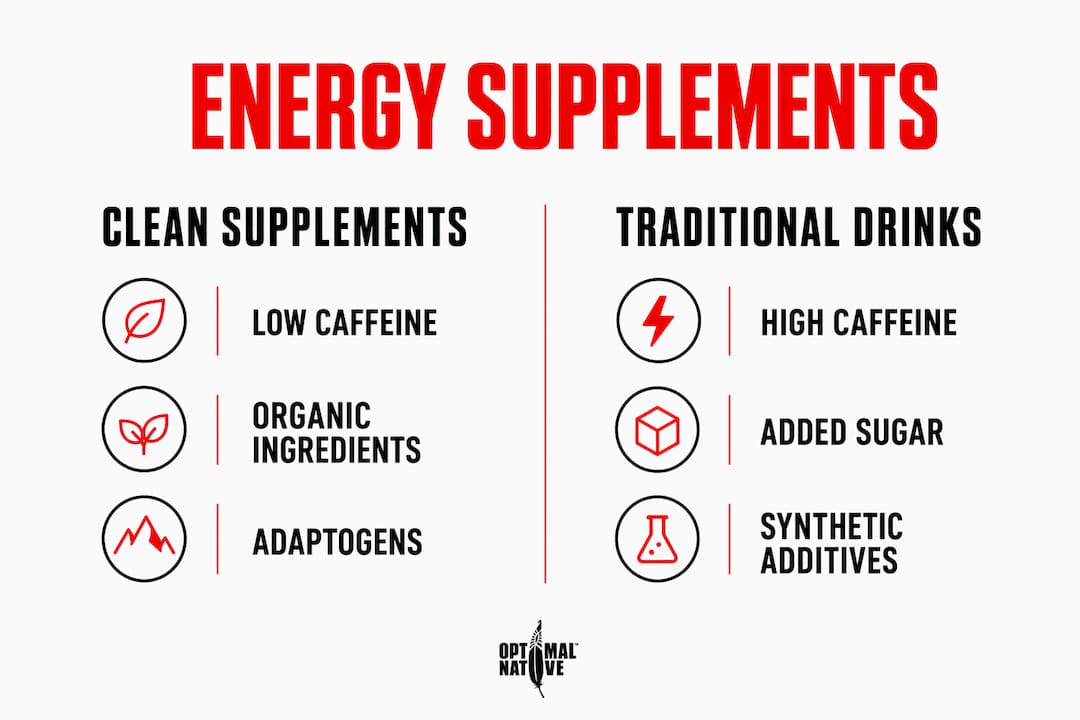
The caffeine source matters as much as the dose. Organic coffeeberry delivers caffeine alongside polyphenols that slow absorption and reduce the spike. Synthetic caffeine anhydrous, common in traditional energy drinks, hits faster and harder, which is exactly what produces jitters and the subsequent crash.
Blood sugar is the other major variable. High-sugar energy drinks spike glucose, which triggers an insulin response and leads to the familiar mid-afternoon energy drop. Clean formulas avoid this entirely by relying on metabolic support from B vitamins and adaptogens rather than sugar-driven stimulation.
Pro Tip: If you are sensitive to caffeine, check out this breakdown of caffeine sensitivity before choosing any energy supplement. Even 74 mg can cause jitters in highly sensitive individuals.
For athletes and entrepreneurs who need sustained mental and physical performance across a full day, the clean supplement model is more practical. You get consistent output without the peaks and valleys that come with high-stimulant products. The performance comparison between pouches and energy drinks shows this difference clearly in real-world use cases.
How do you choose the right clean energy supplement?
Selecting a clean energy supplement requires more than reading the front of the label. Here is what to evaluate before you buy:
- Verify the caffeine dose and source. Look for organic sources like green tea extract or coffeeberry. Confirm the milligrams per serving. Products without disclosed doses are not clean by any reasonable standard.
- Check for third-party certification. Clean Label Project, NSF Certified for Sport, and Informed Sport are the three most credible programs. At least one of these on the label signals that an independent party has verified the product’s purity.
- Read the full ingredient list. Every ingredient should have a clear function. If you see a long list of fillers, anti-caking agents, or artificial sweeteners, the product does not meet the standard the front label implies.
- Match the formula to your goal. Focus and cognitive performance call for nootropics like lion’s mane or bacopa alongside low-dose caffeine. Recovery support calls for magnesium, electrolytes, and adaptogens. Endurance benefits from beet root and B12. Know what you are optimizing for.
- Account for your stimulant sensitivity. Even clean products contain stimulants. If you have experienced jitters from coffee, start with the lowest caffeine dose available and assess your response before increasing.
- Treat supplements as support, not solutions. Sleep, diet, hydration, and stress management remain the primary drivers of energy optimization. Supplements work best when those foundations are already in place.
The lack of a standardized definition for “clean energy supplement” means two products with identical front-label claims can have dramatically different formulations. Your job as a consumer is to look past the marketing and evaluate the actual contents. A product that is genuinely transparent about its ingredients, doses, and certifications will make that process easy.
Key takeaways
Clean energy supplements deliver sustained focus and performance through low-dose organic stimulants, adaptogens, and certified-clean formulations rather than high-caffeine, high-sugar products that cause crashes.
| Point | Details |
|---|---|
| “Clean” is not regulated | Evaluate ingredients and certifications yourself; the FDA does not verify clean claims. |
| Caffeine dose and source matter | Organic sources at 74–100 mg produce smoother energy than synthetic caffeine at 150–300 mg. |
| Third-party certification is the gold standard | Clean Label Project tests for heavy metals, pesticides, and plasticizers against Prop 65 benchmarks. |
| Match formula to your goal | Focus, recovery, and endurance each call for different ingredient profiles. |
| Supplements support lifestyle, not replace it | Sleep, hydration, and nutrition must be in place for any supplement to perform at its best. |
What we have learned from watching the clean energy space evolve
The most common mistake people make with clean energy supplements is treating the word “clean” as a guarantee. It is not. We have seen products with “clean” on the label contain 200 mg of caffeine from unspecified sources, artificial sweeteners buried in the fine print, and zero third-party verification. The label is a starting point, not a conclusion.
What actually works is a low-dose caffeine formula built around adaptogens. The combination of 74–100 mg of organic caffeine with ashwagandha or rhodiola produces a noticeably different experience than a straight caffeine product. The energy is flatter in the best sense: no spike, no crash, no 2 p.m. wall. For anyone who has spent years chasing that experience with traditional energy drinks and coming up short, this combination is worth understanding deeply.
The other thing worth saying plainly: supplements are not a substitute for sleep. We have seen high performers try to use clean energy products to compensate for five hours of sleep, and the results are predictably poor. The supplements that work best are the ones layered on top of solid sleep, real food, and adequate hydration. When those foundations are in place, a well-formulated clean energy product genuinely extends your productive window.
The clean energy supplements benefits conversation has matured significantly in the past few years. Consumers are asking better questions, and brands that cannot answer them are losing ground to those that can. That is a healthy development for everyone in this space.
— Optimal Native
How optimal native supports clean, jitter-free performance
Optimal Native’s performance pouch system is built on the same principles this article covers: low-dose organic stimulants, adaptogens, and full ingredient transparency with no nicotine and no artificial fillers. The formula is designed for entrepreneurs and athletes who need consistent output across a full day, not a two-hour spike followed by a crash.
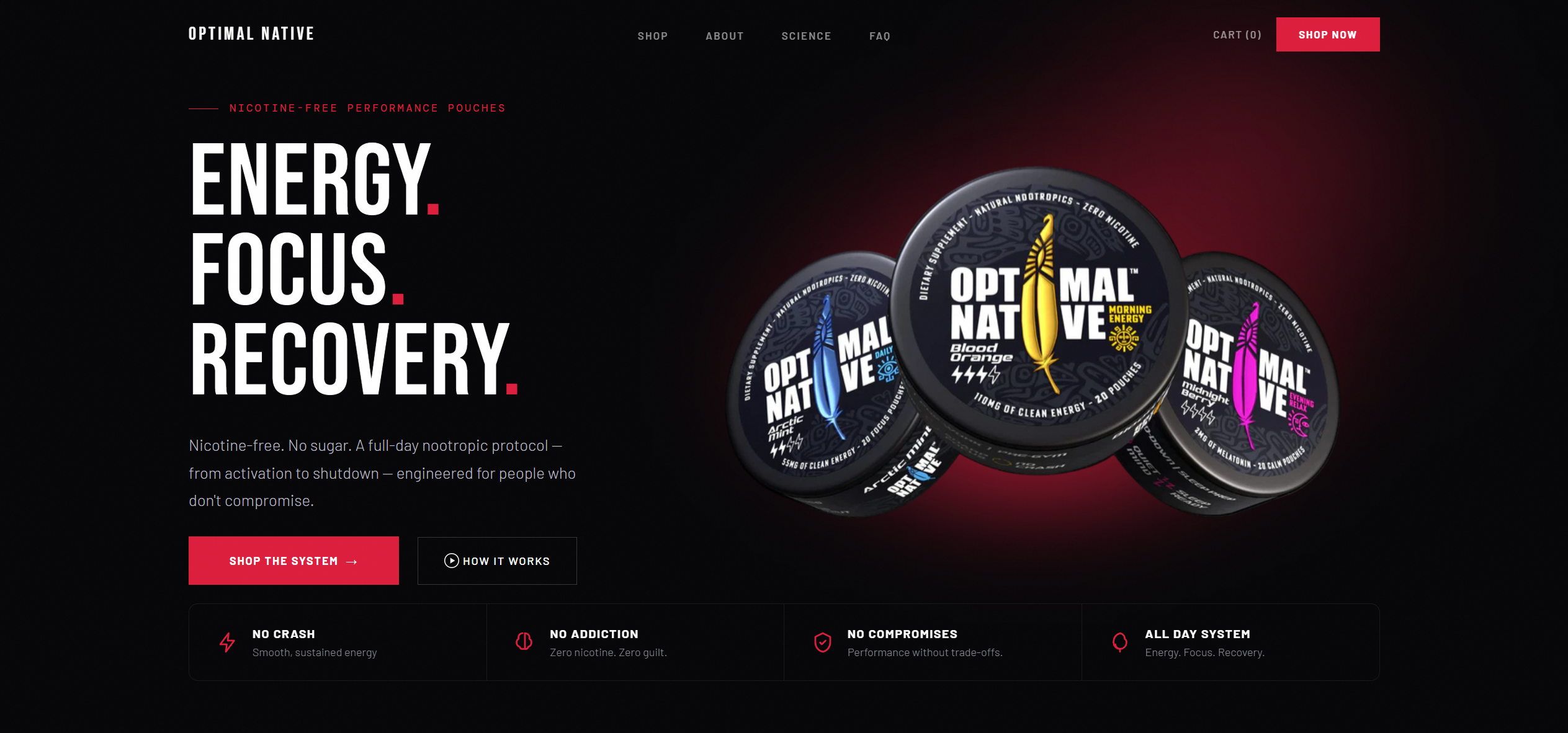
With 4.9 out of 5 stars from over 300 verified reviews, users consistently report improved focus and energy without jitters. If you want consistent access to clean energy support, the Subscribe and Save program locks in your supply at a reduced cost. For those who want to explore the full range, the Optimal Native bundle combines the core performance products for maximum value. Clean energy done right does not require a compromise between performance and purity.
FAQ
What is a clean energy supplement?
A clean energy supplement is a dietary product that uses minimally processed, high-quality ingredients to support energy, focus, and performance without artificial additives or excessive stimulants. The term is a marketing designation rather than a regulated category, so ingredient verification and third-party certification are the most reliable ways to evaluate any product.
How much caffeine is in a clean energy supplement?
Most clean energy supplements contain between 74 and 100 mg of caffeine per serving, sourced from organic options like coffeeberry or green tea extract. That is meaningfully lower than the 150–300 mg found in many traditional energy drinks, which reduces jitter risk and produces more stable energy.
Why does third-party certification matter for energy supplements?
Third-party programs like the Clean Label Project test for heavy metals, pesticides, and plasticizers, providing verified purity data that brand labels alone cannot offer. Without independent testing, consumers have no way to confirm that a product’s clean claims reflect its actual contents.
Do clean energy supplements cause jitters?
Clean energy supplements are formulated to minimize jitters through lower caffeine doses and the addition of adaptogens that regulate cortisol response. However, individuals with high caffeine sensitivity can still experience jitters even at 74 mg, so starting with the lowest available dose and assessing your personal response is the right approach.
Can clean energy supplements replace sleep or a healthy diet?
No. Sleep, nutrition, hydration, and stress management are the primary drivers of sustained energy. Clean energy supplements work best as a complement to those foundations, not a replacement for them.