

Performance Pouches vs Energy Drinks: What Works Best
TL;DR:
- Performance pouches deliver caffeine rapidly through oral mucosa absorption, making them ideal for quick focus and portability. Energy drinks provide a slower, digestive absorption, with higher sugar and additive content that can cause crashes and health concerns. The best choice depends on your specific needs, preferences, and health considerations.
You’ve stood in front of a convenience store cooler, scanned the wall of cans, and wondered if there’s a smarter way to get through your afternoon without the shaky hands and 3 PM crash. The debate around performance pouches vs energy drinks is no longer niche. Athletes, entrepreneurs, and students are all asking the same question: which option actually delivers clean, reliable energy without the side effects? This article breaks down both options using real criteria so you can make a decision based on your body, your schedule, and your goals.
Table of Contents
- Key takeaways
- 1. Performance pouches vs energy drinks: the right criteria to compare them
- 2. How performance pouches work
- 3. How energy drinks work
- 4. Side-by-side comparison
- 5. Which option fits your situation
- My honest take on the energy booster debate
- A better way to approach your daily energy
- FAQ
Key takeaways
| Point | Details |
|---|---|
| Caffeine delivery differs significantly | Pouches absorb through oral mucosa for faster onset; drinks go through digestion for a slower ramp. |
| Energy drinks carry more health risks | Sugar, additives, and variable caffeine make drinks harder to dose safely and consistently. |
| Pouches offer better portability | No liquid, no refrigeration, and no calories make pouches ideal for travel and discreet use. |
| Neither replaces good fundamentals | Sleep, hydration, and nutrition are the real foundation; stimulants are a tool, not a solution. |
| Your use case determines the winner | Athletes, office workers, and travelers each have a different best option based on timing and context. |
1. Performance pouches vs energy drinks: the right criteria to compare them
Before you pick a side, you need to know what you’re actually evaluating. Most people compare these two options on taste or price alone. That misses most of what matters.
Here are the criteria worth measuring:
- Effectiveness: How fast does the energy kick in, and how long does it last without a crash?
- Health impact: What’s in it? Caffeine amount, sugar load, artificial additives, and side effect profile all matter.
- Convenience: Can you use it anywhere? Does it require refrigeration, a cup, or water?
- Cost per dose: What does one serving actually cost when you factor in frequency of use?
- User experience: Does it fit your routine? Taste, ritual, and social context all affect whether you’ll stick with it.
These five criteria give you a real framework instead of a gut feeling. When you hold both options up to the same standard, the right answer for your situation becomes much clearer.
Pro Tip: Track your energy levels for one week before switching anything. Knowing your natural peaks and troughs tells you when you actually need a boost versus when you just need water or a walk.
2. How performance pouches work
Performance pouches are small, tobacco-free pouches placed between the gum and upper lip. The active ingredients, typically caffeine along with nootropics or adaptogens, absorb directly through the oral mucosa. This bypasses the digestive system entirely.
The practical result is fast onset. Many users report feeling effects within 10 to 15 minutes, compared to 30 to 45 minutes for a drink. That speed matters when you need to be sharp for a meeting that starts now, not in half an hour.
Key performance pouch benefits include:
- Zero sugar and near-zero calories in most formulations
- No liquid required, which means no bathroom trips and no spills
- Discreet use in any setting, including flights, meetings, and gyms
- Consistent dosing per pouch, so you know exactly what you’re getting
The drawbacks are real, though. Fixed-dose pouches mean you cannot stop absorption once the pouch is placed. If you’re sensitive to caffeine or already had two cups of coffee, that’s a problem. Stacking pouches is a genuine risk that new users underestimate. Regulatory oversight for pouches is also still catching up, with patchwork standards across regions creating inconsistency in labeling and safety requirements.
Pro Tip: Start with one pouch and wait a full 20 minutes before deciding you need another. The sublingual absorption curve is steeper than most people expect.
3. How energy drinks work
Energy drinks deliver caffeine, sugar, B vitamins, and often a proprietary “energy blend” in liquid form. You drink it, your stomach processes it, and the caffeine enters your bloodstream over 30 to 60 minutes. The experience is familiar, which is part of why the category is so dominant.
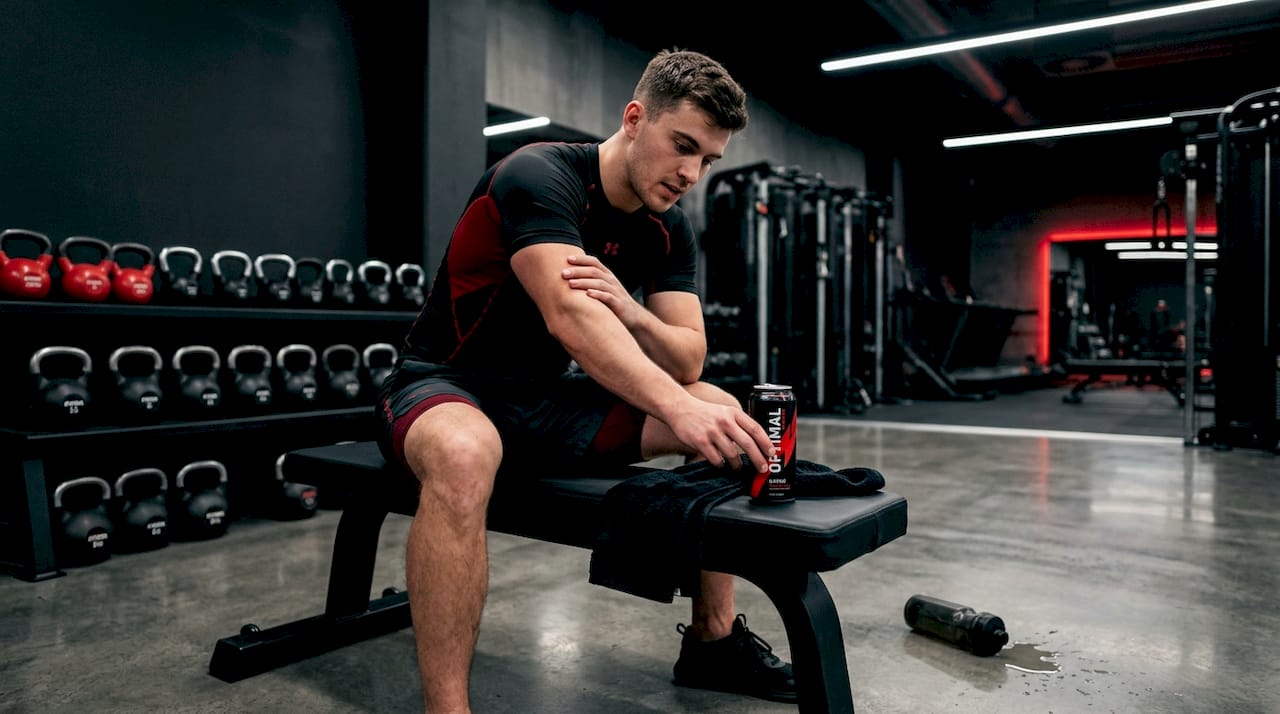
The nutritional profile varies widely. The FDA considers 400 mg of caffeine a safe daily ceiling for most healthy adults, and individual energy drinks can contain anywhere from 80 to 300 mg per serving. That range alone makes dosing tricky, especially if you’re also drinking coffee.
Common concerns with energy drinks include:
- High sugar content in standard formulations, which contributes to the crash you feel an hour after the initial lift
- Artificial stimulants and additives beyond caffeine that can cause palpitations, arrhythmias, and GI distress
- Hydration impact: drinking a can feels hydrating, but caffeine is mildly diuretic and high-sugar drinks can actually increase thirst
- Sleep disruption and dependency with frequent use, along with anxiety and irritability as documented side effects
The energy drink comparison also gets complicated by labeling. Products classified as dietary supplements can hide caffeine in proprietary blends, making it genuinely difficult to know what you’re consuming. That’s not a small detail when you’re trying to manage your intake responsibly.
Where energy drinks shine is in workout contexts and longer focus sessions where the slower ramp and hydration from the liquid itself are actually useful. They’re also widely available and socially normalized, which matters for people who want something they can grab anywhere.
4. Side-by-side comparison
Here’s how the two options stack up across the criteria that matter most:
| Criteria | Performance pouches | Energy drinks |
|---|---|---|
| Caffeine onset | 10 to 15 minutes (sublingual) | 30 to 60 minutes (digestive) |
| Dose control | Fixed per pouch, cannot adjust mid-use | Adjustable by sipping less |
| Sugar content | Typically zero | 0 to 54 grams per can |
| Calories | Near zero | 10 to 230 per can |
| Portability | High, no refrigeration needed | Moderate, requires can or bottle |
| Hydration impact | Neutral to negative (no liquid) | Mildly negative (diuretic effect) |
| Cost per dose | $1.50 to $4.00 | $2.00 to $5.00 |
| Health risks | Stacking risk, fixed dose | Additives, sugar, palpitation risk |
| Availability | Online, specialty stores | Everywhere |
The table makes one thing clear: neither option is universally better. Pouches win on speed, portability, and calorie load. Drinks win on availability, adjustability, and workout hydration. The right choice depends on what you’re actually trying to accomplish.
5. Which option fits your situation
Knowing the specs is one thing. Applying them to your actual life is another. Here’s how to think through it based on common use cases:
-
Office workers and entrepreneurs: If you need a fast, discreet focus boost before a presentation or during a long call, a performance pouch is the better tool. No prep, no noise, no sugar spike. The sublingual absorption means you’re sharp before the meeting starts, not during the Q&A.
-
Athletes and gym-goers: Pre-workout energy drinks can work well here because the slower onset aligns with a warm-up period, and the liquid contributes to hydration. That said, sugary energy drink alternatives are worth exploring if you’re trying to avoid a sugar crash mid-session.
-
Students pulling long study sessions: The crash from a high-sugar drink is your enemy during a four-hour study block. A low-dose pouch or a sugar-free drink with a known caffeine level gives you more predictable performance. Watch your total daily caffeine intake carefully.
-
Frequent travelers: Pouches are the clear winner here. No liquids restriction, no refrigeration, no smell. You can use one on a plane, in a meeting room, or at a conference without anyone noticing.
-
People managing caffeine sensitivity: If you get jittery easily, energy drinks are harder to manage because you can’t stop drinking mid-can without wasting it. With pouches, the fixed dose is a double-edged sword. Start low, know your threshold, and consider formulations that include adaptogens to smooth the response.
-
Anyone trying to reduce caffeine crashes: The crash from energy drinks is largely driven by sugar and the fast spike-and-drop cycle. Switching to lower-sugar formats, whether pouches or sugar-free drinks, is the single most effective change most people can make.
-
Health-conscious users watching ingredients: Read the label on both. Energy drinks classified as supplements can obscure what’s actually in them. Pouches from transparent brands with clear ingredient lists give you more confidence in what you’re putting in your body.
My honest take on the energy booster debate
I’ve watched the caffeine market shift dramatically over the past few years, and the rise of performance pouches is genuinely interesting. But I’ve also seen the same mistake repeat itself: people swap one stimulant product for another and call it a health upgrade.
What I’ve learned from paying close attention to this space is that the format matters less than the habit around it. Medical experts consistently recommend prioritizing hydration, sleep, and nutrition over repeated stimulant use. That’s not a disclaimer. It’s the actual answer for most people who feel like they need a boost every single day.
My honest opinion: performance pouches are a smarter tool than most energy drinks for the reasons outlined above. Faster, cleaner, more portable, and less likely to dump 50 grams of sugar into your system. But “smarter tool” is not the same as “solution.” If you’re reaching for something caffeinated four times a day, the problem isn’t which product you’re using. It’s that you’re using stimulants to mask fatigue that sleep and water would fix.
Use these products with intention. Know your baseline. Know your ceiling. And be honest with yourself about whether you’re managing your energy or just borrowing it.
— Optimal
A better way to approach your daily energy
If you’ve read this far, you’re clearly not looking for a quick fix. You want something that actually works without the side effects that make energy products feel like a trade-off.
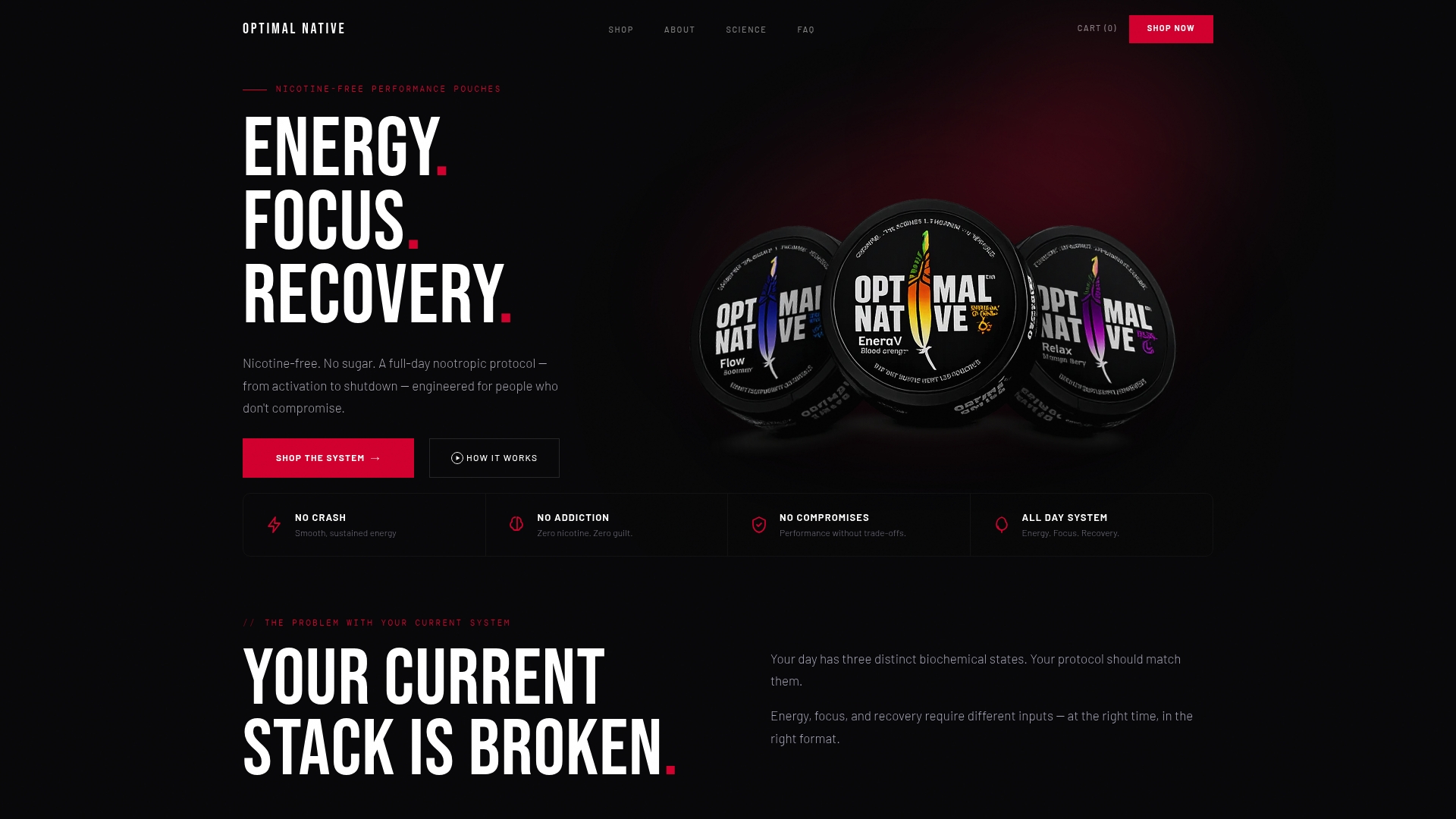
Optimalnative was built for exactly this. The Optimal Native Morning Energy pouch combines nootropics and adaptogens in a nicotine-free, sugar-free format designed to align with your body’s natural energy cycles rather than override them. Over 300 users rate it 4.9 out of 5 stars, specifically calling out the absence of jitters and crashes. If you want to make it part of your daily routine without paying full price every time, the subscribe and save option makes consistent use genuinely affordable. Try it as a direct replacement for your afternoon energy drink and see what a difference clean formulation makes.
FAQ
What is the main difference between performance pouches and energy drinks?
Performance pouches deliver caffeine through the oral mucosa for faster onset (10 to 15 minutes), while energy drinks go through digestion and take 30 to 60 minutes. Pouches are sugar-free and calorie-free; most standard energy drinks are not.
Do performance pouches actually work?
Yes. The sublingual absorption mechanism is well-documented and delivers caffeine more quickly than oral ingestion. The key limitation is fixed dosing. You cannot adjust the amount mid-use, so starting with a low-dose pouch is important for new users.
Are energy drinks worse for you than performance pouches?
Energy drinks carry more documented risks due to sugar content, artificial additives, and variable caffeine levels that can cause palpitations and sleep disruption. Pouches carry their own risks, particularly around stacking and fixed dosing, but generally have a cleaner ingredient profile.
Can I use both performance pouches and energy drinks?
You can, but tracking your total daily caffeine intake becomes critical. The FDA’s safe ceiling is 400 mg per day for most healthy adults. Combining products without tracking makes it easy to exceed that without realizing it.
Which option is better for focus at work?
For fast, discreet, crash-free focus during work, performance pouches are the stronger choice. They activate quickly, contain no sugar, and can be used anywhere without preparation or cleanup.