

Morning Routine Energy Optimization Tips That Actually Work
TL;DR:
- A consistent wake time strengthens your circadian rhythm and enhances morning energy levels.
- Getting natural light within 15 minutes of waking, hydrating, and delaying phone use help sustain focus and alertness throughout the day.
You wake up after seven hours of sleep and still feel like you’ve been hit by a truck. Sound familiar? Morning routine energy optimization tips are everywhere, but most articles bury the useful stuff under generic advice you’ve already heard. The science of circadian biology, or how your body’s internal clock governs energy and focus, gives us a much clearer map. Follow that map and you can design a morning that carries real momentum into your afternoon, not just a short burst before the mid-morning slump arrives.
Table of Contents
- Key takeaways
- 1. Morning routine energy optimization tips start with a consistent wake time
- 2. Get natural light within 15 minutes of waking
- 3. Hydrate before you do anything else
- 4. Put the phone down for the first 30 to 60 minutes
- 5. Add light movement before heavy thinking
- 6. Eat a protein-rich breakfast within 60 to 90 minutes of waking
- 7. Delay your caffeine by at least 60 to 90 minutes
- 8. Practice five minutes of mindfulness or intention-setting
- 9. Sequence and compare your habits for maximum payoff
- 10. Customize and sustain your energizing morning habits
- My honest take on morning energy after years of experimenting
- Give your mornings a clean energy foundation
- FAQ
Key takeaways
| Point | Details |
|---|---|
| Sequence beats completion | Light, hydration, and movement before caffeine aligns your biology for all-day energy. |
| Consistency is the real hack | Waking at the same time daily strengthens your circadian rhythm faster than any supplement. |
| Three habits beat ten | A simplified routine of 3-4 habits prevents routine fatigue and sustains adherence long-term. |
| Screen-free mornings protect focus | Avoiding your phone for the first 30 to 60 minutes after waking guards mental clarity from the start. |
| Layer habits over time | Adding one habit at a time leads to more durable energy routines than overhauling everything at once. |
1. Morning routine energy optimization tips start with a consistent wake time
Your circadian rhythm is not a metaphor. It is a literal biological clock that governs cortisol release, melatonin clearance, body temperature, and alertness. When you wake at a different time every day, you scramble that signal. The result is the kind of grogginess that coffee cannot fully fix.
Consistent wake-up times improve energy levels and sleep quality by reinforcing the circadian clock. You do not need to wake at 5 a.m. You just need to wake at the same time, even on weekends. Two weeks of consistency produces a noticeable shift in how awake you feel without any other changes.
2. Get natural light within 15 minutes of waking
This is the single highest-return morning energy hack that most people skip because it feels too simple. Light hits specialized photoreceptors in your eyes and tells your brain that the day has started. That signal suppresses residual melatonin and accelerates your cortisol peak, which is the hormone responsible for alertness and focus.
Ten to fifteen minutes of morning sunlight daily helps regulate your circadian rhythm, improves mood, and sets you up for better sleep the following night. Step outside with your coffee if you like, but get the light before the screen. On overcast days, outdoor light still delivers far more lux than any indoor bulb.
Pro Tip: If you wake before sunrise, use a 10,000 lux light therapy lamp for the first 10 minutes of your routine. It is not a perfect substitute, but it shifts your clock in the right direction.
3. Hydrate before you do anything else
Your body loses roughly one liter of water overnight through respiration and sweat. That mild dehydration mimics fatigue at a cellular level. You feel slow, your reaction time drops, and your mood takes a hit before the day even begins.

Drinking 500 to 750ml of water first thing in the morning counteracts this and increases alertness without a single milligram of caffeine. Keep a full glass on your nightstand. The habit stacks naturally onto waking and requires almost zero willpower to execute. Add a pinch of sea salt and a squeeze of lemon if you want to support electrolyte balance.
4. Put the phone down for the first 30 to 60 minutes
Checking your phone within minutes of waking is one of the most damaging morning habits for sustained energy. It pulls your attention into a reactive state before your prefrontal cortex is fully online. Notifications, emails, and news activate stress responses that burn through your morning mental reserves before you have even started your own priorities.
Limiting early phone use protects mental clarity and prevents distraction-driven fatigue. This is not about being anti-technology. It is about owning the first hour of your cognition instead of donating it to other people’s agendas. Try leaving your phone in another room overnight and using a physical alarm clock instead.
5. Add light movement before heavy thinking
You do not need a 45-minute workout to get the energy benefits of morning exercise. A 10-minute walk, five minutes of stretching, or a brief yoga flow is enough to increase blood flow, raise body temperature, and trigger endorphin release. All three of those effects translate directly into sharper focus and better mood.
Morning exercise aligned with hormonal peaks enhances productivity and well-being over time. The key word is “aligned.” Exercise after light exposure and hydration, not before. Your body temperature and cortisol are still rising in the first 30 minutes after waking. Light movement accelerates that rise without overtaxing a system that is not yet fully awake.
6. Eat a protein-rich breakfast within 60 to 90 minutes of waking
Blood sugar stability is one of the most underrated factors in sustained morning energy. A carb-heavy breakfast without protein spikes blood glucose and then crashes it, which explains why many people feel sharp at 8 a.m. and foggy by 10. Protein slows digestion, stabilizes glucose, and provides amino acid precursors for neurotransmitters like dopamine and acetylcholine.
Eating a high-protein breakfast sustains alertness well into the mid-morning hours. Eggs, Greek yogurt, cottage cheese, or a protein smoothie all qualify. For plant-based eaters, pairing whole grains with legumes or tofu works well. You can find additional ideas through balanced nutrition approaches that keep energy stable without relying on sugar.
7. Delay your caffeine by at least 60 to 90 minutes
This one sounds counterintuitive, but the logic is solid. Cortisol, your natural alertness hormone, peaks roughly 30 to 90 minutes after waking. Drinking coffee during that window can blunt the cortisol effect and increase your tolerance to caffeine over time. Waiting until cortisol begins to dip means caffeine fills the gap rather than fighting your own biology.
The 90-minute delay remains unproven as a strict rule, but many people report a noticeable difference in sustained focus when they try it. Treat it as a personal experiment rather than a mandate. If you have caffeine sensitivity concerns, delaying your first cup may also reduce jitteriness and afternoon crashes. For more on how coffee timing affects your body, coffee timing research offers a useful breakdown.
8. Practice five minutes of mindfulness or intention-setting
You do not need a meditation cushion or a half-hour practice to get real returns from mindfulness. Five minutes of quiet intention-setting, journaling, or focused breathing is enough to reduce cortisol reactivity and prime your brain for focused work.
Nearly half of waking hours are lost to distractions, and a brief mindfulness practice at the start of the day significantly reduces that loss. The mechanism is attention regulation. When you start the day by choosing where your focus goes, you carry that intentionality forward into your first work block. Write down three priorities, take ten deep breaths, or simply sit quietly for five minutes. Any of those works.
9. Sequence and compare your habits for maximum payoff
Order matters more than most morning routine articles admit. The sequence of habits boosts biology and psychology more than just checking boxes on a list. Here is how the top morning habits stack up when you look at time, effort, and return on investment.
| Habit | Time needed | Effort level | Energy payoff | Sustainability |
|---|---|---|---|---|
| Consistent wake time | 0 minutes | Low | Very high | Very high |
| Morning light exposure | 10-15 minutes | Low | High | High |
| Hydration (500-750ml water) | 2 minutes | Very low | High | Very high |
| Light movement | 5-15 minutes | Low-medium | High | High |
| Protein-rich breakfast | 10-20 minutes | Medium | High | High |
| Mindfulness/intention-setting | 5-10 minutes | Low | Medium-high | High |
| Caffeine delay | 0 extra minutes | Low | Medium | Medium |
| Phone-free first hour | 0 extra minutes | Medium | High | Medium |
The evidence-based morning protocol runs light first, then hydration, then movement, then breakfast and caffeine. Build in that order and each habit amplifies the next.
Pro Tip: Pick two habits from this table that you are not currently doing and add them in sequence over two weeks. Trying to add all eight at once is the fastest way to abandon the entire routine.
10. Customize and sustain your energizing morning habits
The best morning routine for vitality is the one you will actually maintain. That sounds obvious until you realize how many people design their ideal morning on paper and execute it exactly twice.
Customization starts with honest self-assessment:
- What time do you actually need to leave the house or start work?
- Are you a slow starter who needs 20 quiet minutes, or do you feel better moving immediately?
- Do you have children, pets, or a partner who affects your morning timeline?
- What season are you in? Winter mornings in northern climates require light therapy, not just outdoor exposure.
Layering habits gradually rather than overhauling everything at once produces more durable routines. Start with one anchor habit, typically consistent wake time, and attach one new habit per week. Track a simple metric like tasks completed before noon or your subjective energy score at 10 a.m. to create a feedback loop.
Tracking productivity metrics tied to morning habits gives you the data to keep what works and cut what does not. Routines also shift with life phases. A routine that worked at 28 may not serve you at 40. Give yourself permission to adjust without calling it failure.
My honest take on morning energy after years of experimenting
I have tried nearly every morning habit in circulation. The expensive ones, the time-consuming ones, the ones that require waking at 4:30 a.m. and cold-plunging into a tub you own specifically for that purpose. Here is what I have actually learned.
Complexity is the enemy of consistency. I have seen more people abandon solid routines because they added too many elements at once than for any other reason. A three-habit morning you do every single day beats a ten-habit morning you do twice a week.
Morning light and water genuinely changed my cognitive baseline in a way that felt almost embarrassing in its simplicity. I was skeptical. I do not love going outside before coffee. But two weeks in, the difference in my focus between 9 and 11 a.m. was measurable, not just subjective.
The caffeine delay is where I push back on dogma. There is no magic number. What matters is that you experiment. I moved my first cup from immediately upon waking to about an hour later and noticed less of an afternoon slump. Your result may differ. Treat it as data, not doctrine.
The counterintuitive lesson I keep landing on: the most productive mornings I have are the ones where I resist the urge to do more and instead do the same four things well. Mornings are not where you grind. They are where you set the biological and psychological conditions that let you grind later.
— Optimal Native
Give your mornings a clean energy foundation
If you have the habits down but still feel like your energy hits a wall by mid-morning, the gap is often in what you are putting into your body, not just how you are structuring your time.
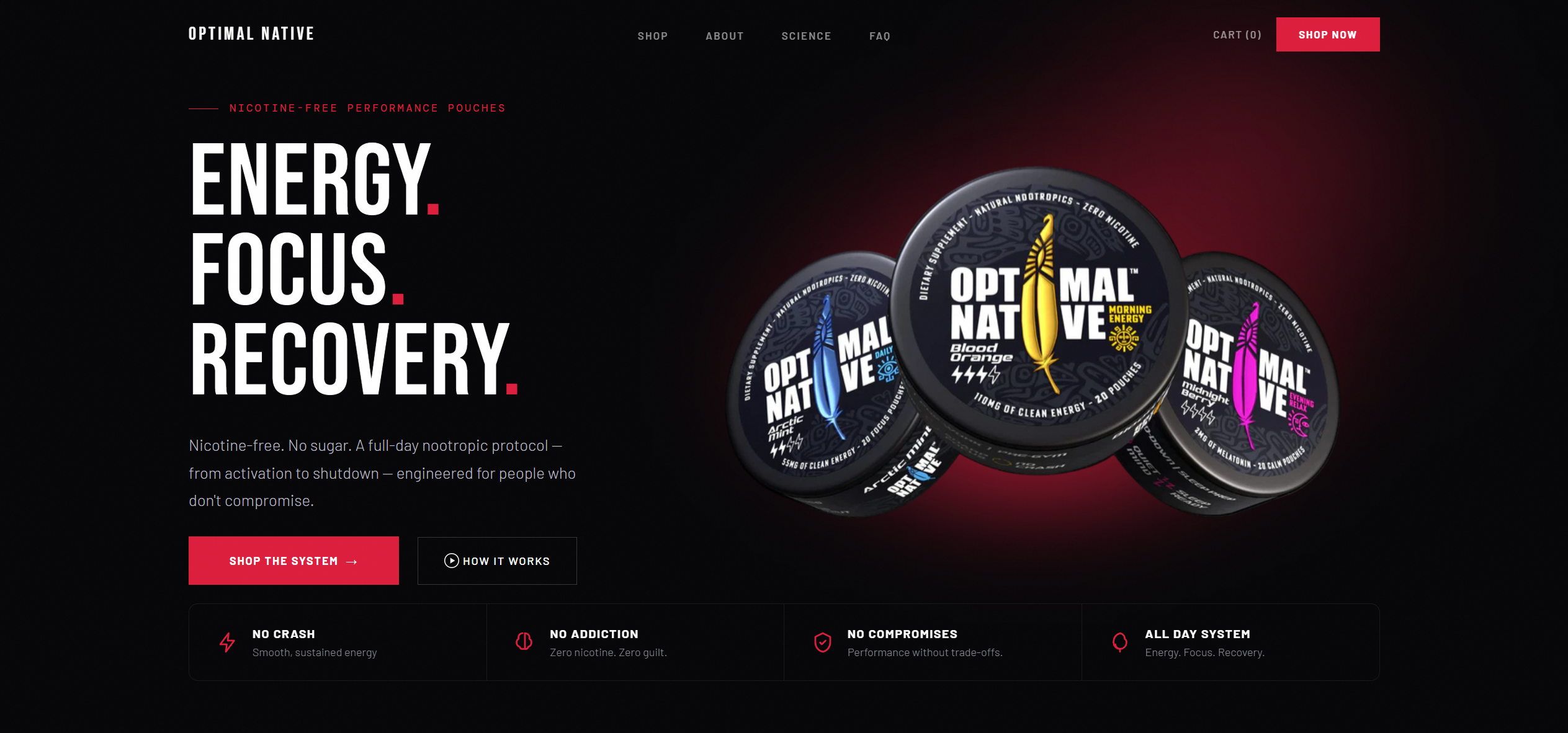
Optimal Native was built for exactly this situation. The Daily Flow performance pouch delivers a clean blend of nootropics and adaptogens with no nicotine, no jitters, and no crash. It fits naturally into the part of your morning after light and water, before or alongside your delayed coffee. Customers with a 4.9-star average across 300-plus reviews report better sustained focus without the dependency spiral. For consistent support every morning, the subscribe and save option makes it one less thing to think about.
FAQ
What is the most important habit for morning energy?
Waking at a consistent time every day is the single highest-impact habit because it stabilizes your circadian rhythm, which governs cortisol, alertness, and sleep quality without requiring any extra time or equipment.
Should you drink water or coffee first in the morning?
Water first. Drinking 500 to 750ml of water before coffee rehydrates your body after sleep, counteracts mild dehydration-related fatigue, and prepares your digestive system before stimulants are introduced.
How long should a morning routine take?
A simplified routine of 3 to 4 habits is more sustainable than a long one. Even 20 to 30 minutes covering light exposure, hydration, and light movement delivers significant energy and focus benefits without requiring an early alarm.
Does delaying caffeine actually improve energy?
The strict 90-minute rule is not scientifically proven, but waiting at least 60 minutes lets your natural cortisol peak run its course so caffeine fills the energy gap rather than competing with your own hormones.
Why do I feel tired even after a full night of sleep?
Morning fatigue despite adequate sleep often comes from inconsistent wake times, dehydration, or immediate phone use that spikes stress hormones before your brain is fully alert. Addressing those three factors first usually produces a noticeable improvement.