

Clean Energy Sources Without Caffeine Dependency
TL;DR:
- Clean energy sources that support your body’s biological systems without caffeine dependency exist and can provide sustained alertness. Incorporating practices like morning sunlight, movement, gut health, and plant-based beverages enhances energy naturally, reducing reliance on stimulants. Transitioning to these methods takes about two weeks but results in more stable, long-lasting energy and improved overall well-being.
If you’ve ever hit 2 PM feeling like your brain shut off mid-sentence, you’ve probably reached for another cup of coffee. That reflex is the problem. Clean energy sources without caffeine dependency actually exist, and they work by supporting your body’s own biological systems rather than borrowing against tomorrow’s alertness. Up to 400 mg of caffeine daily is considered safe for most people, but for anyone who regularly experiences jitters, crashes, or disrupted sleep, sustainable alternatives are worth exploring seriously.
Table of Contents
- Key takeaways
- 1. What “clean energy” actually means for your body
- 2. Plant-based beverages that deliver focus without caffeine
- 3. Physical and lifestyle practices as genuine energy sources
- 4. Side-by-side comparison of clean energy options
- 5. Building a personalized daily routine with clean energy
- My honest take on breaking free from caffeine
- Clean, sustained energy with Optimal Native
- FAQ
Key takeaways
| Point | Details |
|---|---|
| Caffeine isn’t the only option | Natural energy boosters like herbal teas, nutrient-dense foods, and movement rival caffeine without the crashes. |
| Lifestyle practices matter most | Morning sunlight and brief exercise sessions provide an immediate energy lift that outlasts stimulants. |
| Gut health drives sustained energy | A high-fiber diet supports serotonin production and steady metabolic fuel all day long. |
| Timing amplifies results | Aligning meals, naps, and movement to your circadian rhythm dramatically reduces afternoon slumps. |
| Combinations outperform solo strategies | Pairing hydration, light movement, and adaptogens creates layered, crash-free energy that sticks. |
1. What “clean energy” actually means for your body
Before you can choose the right energy sources without stimulants, you need a clear framework for what qualifies. Not every “natural” product earns that label in practice.
Clean energy, in the context of personal performance, means energy that is non-addictive, sustains mental clarity over time, and does not produce rebound fatigue. The criteria worth using to evaluate any option include:
- Duration: Does the energy boost last two to four hours, or does it spike and vanish?
- Dependency risk: Does regular use require increasing doses for the same effect?
- Effect on focus: Does it sharpen cognition, or just suppress tiredness temporarily?
- Side effects: Are there known interactions, sensitivities, or gut reactions?
- Ease of integration: Can you realistically do this daily without major lifestyle disruption?
Two deeper factors most people overlook are circadian rhythm alignment and gut health. Your body cycles through natural peaks of alertness and rest throughout the day. Any energy strategy that fights that rhythm (like a double espresso at 9 PM) will borrow from sleep quality and create fatigue the next day. Gut health and fiber intake are more fundamental to sustained energy than stimulant intake, because the gut produces roughly 90% of the body’s serotonin, which directly influences alertness and mood.
Pro Tip: Before adding any new energy source to your routine, track your current energy levels across three days. Note when you crash, when you feel sharpest, and what you consumed beforehand. Patterns emerge fast, and they will tell you more than any generic protocol.
2. Plant-based beverages that deliver focus without caffeine
The beverage world offers more non-caffeinated energy options than most people realize. These are worth knowing well.
Peppermint and ginger herbal teas provide alertness through sensory stimulation and circulation support. Peppermint contains menthol, which triggers cold-sensitive receptors and heightens attention. Ginger supports circulation and reduces inflammation that contributes to brain fog.
Maca root is a Peruvian adaptogen available as a powder or latte base. It does not contain stimulants but supports adrenal function and hormonal balance, which underlies stable energy across the day. Users often report steadier mood and endurance without any spike-and-crash pattern.
Chicory root coffee is one of the most practical plant-based energy sources for former coffee drinkers. It mimics the flavor and ritual of coffee while delivering inulin, a prebiotic fiber that feeds beneficial gut bacteria. This supports the gut-brain axis and contributes to sustained mental energy without any caffeine.

Kombucha delivers B vitamins, probiotics, and a modest energy lift through its fermentation compounds. Choose low-sugar varieties to avoid a glucose crash that undermines the benefit.
Turmeric latte (golden milk) combines curcumin’s anti-inflammatory properties with warming spices that improve circulation. Less about acute alertness and more about reducing the chronic inflammation that silently drains your energy baseline.
When it comes to food, a few specifics stand out:
- Blueberries, avocados, and mixed nuts provide fiber and nutrients that support gut health and metabolic fuel
- Iron-rich foods like lentils and spinach address one of the most common but undiagnosed causes of fatigue
- Magnesium-rich foods like pumpkin seeds and dark chocolate support over 300 enzymatic reactions, including energy production at the cellular level
- Soaking four dates overnight and eating them at 3 PM with the soaking water effectively combats the post-lunch slump without any crash
One note on matcha: it contains caffeine but at lower levels than coffee, paired with L-theanine, which smooths the energy curve significantly. If you want renewable energy without caffeine at all, skip matcha. If you want dramatically less caffeine with better focus quality, matcha is a reasonable middle step. People who replaced caffeinated drinks with natural alternatives like soaked dates and chia seed lemonade reported improved energy and better sleep quality within just three days.
3. Physical and lifestyle practices as genuine energy sources
This is where most people leave serious performance gains on the table. The body generates its own energy chemistry through movement, light, sleep positioning, and meal timing. None of it costs anything.
Morning sunlight exposure is the most underrated energy practice in existence. Getting outside within the first hour of waking, even for ten minutes, signals your suprachiasmatic nucleus to suppress melatonin and elevate cortisol at the right time. Morning light exposure regulates circadian rhythms, improves nighttime sleep quality, and boosts daytime alertness in ways caffeine cannot replicate because it addresses the root biological signal rather than masking fatigue.
Brief movement sessions have a research advantage most people do not know about. A 10-minute stair walk produces a larger increase in perceived energy than 50 mg of caffeine in sleep-deprived adults. That is not a minor finding. Ten minutes of movement beats coffee for people who need it most.
Hydration with electrolytes is non-negotiable for sustained focus. 2% dehydration significantly impairs physical performance and increases mental fatigue. Most people walk around at exactly that deficit by midmorning. Adding sodium, magnesium, and potassium to your water, rather than drinking plain water in large volumes, actually gets fluids into your cells efficiently.
Strategic napping is a skill worth developing. A 10 to 20 minute nap taken between 1 and 3 PM restores alertness without producing the grogginess of longer sleep. Set an alarm. Do not allow yourself to reach deep sleep stages or you will wake up feeling worse.
Meal timing aligned with your circadian rhythm is the final pillar. Stopping food intake three hours before bed and allowing roughly twelve hours of overnight fasting rests the gut, stabilizes blood sugar, and produces more consistent energy the following morning.
“Your energy system is a biological machine. Feed it signals it understands, and it runs clean. Fight it with stimulants, and you will always be paying interest on borrowed energy.”
Pro Tip: Combine morning sunlight with a ten-minute walk outside. You get circadian regulation, endorphin release, and light exposure simultaneously. That stack beats caffeine for sleep-deprived people in a single fifteen-minute window.
4. Side-by-side comparison of clean energy options
Not every option fits every lifestyle. Here is a direct look at how the main choices compare across criteria that actually matter for productivity and focus.
| Option | Energy duration | Dependency risk | Focus impact | Ease of use | Key trade-off |
|---|---|---|---|---|---|
| Peppermint tea | 30–60 min | None | Mild boost | Very easy | Short duration |
| Chicory root coffee | 2–3 hours | None | Moderate | Easy | Acquired taste |
| Maca root | 3–5 hours | Very low | Strong, steady | Moderate | Slower onset |
| Soaked dates | 2–3 hours | None | Moderate | Easy | Caloric content |
| Morning sunlight | 3–5 hours | None | Strong | Requires habit | Weather dependent |
| Brief movement (10 min) | 1–2 hours | None | Strong | Easy | Requires space |
| Electrolyte hydration | Ongoing | None | Moderate | Very easy | Cost of electrolytes |
| Strategic nap | 2–3 hours | None | Strong | Moderate | Timing sensitive |
For entrepreneurs and high-performers who need focus without crashes, the data consistently favors combining two to three of these options rather than relying on any single one. Movement plus sunlight plus maca, for example, covers multiple physiological systems simultaneously. If you want to understand why caffeine specifically works against you, reviewing caffeine sensitivity is a useful place to start.
5. Building a personalized daily routine with clean energy
Choosing clean, sustainable energy alternatives works best when you treat it as a system, not a series of individual swaps.
Here is a practical framework for layering non-caffeinated energy options throughout the day:
- Within 30 minutes of waking: Step outside for sunlight exposure. Drink water with electrolytes before anything else.
- Breakfast: Focus on protein, healthy fats, and fiber. Avoid high-glycemic foods that spike and crash blood sugar before 10 AM.
- Mid-morning: Brew peppermint or chicory root coffee. Add a small handful of nuts or seeds for sustained metabolic fuel.
- Noon to 1 PM: Eat your largest meal, aligned with peak digestive activity. Include iron and magnesium-rich foods.
- 2 to 3 PM: Take a ten-minute walk or stair session. If fatigue is significant, a brief nap before 3 PM is more effective than another beverage.
- Mid-afternoon: Try soaked dates with water, or a maca latte, to carry energy through the rest of the workday.
- Evening: Stop eating three hours before bed. Allow the gut to rest and blood sugar to stabilize overnight.
Experiment with this structure for two weeks before judging it. The first three to five days of reducing caffeine often feel harder than baseline because adenosine receptors are recalibrating. This is temporary. People who track the transition consistently report that energy quality improves significantly after the first week without stimulants.
Pro Tip: Do not eliminate caffeine cold turkey if your current intake is high. Step down by 25% weekly to avoid withdrawal headaches while your natural energy systems rebuild.
My honest take on breaking free from caffeine
I’ll be direct about what I’ve seen over time working in the performance space: most people who say they “need caffeine to function” are not experiencing a genuine physiological need. They are managing chronic sleep debt, poor nutrition timing, and dehydration with a stimulant. The caffeine is doing triage, not optimization.
What I’ve found is that the transition to clean energy sources takes about ten to fourteen days to feel genuinely better. The first week is the hardest, and people quit there. The ones who push through consistently describe something they did not expect: they feel more energized by mid-afternoon than they ever did with coffee, because the system driving their alertness is actually restored.
The contrarian view worth stating plainly: natural energy boosters are not weaker than caffeine. They are slower to establish, which people misread as less effective. Maca, morning sunlight, and movement do not produce a sensation in twenty minutes. They rebuild the substrate your alertness runs on. That is a different mechanism, and a more durable one.
Realistic expectations matter. You will not feel like a different person in forty-eight hours. You will feel like a better version of yourself in two to three weeks, if you stay consistent and address the real inputs: sleep, hydration, nutrition timing, and movement. Everything else is secondary.
— Optimal Native
Clean, sustained energy with Optimal Native
If you are ready to act on what this article covers, Optimal Native is built precisely for this transition. The performance pouch system delivers a curated blend of nootropics and adaptogens that align with your body’s natural biochemical states, providing clean focus and energy without nicotine, caffeine dependency, or crashes.
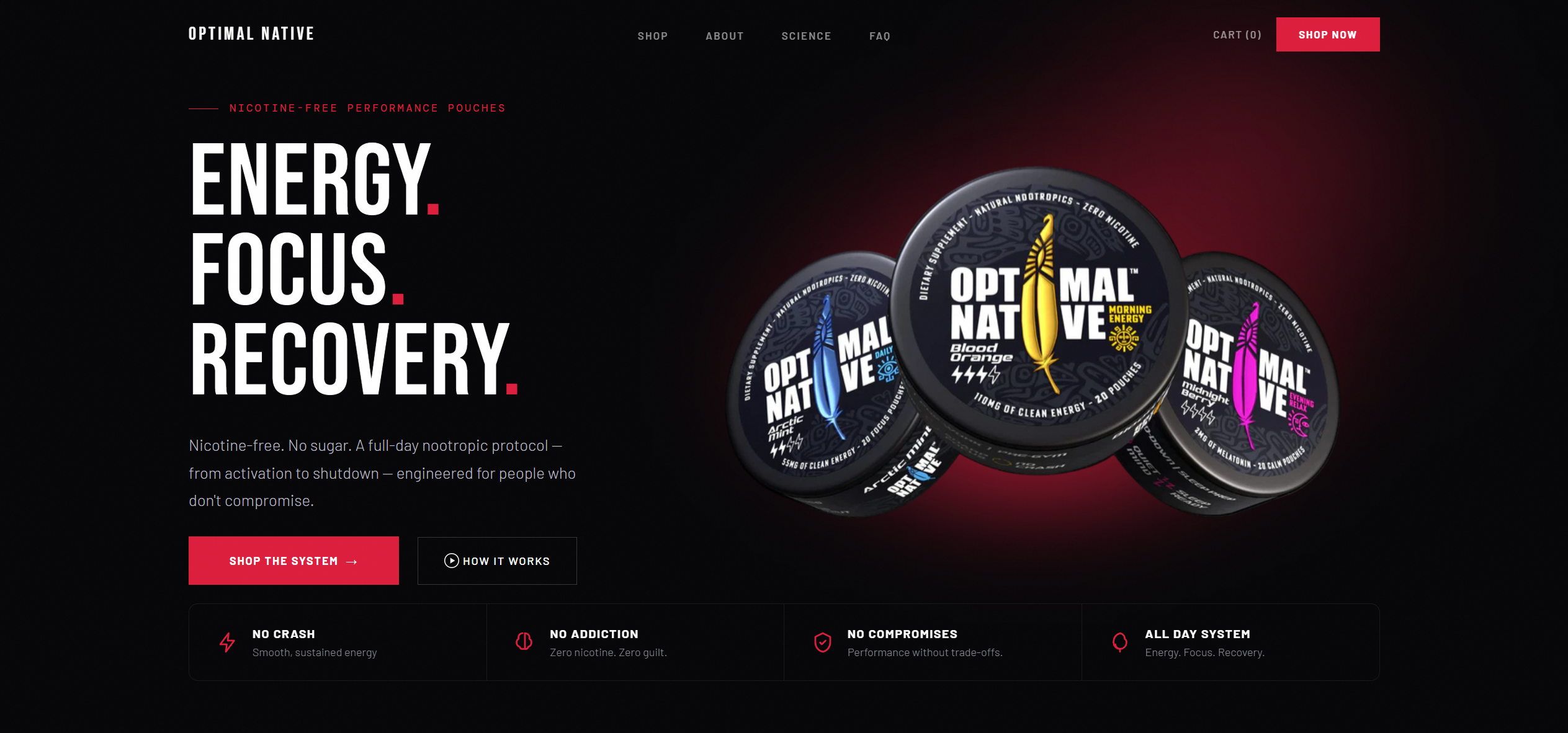
Over 300 users with a 4.9-star average report sharper focus, steadier energy, and zero jitters across their workday. Whether you are an entrepreneur managing back-to-back decisions or an athlete in recovery, the subscribe and save program makes maintaining your clean energy protocol simple and cost-effective. You can also explore the full product bundle to find the right fit for your daily routine without the guesswork.
FAQ
What are the best clean energy sources without caffeine?
The most effective options include morning sunlight exposure, brief movement sessions, maca root, electrolyte hydration, and high-fiber foods. Combining two to three of these covers multiple energy systems simultaneously and produces more stable results than any single option.
How long does it take to stop needing caffeine for energy?
Most people experience the recalibration period within ten to fourteen days. The first week involves some fatigue as adenosine receptors adjust, but energy quality consistently improves after that window when sleep, hydration, and nutrition are addressed.
Can movement really replace coffee for energy?
Research shows that a 10-minute stair walk produces a larger energy boost than 50 mg of caffeine in sleep-deprived adults. For acute alertness needs, a short movement session is both effective and free of side effects.
Are plant-based energy sources safe for daily use?
Options like peppermint tea, chicory coffee, maca root, and soaked dates carry no dependency risk and are generally well-tolerated. As with any dietary change, those with specific conditions or medications should confirm with a healthcare provider.
Does dehydration cause energy crashes?
Yes. Even 2% dehydration measurably impairs physical and cognitive performance while increasing mental fatigue. Electrolyte-enhanced water, not plain water alone, addresses cellular hydration most effectively.