

Why Caffeine Disrupts Student Sleep and Costs You Grades
TL;DR:
- Caffeine disrupts student sleep by impairing deep, restorative sleep and delaying sleep onset through adenosine receptor blocking. Its effects are influenced by timing, metabolism, and individual differences, leading to cognitive impairments and poorer exam performance. To minimize harm, students should stop caffeine at least six hours before sleeping and consider alternative alertness strategies.
You pull an all-nighter fueled by coffee, crash into bed at 2 a.m., and wake up groggy eight hours later wondering why you still feel terrible. This is exactly why caffeine disrupts student sleep in ways that go far beyond simply making it harder to fall asleep. Caffeine doesn’t just delay rest. It changes the biological structure of sleep itself, quietly stripping away the deep recovery your brain needs to consolidate memories, regulate mood, and show up sharp for an 8 a.m. exam. Understanding the science behind this isn’t just reassuring. It’s the first step toward doing something about it.
Table of Contents
- Key Takeaways
- Why caffeine disrupts student sleep: the biology
- The hidden damage to sleep quality
- When to stop: timing guidelines that actually work
- How sleep disruption hits your grades
- My honest take on caffeine and student sleep
- Smarter energy for students who actually want to perform
- FAQ
Key Takeaways
| Point | Details |
|---|---|
| Caffeine blocks sleep pressure | It masks adenosine buildup rather than eliminating it, pushing disrupted sleep later in the night. |
| Deep sleep is the real casualty | EEG studies show caffeine reduces slow-wave sleep even when total sleep time looks normal. |
| Timing matters enormously | Caffeine consumed within 6 hours of bedtime measurably increases sleep onset latency and fragmentation. |
| Academic performance suffers | Impaired sleep recovery degrades memory consolidation, attention, and exam performance in students. |
| Individual metabolism varies widely | Caffeine half-life ranges from 1.5 to 9.5 hours, meaning some students are affected far longer than they realize. |
Why caffeine disrupts student sleep: the biology
To understand why this happens, you need to know about adenosine. Adenosine is a naturally occurring chemical your brain produces all day as a byproduct of neural activity. The longer you’re awake, the more adenosine accumulates, and the stronger your urge to sleep becomes. Scientists call this “sleep pressure.” It’s your body’s built-in shutdown timer.
Caffeine works by blocking adenosine receptors in your brain. It doesn’t eliminate the adenosine that’s already built up. It simply prevents your brain from sensing it. You feel alert and focused, but the sleep debt is still there, waiting. When caffeine eventually clears your system, all that undetected adenosine floods the receptors at once. The result is that heavy, crashed-out fatigue that follows a caffeine spike.
Here’s what makes this particularly problematic for sleep quality:
- Caffeine delays the moment your brain recognizes it needs rest, pushing sleep onset later even when you’re physically exhausted
- The sudden adenosine flood after caffeine clears can cause fragmented sleep, with more brief awakenings your brain doesn’t consciously register
- Caffeine also raises levels of cortisol and adrenaline, both of which keep the brain in an activated state
- The average caffeine half-life is roughly 5 hours, but the range stretches from 1.5 to 9.5 hours depending on your genetics and other factors
That last point is critical. A cup of coffee at 3 p.m. still has half its caffeine active in your system at 8 p.m. for someone with average metabolism. For a slow metabolizer, meaningful amounts can persist well past midnight.
Pro Tip: If you’re a woman on hormonal contraceptives, research shows your caffeine metabolism slows significantly, meaning the same afternoon coffee hits your sleep much harder than it would otherwise.
The hidden damage to sleep quality
Most students use a simple test to evaluate their sleep: “Did I fall asleep? Did I stay asleep? Do I feel okay?” That test misses the most important variable entirely. The quality of your sleep architecture matters as much as duration.
During deep sleep, specifically slow-wave sleep (SWS), your brain clears metabolic waste products, consolidates memories from the day, and restores prefrontal cortex function. This is the sleep that makes you feel genuinely refreshed versus just rested. And this is exactly the sleep caffeine takes from you.
EEG research from Wroclaw Medical University demonstrates that caffeine reduces slow-wave sleep and shifts brain activity patterns toward wakefulness even in people who report sleeping normally. You can sleep eight hours and still wake up cognitively impaired because the restorative portions of that sleep were biologically compromised.
“Participants significantly underestimate sleep disruption even with significant loss of slow-wave sleep, because the subjective experience of sleep feels unchanged.” — Caffeine and sleep research, Unbuzz
This gap between how sleep feels and what’s actually happening in the brain is where students get hurt most. You convince yourself you’re fine. Your hippocampus, which handles memory storage during deep sleep, knows otherwise.
Students are especially exposed to this effect. Irregular schedules, exam stress, and late-night studying create conditions where sleep is already compromised before caffeine enters the equation. Irregular sleep combined with academic stress amplifies caffeine’s disruptive effects, creating a situation where even modest evening caffeine hits harder than it would for someone with consistent sleep habits.
A controlled study found that a 400 mg caffeine dose taken 6 hours before bed caused significant disruption to sleep architecture even when subjects didn’t report severe subjective impairment. Four hundred milligrams is roughly two large cups of coffee. This is not an unusual student intake.
When to stop: timing guidelines that actually work
The practical question is simple. How late is too late? The research points consistently to the same answer: stop caffeine at least 6 hours before your intended sleep time.
A study tracking sleep onset latency in young adults found that caffeine consumed after 6 p.m. pushed perceived sleep onset from about 20 minutes to over 46 minutes. Objective actigraphy measurements confirmed the delay. Dream recall frequency dropped by half, suggesting significant disruption to REM sleep phases as well.
Here’s a practical framework students can apply right now:
- Set a firm caffeine cutoff at 6 hours before your typical bedtime. If you sleep at midnight, your last coffee goes no later than 6 p.m.
- Count all sources. Energy drinks, pre-workout supplements, some teas, and chocolate all contain caffeine. Your “one coffee” may actually be multiple doses.
- Track how you feel after experimenting with an earlier cutoff for one week. Many students notice better focus and mood within days.
- If you have a high-stakes exam the next day, push your cutoff to 8 hours before bed. The cognitive stakes are too high to risk fragmented recovery.
- Consider switching to lighter roasts earlier in the day, as they provide alertness with marginally different absorption profiles than darker espresso drinks.
Pro Tip: If you’re studying late and feel you need caffeine after your cutoff, try cold water, a short walk, or five minutes of focused breathing. These genuinely restore alertness without touching your sleep architecture.
The comparison below shows how caffeine timing changes outcomes for a student with a midnight bedtime:
| Caffeine consumed at | Remaining in system at midnight | Likely sleep impact |
|---|---|---|
| 12 p.m. (noon) | Less than 12% | Minimal sleep disruption |
| 3 p.m. | Roughly 25 to 50% | Mild sleep latency increase |
| 6 p.m. | 50% or more | Significant onset delay, reduced deep sleep |
| 9 p.m. | Up to 75% | Severe fragmentation, major SWS reduction |
These percentages use the average 5-hour half-life. For slow metabolizers, every figure above gets worse.
How sleep disruption hits your grades
Here’s the academic cost of all of this. Sleep is not passive downtime. During the night after a study session, your brain actively transfers information from short-term to long-term memory during slow-wave and REM sleep phases. Cut those phases short with evening caffeine, and the material you reviewed for hours gets partially erased before your exam.

Research on medical students links excessive and poorly timed caffeine use directly to worse attention, impaired working memory, and lower exam performance. The temporary alertness boost from caffeine during a study session does not compensate for the memory consolidation deficit that follows when sleep quality drops.
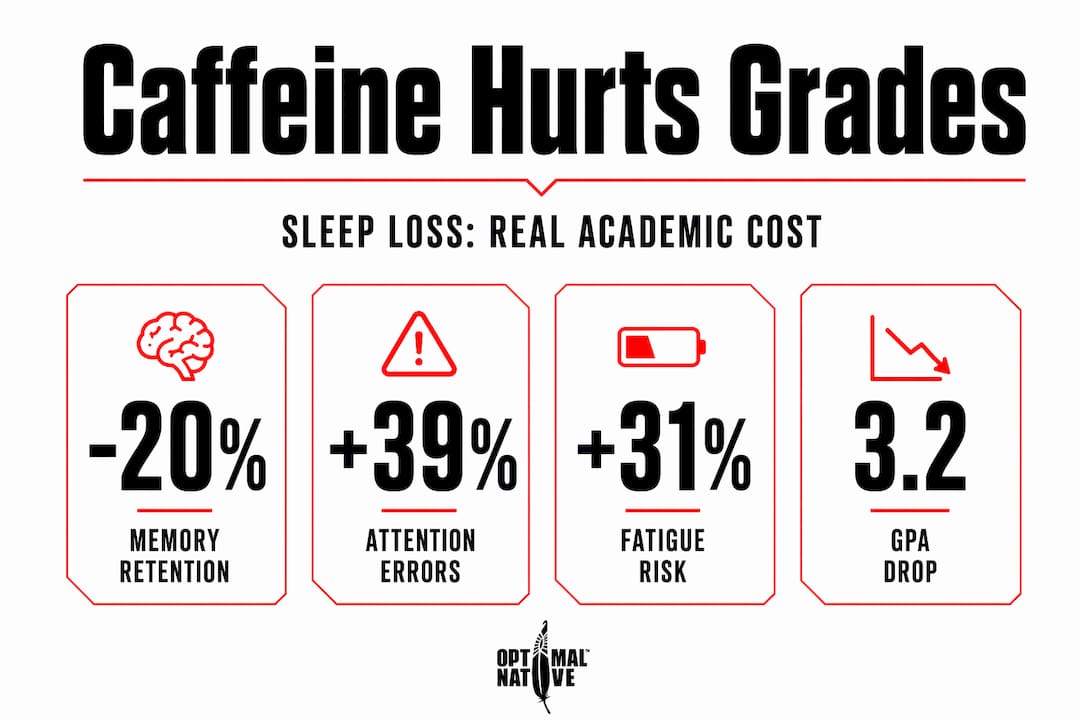
The real problem is what researchers describe as a self-reinforcing cycle. You use caffeine to compensate for sleep-deprived fatigue, caffeine degrades your recovery that night, you wake up more tired than before, and you reach for more caffeine the next morning. Each iteration leaves you slightly worse off.
| Effect on cognitive function | Cause | Timeframe |
|---|---|---|
| Slower reaction time | Fragmented sleep reduces alertness restoration | 1 to 2 nights |
| Reduced working memory | SWS disruption impairs prefrontal recovery | Ongoing with repeated use |
| Worse long-term memory consolidation | REM disruption prevents memory transfer | Night of heavy caffeine use |
| Increased anxiety and stress | Elevated cortisol from caffeine plus poor recovery | Cumulative |
Habitual high-dose coffee consumption does show some tolerance in perceived sleepiness, but objective sleep architecture measures still show impairment. Feeling used to it is not the same as not being harmed by it.
My honest take on caffeine and student sleep
I’ve watched students defend their caffeine habits with one sentence: “I can fall asleep after coffee, so it doesn’t affect me.” That belief is the single most expensive mistake I see repeated in this space.
Falling asleep quickly after caffeine doesn’t mean your sleep is doing its job. What I’ve learned is that the brain can lose significant amounts of slow-wave recovery time while the person sleeping has absolutely no awareness of it. You can spend eight hours in bed, wake up having “slept fine,” and still arrive at your exam with a brain that processed almost none of yesterday’s studying.
What I’ve also found is that students respond incredibly well once they actually experiment with an earlier cutoff. Not just reading about it. Doing it for a week. The reports I consistently hear back are better morning clarity, less reliance on that first cup to feel functional, and sometimes, noticeably improved retention during study sessions.
The real challenge is that caffeine feels like a solution during exam week. It delivers short-term alertness in exchange for long-term recovery debt. That trade gets worse with each passing day. My recommendation is to treat the energy crash problem as a signal, not a problem to be caffeinated through. Your sleep is trying to tell you something. Listen to it.
— Optimal Native
Smarter energy for students who actually want to perform
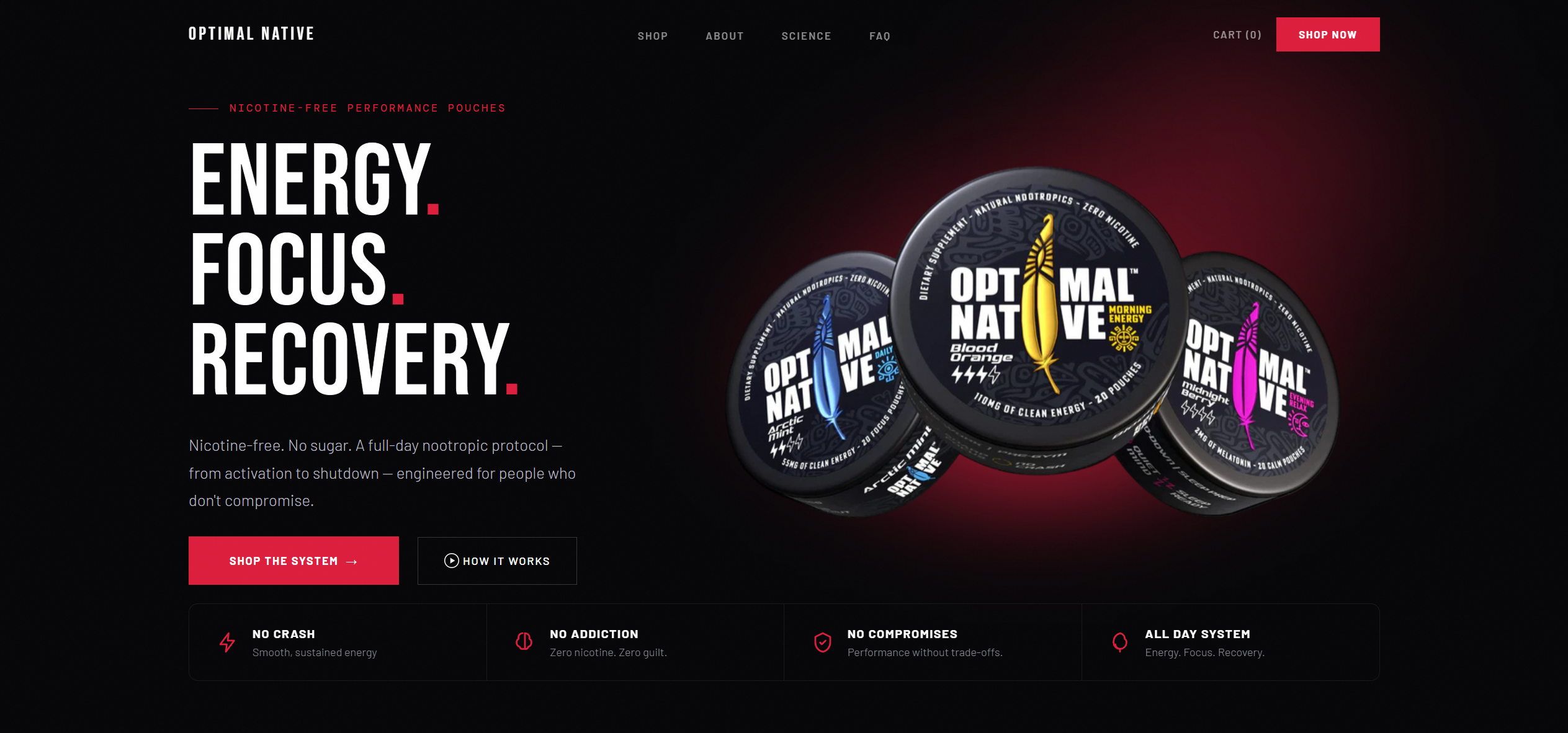
If you’re trying to study hard without wrecking your sleep, the issue usually isn’t caffeine itself. It’s caffeine without any modulating support, taken too late, in amounts that spike and crash. At Optimal Native, we built our daily focus formula specifically around this problem. The Morning Energy pouch combines caffeine with L-Theanine and adaptogens that smooth the delivery curve, reduce jitter-related cortisol spikes, and don’t leave the same residual activation that disrupts sleep at night.
Students who want consistent, level-headed focus throughout their study day without paying for it in lost deep sleep can also explore the Optimal Native bundle for a full day approach to clean energy. For ongoing use, the subscribe and save option keeps your stack consistent without thinking about it each week. No nicotine. No crash. No 11 p.m. cortisol hangover eating into your exam-night recovery.
FAQ
Why does caffeine disrupt sleep even when you fall asleep quickly?
Caffeine reduces slow-wave sleep even when sleep onset feels normal. Your brain loses critical deep-recovery time without any subjective awareness of the disruption.
How long before bed should students stop drinking coffee?
Stop caffeine at least 6 hours before your planned sleep time. Students with slower caffeine metabolism may need to extend that cutoff to 8 hours for reliable sleep quality.
Does caffeine sensitivity vary between students?
Yes. Caffeine half-life ranges from 1.5 to 9.5 hours depending on genetics, age, and medication use. Some students are significantly more affected than others by the same dose at the same time.
Can you build a tolerance to caffeine’s sleep effects?
Tolerance develops for perceived sleepiness, but objective sleep architecture research shows slow-wave sleep reduction continues even in habitual consumers. Feeling adapted does not mean your sleep is recovering fully.
How does poor sleep from caffeine actually hurt exam performance?
Disrupted slow-wave and REM sleep impairs memory consolidation overnight. Medical student research links caffeine-related sleep disruption directly to worse attention, working memory, and academic test scores.