

What Does Nicotine-Free Energy Mean for Your Focus?
TL;DR:
- Nicotine-free energy products boost alertness and focus using ingredients like caffeine, nootropics, and vitamins without nicotine, eliminating dependency risks. They absorb quickly through oral mucosa, providing smoother, discreet energy without the crashes associated with traditional energy drinks or nicotine products. Increasing consumer demand reflects a cultural shift toward clean, sustainable performance solutions with broader health and regulatory benefits.
Nicotine-free energy is defined as any product or method that delivers a measurable boost in energy and cognitive focus through ingredients like caffeine, nootropics, and B vitamins, with zero nicotine content. This separates the stimulant effect from nicotine’s addictive properties entirely. Products in this category include oral performance pouches, functional drinks, and supplement blends that use compounds like Alpha GPC, guarana, and ginseng root extract instead of nicotine. Brands like Optimal Native have built entire performance systems around this principle, targeting entrepreneurs, athletes, and anyone who wants clean, sustained output without dependency. Understanding what nicotine-free energy means is the first step toward choosing the right tool for your productivity.
What does nicotine-free energy mean and how is it defined?
Nicotine-free energy means achieving a functional boost in alertness, focus, and physical vitality through stimulants and cognitive enhancers that contain no nicotine whatsoever. The term is a descriptive phrase used in the supplement and functional food space, while the recognized industry classification for these products is nicotine-free performance supplements or functional energy supplements. Both terms are used throughout this article.
The distinction matters because nicotine is a highly addictive alkaloid found in tobacco and in products like ZYN nicotine pouches or ULTRA nicotine pouches. Nicotine-free oral pouches replace nicotine with caffeine or nootropics, delivering performance benefits without the addiction potential. That single substitution changes the entire risk profile of the product.
Common ingredients in nicotine-free energy products include caffeine, taurine, guarana, L-theanine, Alpha GPC, ginseng root extract, and B vitamins. Each ingredient targets a specific physiological mechanism, whether that is adenosine receptor blockade (caffeine), acetylcholine synthesis (Alpha GPC), or mitochondrial energy production (B vitamins). The result is a multi-pathway approach to energy that nicotine itself never offered.

How do nicotine-free energy products work to boost focus?
Nicotine-free energy pouches deliver their ingredients through the oral mucosa, the thin tissue lining the inside of the mouth. This sublingual and buccal absorption route bypasses the digestive system, meaning active compounds reach the bloodstream faster than a capsule or drink. The practical effect is a quicker onset of focus without the sugar load or carbonation of a traditional energy drink.
The core mechanisms break down into three categories:
- Stimulants: Caffeine and guarana block adenosine receptors in the brain, reducing the perception of fatigue. Guarana releases caffeine more slowly than synthetic sources, which smooths the energy curve.
- Nootropics: Alpha GPC increases acetylcholine availability, directly supporting memory, attention, and processing speed. Ginseng root extract modulates cortisol and supports sustained mental output under stress.
- Metabolic support: Taurine and B vitamins (B6, B12) support cellular energy production and neurotransmitter synthesis, filling in the gaps that stimulants alone cannot address.
Caffeine-free formulations using taurine and guarana can provide smooth energy that supports mental focus and physical vitality without the jitteriness associated with high-dose caffeine products. This matters for anyone who is caffeine-sensitive or who needs to perform in the afternoon without disrupting sleep.
Pro Tip: If you experience anxiety or a racing heart from standard energy drinks, look for nicotine-free products that pair caffeine with L-theanine. L-theanine blunts caffeine’s stimulant edge while preserving the focus benefit, producing what researchers describe as calm alertness.
The absence of nicotine is not just a marketing point. Nicotine creates dependency by flooding the brain’s reward circuitry with dopamine. Remove nicotine and you remove the craving cycle entirely, leaving only the functional ingredients that actually serve your performance goals.
What are the differences between nicotine-free and nicotine-containing products?
The gap between nicotine-free and nicotine-containing energy products is wider than most people realize. The comparison below covers the dimensions that matter most for anyone making a deliberate choice about their energy routine.
| Factor | Nicotine-free products | Nicotine-containing products |
|---|---|---|
| Addiction potential | None from the formula itself | High; nicotine creates physical dependency |
| Oral health risk | Minimal with clean formulations | Elevated; linked to gum disease and tooth decay |
| Regulatory classification | Typically dietary supplement | Often regulated as tobacco or nicotine product |
| Retail availability | Broader; health and wellness channels | Restricted; age-gated, tobacco-section placement |
| Energy mechanism | Caffeine, nootropics, adaptogens | Nicotine receptor activation plus stimulant effect |
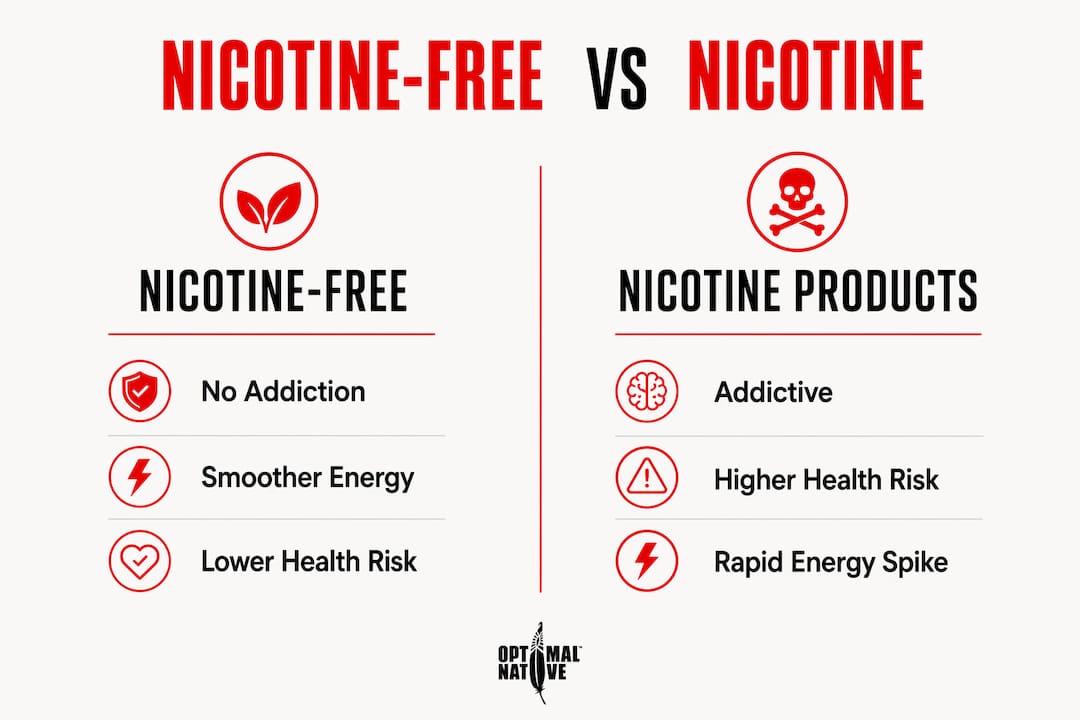
Nicotine-free pouches avoid gum disease, tooth decay, and oral cancer risks linked to traditional tobacco products. That is not a minor benefit. Chronic nicotine pouch users report gum recession and mucosal irritation even from tobacco-free nicotine products, because nicotine itself is a vasoconstrictor that reduces blood flow to oral tissue.
One category worth knowing is synthetic nicotine analogs. Nixodine-S is a patented compound where (S)-6-Methylnicotine binds nicotinic receptor subtypes responsible for nicotine’s effects without metabolizing into nicotine markers. Products using Nixodine-S occupy a gray zone: they activate nicotinic receptors but technically contain zero nicotine. For anyone trying to avoid nicotine dependency specifically, this distinction is critical. Receptor activation without the molecule is still receptor activation.
The format differences also shape the user experience significantly:
- Pouches (nicotine-free): Discreet, portable, no liquid, no calories, no sugar. Ideal for focus during meetings or study sessions.
- Energy drinks: Fast onset, widely available, but often loaded with sugar, artificial dyes, and high caffeine doses that produce crashes.
- Vapes (nicotine-free): Rapid delivery but carry inhalation risks regardless of nicotine content.
- Capsules and powders: Slower absorption, harder to dose precisely, less convenient for on-the-go use.
What marketing and regulatory challenges affect nicotine-free energy products?
The phrase “nicotine-free” creates an unexpected problem for brands. Marketing language like “nicotine-free” can affect product classification, leading to regulatory challenges that impact how energy and nicotine-free pouches are sold and perceived by consumers and retailers. A product that says “nicotine-free” on the label is implicitly associating itself with the nicotine pouch category in the consumer’s mind, even if the formula has nothing in common with ZYN or VELO.
Retailers face a classification dilemma. A nicotine-free energy pouch formulated with caffeine and B vitamins is legally a dietary supplement, but its physical format (a small white pouch placed under the lip) looks identical to a nicotine pouch. Convenience store buyers often place these products in the tobacco section by default, which limits their reach to health-conscious consumers who would never browse that aisle.
“The convergence between the energy category and the nicotine-free pouch category is real, and it’s going to force both retailers and regulators to develop new frameworks for how these products are classified and sold.” — Joshua Schall, functional food and beverage industry analyst
Classification of nicotine-free pouches as supplements or drug-type products varies based on ingredients and marketing claims, which directly impacts consumer perception and retail acceptance. A brand that makes a cognitive performance claim (“improves focus”) is subject to different scrutiny than one that simply lists ingredients. This regulatory ambiguity is one reason many brands in this space keep their marketing language conservative.
The practical takeaway for consumers: read the supplement facts panel, not just the front-of-pack claims. A product classified as a dietary supplement is held to different standards than a food or drug. Knowing that distinction helps you evaluate what you are actually buying.
How to use nicotine-free energy products for productivity and performance
Choosing and using nicotine-free energy products effectively requires more than picking the one with the most appealing label. Here is a structured approach that works for entrepreneurs, students, and athletes alike.
- Audit your current stimulant intake. Before adding any new energy product, map out your existing caffeine consumption from coffee, tea, and other sources. Caffeine dependency reduces productivity over time by raising your baseline tolerance, meaning you need more to achieve the same effect.
- Match the product format to your use case. Oral pouches work best for sustained, discreet focus during work or study. Drinks are better for pre-workout or situations where you need rapid onset. Capsules suit people who prefer precise, scheduled dosing.
- Check for clean ingredient lists. Prioritize products with no artificial dyes, no proprietary blends that hide individual ingredient doses, and no added sugars. Optimal Native’s pouch system, for example, uses a transparent formulation built around nootropics and adaptogens.
- Start with the lowest effective dose. Even without nicotine, stimulant overuse creates dependency. Understanding your caffeine sensitivity before committing to a daily routine prevents the tolerance buildup that undermines long-term performance.
- Time your usage strategically. The most productive window for a focus-enhancing pouch or drink is 60 to 90 minutes after waking, once cortisol levels begin to drop naturally. Using stimulants at peak cortisol (immediately upon waking) wastes the effect and accelerates tolerance.
Pro Tip: Pair a nicotine-free energy pouch with a 20-minute focus block using a timer-based method like the Pomodoro Technique. The pouch’s onset aligns with the start of your work interval, and the natural wind-down matches your break. You get the biochemical and behavioral cues working together.
Nicotine-free pouches with taurine, guarana, L-theanine, and B vitamins provide balanced energy without the crash patterns associated with high-caffeine or nicotine-based products. The absence of a crash is not accidental. It reflects a formulation philosophy that prioritizes sustained output over a sharp spike.
Key takeaways
Nicotine-free energy products deliver real, measurable performance benefits through caffeine, nootropics, and adaptogens, with zero nicotine and zero addiction risk.
| Point | Details |
|---|---|
| Core definition | Nicotine-free energy uses caffeine, nootropics, and vitamins to boost focus with no nicotine content. |
| Mechanism advantage | Oral pouches absorb through the mucosa for faster onset than capsules or drinks. |
| Health distinction | Nicotine-free formulas eliminate gum disease, oral cancer, and dependency risks tied to nicotine. |
| Regulatory awareness | Product classification varies; always read the supplement facts panel to know what you are buying. |
| Usage strategy | Time stimulant use 60 to 90 minutes after waking and match format to your specific performance need. |
The real shift happening in performance nutrition
The most interesting thing about nicotine-free energy is not the ingredients. It is the behavioral shift it represents. For years, the only people using oral pouches were nicotine users. Now, a growing segment of high-performers is adopting the same format for a completely different reason: clean, discreet, sustained focus with no addiction attached.
At Optimal Native, we have watched this shift accelerate in real time through our own customer base. Entrepreneurs who used to rely on a ZYN pouch to get through a 3 p.m. slump are switching to our nicotine-free system not because they were told to, but because they realized the nicotine was not doing the cognitive work. The caffeine and nootropics were. Removing nicotine just removed the part that was creating dependency without adding performance value.
The market data supports this. The nicotine-free pouch market could surpass a billion dollars as consumer demand for discreet and clean energy formats grows. That projection reflects a genuine cultural shift, not a fad. People are becoming more deliberate about what they put in their bodies and more skeptical of products that trade short-term performance for long-term dependency.
What I would caution against is assuming that “nicotine-free” automatically means safe or effective. The category is still young, and not every product in it is formulated with the same rigor. Some brands use the label as a marketing differentiator without backing it with a genuinely clean, well-dosed formula. Read the label. Know your ingredients. And choose products where the formulation philosophy matches your performance goals, not just the packaging.
— Optimal Native
Explore Optimal Native’s nicotine-free performance system
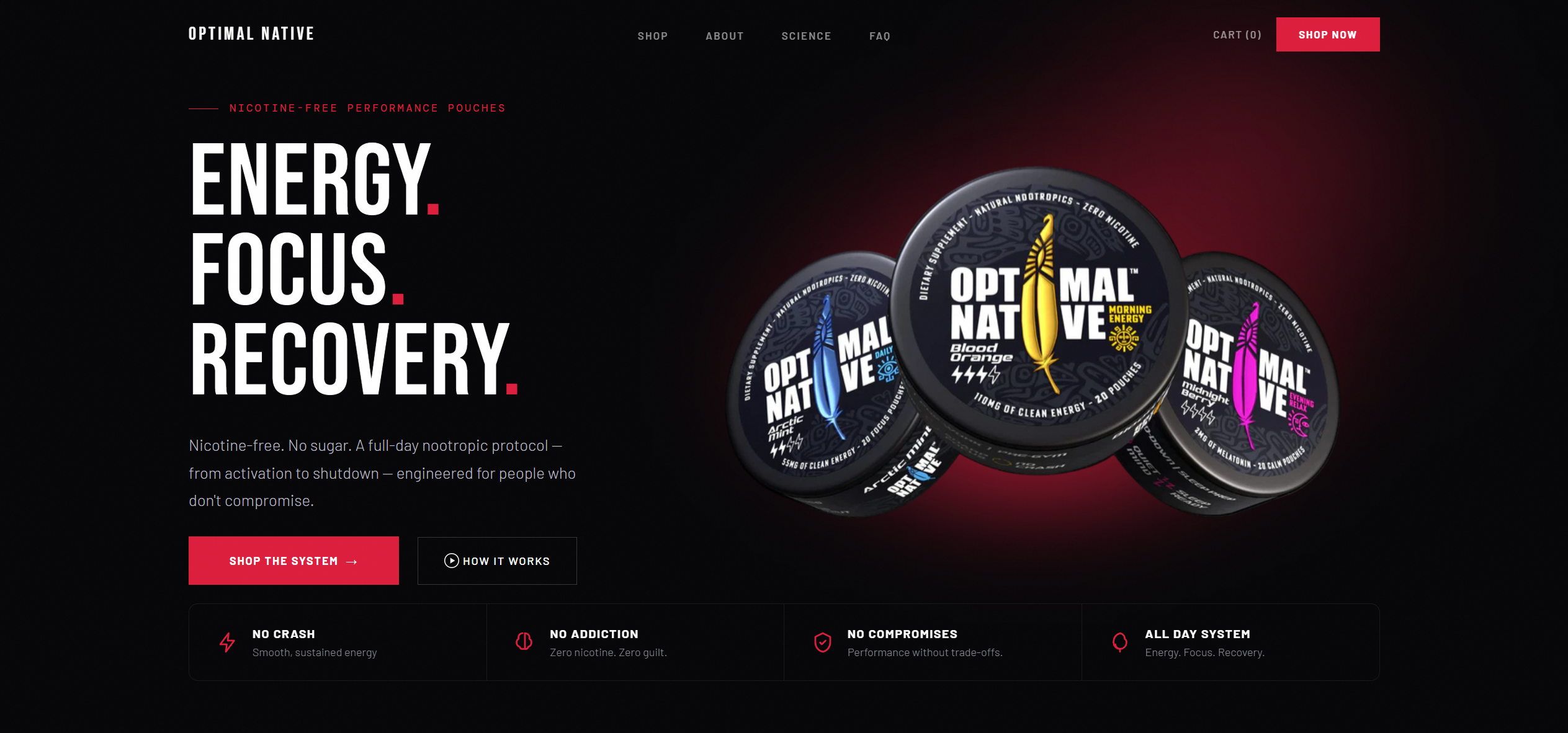
Optimal Native’s nicotine-free performance pouches are built for people who need real focus and energy without the dependency cycle. Each pouch delivers a curated blend of nootropics and adaptogens, including L-theanine, Alpha GPC (in Daily Flow), NAD+, and B vitamins, with zero nicotine and zero artificial fillers. With a 4.9 out of 5 star rating from over 300 verified reviews, customers consistently report improved focus and sustained energy with no jitters or crashes. If you are ready to build a clean energy routine that performs as hard as you do, explore the subscribe and save option for the best value on daily use. You can also explore the Optimal Native bundle to find the right combination for your specific performance needs.
FAQ
What does nicotine-free energy mean exactly?
Nicotine-free energy means using products formulated with caffeine, nootropics, and vitamins to boost focus and vitality, with absolutely no nicotine content. The term distinguishes these supplements from nicotine pouches and tobacco products that also claim to enhance alertness.
Are nicotine-free energy pouches better than energy drinks?
Nicotine-free energy pouches offer faster absorption through the oral mucosa, no sugar, and no carbonation compared to most energy drinks. They are more discreet and typically produce a smoother energy curve without the crash that follows high-sugar drink formulas.
Can nicotine-free products cause dependency?
Nicotine-free products carry no nicotine dependency risk, but stimulant ingredients like caffeine can still build tolerance with daily overuse. Choosing products with moderate, well-dosed caffeine and pairing them with non-stimulant nootropics reduces that risk significantly.
How are nicotine-free energy products regulated?
Most nicotine-free energy products are classified as dietary supplements, which means they are subject to FDA oversight under DSHEA but do not require pre-market approval. Regulatory treatment varies based on specific ingredient claims and product format.
What ingredients should I look for in a nicotine-free energy product?
The most effective formulas combine caffeine or guarana for stimulation, Alpha GPC or L-theanine for cognitive support, and B vitamins for metabolic energy. Avoid products with proprietary blends that hide individual ingredient doses, since transparent labeling is the clearest sign of a trustworthy formulation.