

Sustained Energy Without Caffeine Explained Simply
TL;DR:
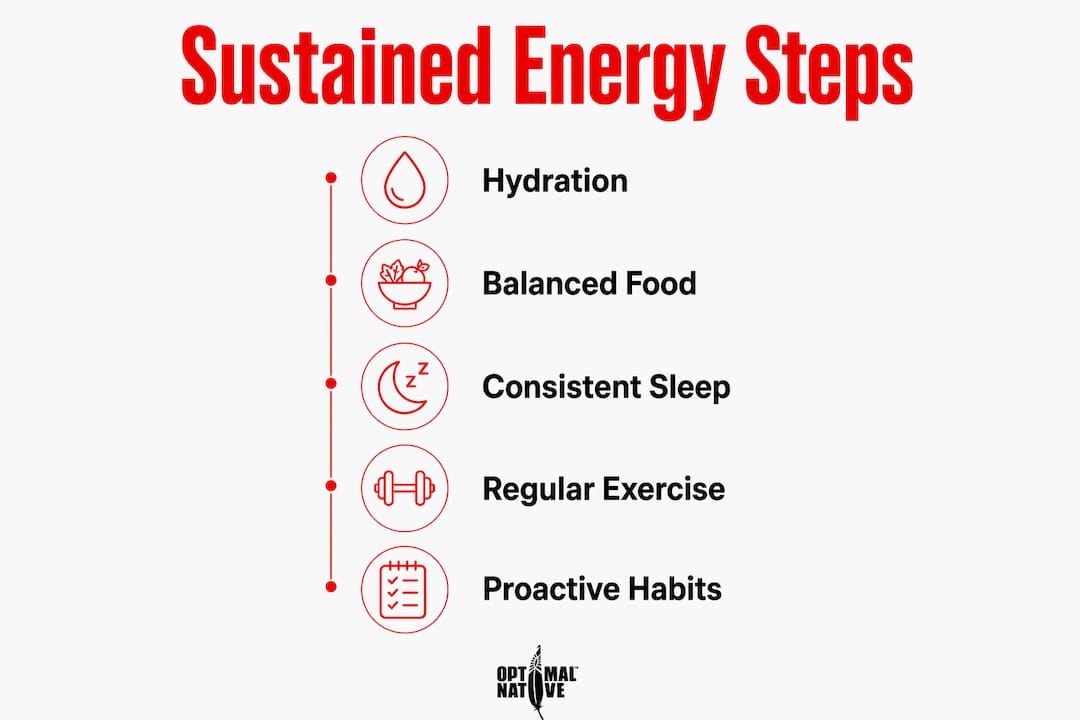
- Achieving sustained energy without caffeine involves optimizing hydration, blood sugar stability, circadian alignment, and mitochondrial health. Caffeine masks fatigue by blocking adenosine receptors, not by creating energy, so addressing root systems improves long-term vitality. Proper hydration, balanced nutrition, consistent sleep routines, and regular exercise are essential for natural, crash-free energy.
Sustained energy without caffeine is achieved by optimizing the physiological inputs that caffeine was masking all along: hydration, blood sugar stability, circadian alignment, and regular movement. Caffeine works as an adenosine receptor antagonist, blocking the brain’s fatigue signals rather than generating real energy. That distinction matters. When you remove caffeine, the fatigue you feel is not weakness. It is the accumulated sleep debt, dehydration, and blood sugar instability that caffeine was covering up. The good news is that each of those inputs is directly within your control, and fixing them produces energy that does not crash.
What sustained energy without caffeine actually means
The phrase “sustained energy without caffeine” describes a physiological state, not a product category. The recognized term in sports science and nutrition research is energy homeostasis, the body’s ability to maintain stable ATP production and cognitive output across the day. Achieving it requires four systems working together: cellular hydration, glucose regulation, circadian rhythm integrity, and mitochondrial capacity. Caffeine bypasses all four. It simply tells your brain to ignore the warning lights. Entrepreneurs, athletes, and high-output professionals who rely on caffeine dependency often find their baseline energy deteriorates over months because the underlying systems never get addressed.
Understanding this mechanism is the first step toward doing something about it. The strategies below are not about willpower. They are about giving your body the raw materials it needs to produce energy on its own.
How does hydration affect energy and focus?
Hydration is the most underestimated variable in daily energy management. Mild dehydration impairs attention and working memory in adults with high statistical significance, meaning the effect is measurable and consistent, not anecdotal. Most people reach for a second coffee when they are actually just dehydrated.

The mechanism is direct. Water is required for the electrochemical gradients that neurons use to fire. When fluid volume drops even slightly, signal transmission slows, reaction time increases, and focus fragments. Research confirms that hydration predicts attention scores even after controlling for sleep quality and caloric intake, which means you cannot out-sleep or out-eat poor hydration.
Practical targets for most adults:
- Drink 8 to 10 glasses of water daily, distributed across the day rather than consumed in large amounts at once
- Drink one full glass of water within 10 minutes of waking, before any food or supplements
- Infuse water with lemon, cucumber, or mint if plain water feels unappealing
- Set a phone reminder every 90 minutes during focused work blocks to drink proactively
Pro Tip: Schedule hydration around your focus sessions rather than waiting for thirst. Mild dehydration impairs performance before you feel thirsty, so thirst is a lagging indicator, not a reliable cue.
The shift from reactive to proactive hydration is one of the fastest ways to notice a difference in mental clarity. Most people report sharper focus within 48 to 72 hours of consistent hydration, which is faster than any dietary change.
What foods give you sustained energy without crashes?
Food is where most people either win or lose the energy game. The core principle from Dartmouth Cancer Center’s nutrition research is straightforward: complex carbohydrates paired with protein and healthy fats stabilize blood sugar and deliver steady energy across several hours. Simple carbohydrates and sugary drinks do the opposite.
Here is what that contrast looks like in practice:
| Meal type | Blood sugar effect | Energy outcome |
|---|---|---|
| White bread with jam | Rapid spike, rapid crash | 30 to 60 minutes of energy, then fatigue |
| Oatmeal with seeds and fruit | Slow, steady glucose release | 3 to 4 hours of stable energy |
| Whole-grain toast with peanut butter and banana | Blunted spike, sustained plateau | 3 to 5 hours of focus-ready energy |
| Sugary energy drink | Extreme spike, hard crash | 45 to 90 minutes, then worse fatigue |
The slow digestion produced by fiber-rich complex carbs combined with protein and fat blunts glucose spikes and keeps energy levels stable throughout the day. This is not a theory. It is the biochemistry of insulin response and glycogen utilization. When glucose enters the bloodstream gradually, the pancreas releases insulin in proportion. When it floods in all at once, the overcorrection drops blood sugar below baseline, which is the crash.
Practical food strategies to sustain energy without caffeine crashes:
- Build every meal around a complex carbohydrate base: oats, brown rice, quinoa, sweet potato, or whole-grain bread
- Add a protein source to every meal: eggs, Greek yogurt, legumes, chicken, or cottage cheese
- Include a healthy fat: avocado, nuts, seeds, or olive oil to slow gastric emptying
- Limit fruit juice, white bread, pastries, and sweetened beverages to prevent glucose spikes
Pro Tip: Eat within 60 minutes of waking. Skipping breakfast forces your body to run on cortisol alone, which produces a false sense of alertness followed by a mid-morning energy drop that no amount of water will fix.
For those exploring clean energy sources beyond food, adaptogens like ashwagandha and rhodiola have a growing evidence base for supporting energy regulation without stimulant effects.
How does sleep consistency support all-day energy?
Sleep is not just recovery. It is the primary mechanism by which your brain clears adenosine, the same molecule caffeine blocks. Without consistent, quality sleep, adenosine accumulates, and no amount of hydration or nutrition fully compensates. Good morning routines anchored to a consistent wake time and early natural light exposure are the most reliable tools for circadian entrainment.
Circadian alignment means your body’s internal clock matches the external light-dark cycle. When it does, cortisol peaks naturally in the morning to produce alertness, melatonin rises at night to produce sleepiness, and energy is distributed across the day in a predictable arc. When it does not, because of irregular sleep times, late-night screen exposure, or skipping morning light, that arc flattens and energy becomes erratic.
Morning habits that protect circadian rhythm:
- Wake at the same time every day, including weekends, to anchor your circadian clock
- Get outside or sit near a bright window within 30 minutes of waking for natural light exposure
- Drink water and eat a balanced breakfast before checking your phone or email
- Do 5 to 10 minutes of light movement such as stretching or a short walk to activate circulation
The habits to avoid are equally specific. Hitting snooze fragments sleep architecture and produces sleep inertia, the groggy feeling that can last 30 to 60 minutes. Checking your phone immediately after waking spikes cortisol reactivity before the natural morning cortisol peak has finished, which disrupts the hormonal sequence that produces clean morning energy. These are not minor inconveniences. They are measurable disruptions to the system you are trying to optimize.
Does exercise actually replace caffeine for energy?
Exercise is the most evidence-backed non-caffeine energy source available. At least 150 minutes per week of aerobic activity combined with two muscle-strengthening sessions improves energy by directly upgrading mitochondrial health. More mitochondria means more ATP production, which means more cellular energy available for both physical and cognitive work.
The mechanism works on two timescales. Acutely, a single 20-minute walk increases alertness and mood for up to two hours by raising norepinephrine and dopamine. Over weeks and months, consistent aerobic training increases mitochondrial density in muscle and brain tissue, raising your energy baseline permanently. This is the difference between a caffeine hit and a structural upgrade.
Here is a practical weekly framework for energy-focused exercise:
- Monday, Wednesday, Friday: 30 minutes of moderate aerobic activity such as brisk walking, cycling, or swimming
- Tuesday and Thursday: 20 to 30 minutes of bodyweight or resistance training targeting major muscle groups
- Saturday: One longer, lower-intensity session such as a 45-minute walk or hike for active recovery
- Sunday: Full rest or gentle yoga to allow full muscular and neurological recovery
Beyond scheduled exercise, pacing daily tasks prevents energy depletion just as effectively. Harvard Health’s energy management framework uses the concept of “energy dollars,” treating attention and physical effort as a finite daily budget. Prioritizing, planning, pacing, and positioning tasks around your natural energy peaks prevents the mid-afternoon collapse that most people treat with caffeine.
Pro Tip: Schedule your most cognitively demanding work in the 90-minute window after your morning routine is complete. That window aligns with your natural cortisol peak and produces the sharpest focus of the day without any stimulants.
For those who want to explore adaptogens for stable energy alongside exercise, compounds like rhodiola rosea have research support for reducing exercise-induced fatigue and improving mental endurance.
Key takeaways
Sustained energy without caffeine requires fixing the four systems caffeine was compensating for: hydration, blood sugar stability, circadian alignment, and mitochondrial capacity through exercise.
| Point | Details |
|---|---|
| Caffeine masks, not creates | Caffeine blocks adenosine receptors, hiding fatigue without addressing its root causes. |
| Hydration is cognitive fuel | Mild dehydration measurably impairs attention and working memory before thirst appears. |
| Food composition determines stability | Pairing complex carbs with protein and fat prevents blood sugar spikes and energy crashes. |
| Sleep consistency is non-negotiable | A fixed wake time and morning light exposure anchor circadian rhythm and natural energy output. |
| Exercise upgrades your baseline | 150 minutes of weekly aerobic activity increases mitochondrial density and raises your energy floor permanently. |
What I have learned from going caffeine-free
Transitioning off caffeine is harder than most productivity content admits. Withdrawal fatigue typically begins 12 to 24 hours after your last dose and can persist for several days. That early fatigue is physiological, not a sign that the strategy is failing. Knowing that in advance changes how you interpret the experience.
What I have found is that the order of implementation matters. Hydration and sleep consistency produce noticeable results within the first week. Nutrition changes take two to three weeks to stabilize blood sugar patterns. Exercise benefits compound over months. Trying to change all four simultaneously is overwhelming. Starting with water and a consistent wake time is not a compromise. It is the correct sequence.
The benefits that surprised me most were not energy-related. Anxiety dropped significantly within two weeks of stopping caffeine. Sleep quality improved even before I changed anything else about my routine. The jittery, wired-but-tired feeling that I had normalized for years turned out to be a caffeine side effect, not my baseline state. That realization alone was worth the transition.
— Optimal Native
Support your natural energy with Optimal Native
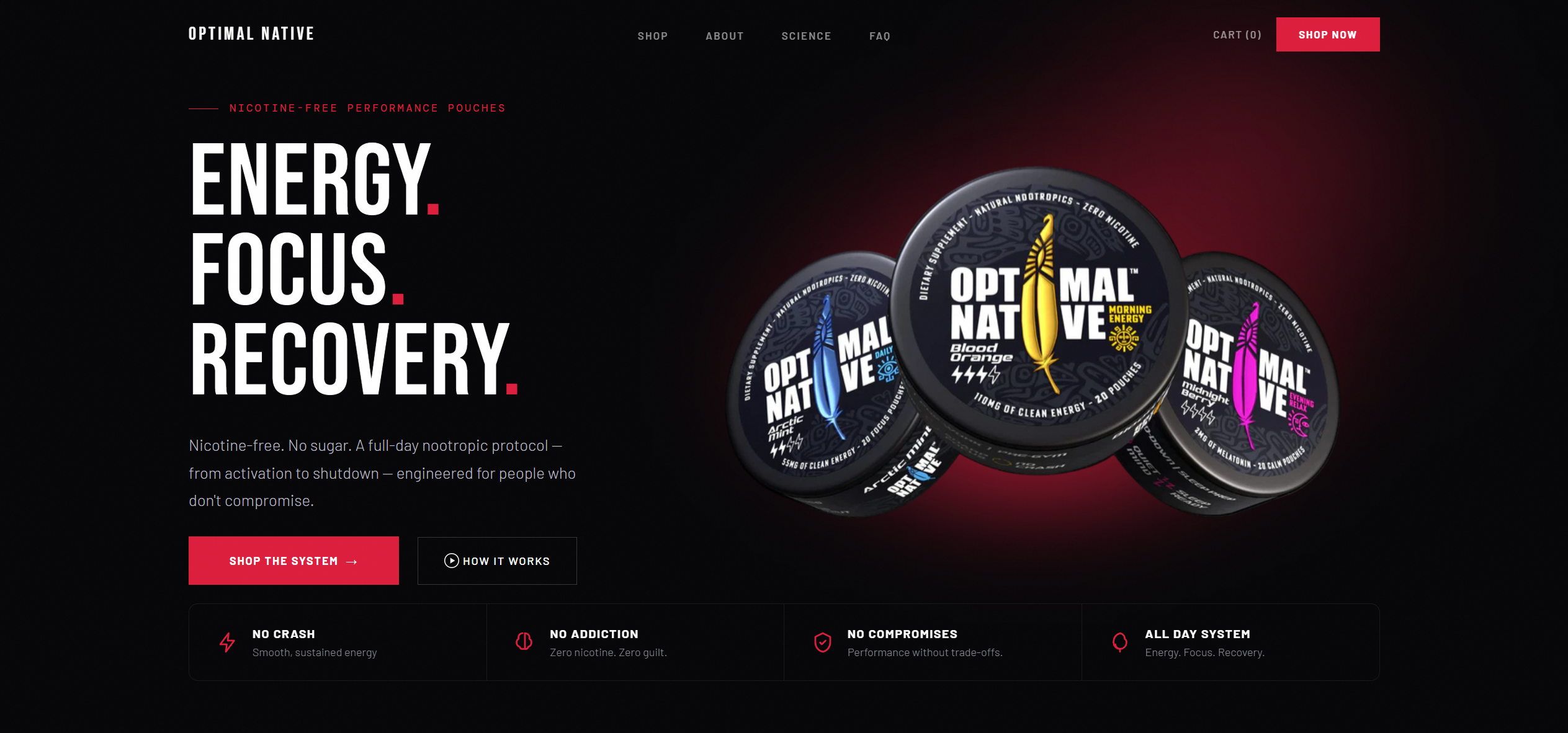
If you are building a caffeine-free energy routine, the foundational habits above do the heavy lifting. Optimal Native products are designed to complement those habits, not replace them. The Optimal Native Morning Energy pouch delivers a curated blend of nootropics and adaptogens that align with your body’s natural morning cortisol peak, providing clean focus without jitters or crashes. For those who want to cover the full day, the Optimal Native Bundle pairs morning and recovery formulas for consistent performance from first task to last. Subscribers save on every order through the Subscribe and Save program, making it straightforward to stay consistent without thinking about it.
FAQ
What is the fastest way to get energy without caffeine?
Drinking a full glass of water and getting 10 minutes of natural light exposure are the two fastest non-caffeine energy interventions. Both produce measurable alertness improvements within 20 to 30 minutes by addressing dehydration and circadian signaling directly.
How long does caffeine withdrawal fatigue last?
Withdrawal fatigue typically begins 12 to 24 hours after stopping caffeine and lasts several days for most adults. The fatigue is physiological and temporary, not a sign that caffeine-free energy strategies are ineffective.
What foods give the most sustained energy?
Complex carbohydrates paired with protein and healthy fats, such as oatmeal with seeds or whole-grain toast with peanut butter, provide the most stable energy by slowing glucose absorption and preventing blood sugar crashes.
Does exercise replace caffeine for mental energy?
Regular aerobic exercise increases mitochondrial density and raises dopamine and norepinephrine levels, producing both acute and long-term improvements in mental energy and focus without any stimulant dependence.
How much water should I drink for better focus?
Eight to ten glasses of water daily supports cognitive performance, and research confirms that attention scores drop with even mild dehydration before thirst is felt. Proactive, scheduled hydration outperforms drinking only when thirsty.