

Why Caffeine Dependency Reduces Productivity at Work
TL;DR:
- Caffeine dependency develops quickly, transforming a temporary performance tool into a reliance that reduces productivity over time. It impairs sleep quality, increases tolerance, and triggers withdrawal symptoms that hinder focus and work output. Alternatives like nootropics and sleep strategies support sustained focus without dependency, promoting clearer thinking and healthier energy levels.
Caffeine dependency is defined as a physiological state in which the brain requires caffeine to reach baseline alertness rather than using it to exceed normal function. This distinction explains why caffeine dependency reduces productivity over time. What starts as a performance tool becomes a maintenance drug. The brain upregulates adenosine receptors in response to chronic caffeine use, meaning you need more caffeine just to feel normal, not sharp. Research from Recovery Centers of America and behavioral science publications like Goals and Progress confirm this cycle is both measurable and reversible.
Why caffeine dependency reduces productivity through tolerance
The mechanism behind caffeine’s productivity trap starts with adenosine, the chemical your brain accumulates to signal fatigue. Caffeine blocks adenosine receptors, which temporarily masks tiredness and sharpens focus. The problem is that your brain responds by growing more adenosine receptors to compensate, which means the same dose of caffeine covers less ground over time.
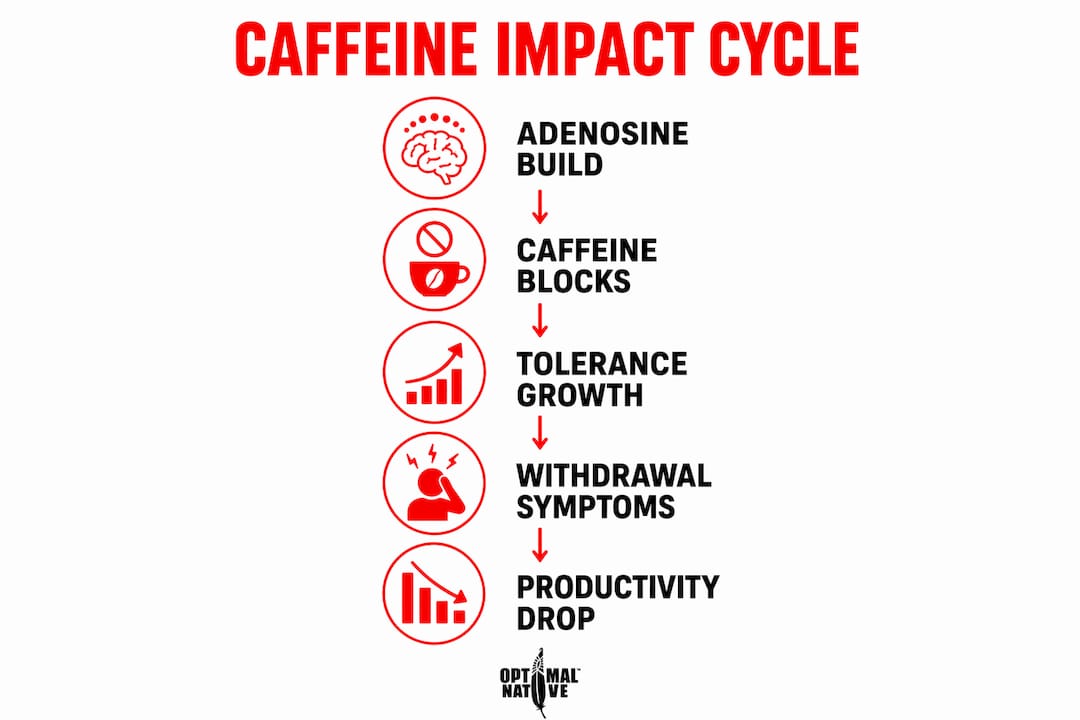
This tolerance develops faster than most people expect. Significant cognitive benefits diminish within two to three weeks of daily use, after which caffeine primarily prevents withdrawal rather than enhancing cognition. That means the mental edge you felt during your first week of morning coffee is largely gone by week three. You are no longer getting a boost. You are just avoiding a deficit.
Think of it as an attention loan. Every cup of coffee borrows alertness from your future self. The loan compounds. Over weeks, caffeine creates borrowed energy rather than producing real cognitive output, and the interest payment comes in the form of deeper fatigue when the caffeine clears. Understanding caffeine sensitivity at the individual level, including how your receptor density responds to habitual use, is the first step toward breaking this pattern. You can read more about caffeine sensitivity factors to understand why some people hit tolerance faster than others.
- Caffeine blocks adenosine receptors, masking fatigue temporarily.
- The brain compensates by producing more adenosine receptors.
- Higher doses are needed to achieve the same alertness.
- Daily intake of 100 mg can trigger physiological dependency in some individuals, roughly the amount in a single cup of coffee.
- Within two to three weeks, the net cognitive benefit approaches zero for habitual users.
Pro Tip: If you notice that skipping your morning coffee causes headaches or brain fog before 10 a.m., you are no longer using caffeine for performance. You are using it to avoid withdrawal.
What withdrawal symptoms do to your focus and output
When you miss a dose or try to cut back, the newly expanded population of adenosine receptors floods with adenosine all at once. The result is not just tiredness. It is a measurable cognitive impairment that affects your ability to work.
Common withdrawal effects include:
- Brain fog and difficulty concentrating, which directly impair deep work and decision-making
- Intense drowsiness, making even simple tasks feel effortful
- Irritability and low mood, which degrade collaboration and communication quality
- Headaches, which reduce sustained attention and increase error rates
- Reduced motivation, which slows task initiation and follow-through
The duration of these symptoms is longer than most people realize. Withdrawal symptoms last two to nine days as the brain recalibrates its energy regulation systems. For a working professional, that is nearly two weeks of suboptimal cognitive performance during any reset attempt. This is precisely why caffeine cycling, the practice of alternating use and abstinence to restore sensitivity, is so difficult to maintain in practice.
“Regular caffeine users unwittingly enter a vicious cycle of caffeine-induced sleep degradation and compensatory caffeine intake that undermines true rest and focus.” — Earth.com research on caffeine and sleep
The withdrawal period is not a sign of weakness. It is the brain doing exactly what it is designed to do: adapt. The challenge is that most people interpret the cognitive fog of withdrawal as proof that they need caffeine, when it is actually proof that their brain is healing. Understanding why energy crashes hurt focus can reframe this experience and help you push through the reset window.
How caffeine disrupts sleep and creates a fatigue cycle
This is where caffeine dependency becomes genuinely self-defeating. The same caffeine that helps you push through the afternoon actively degrades the sleep quality that would have made the afternoon easier in the first place.

| Sleep metric | Effect of regular caffeine use |
|---|---|
| Slow-wave sleep (deep sleep) | Significantly reduced, impairing physical and cognitive recovery |
| EEG brain activity during sleep | Shifts toward lighter, less restorative patterns |
| Total sleep time | May appear adequate but lacks restorative depth |
| Next-day alertness | Reduced despite spending 7 to 8 hours in bed |
Regular caffeine intake reduces slow-wave sleep, which is the deepest and most restorative phase of the sleep cycle. You can spend eight hours in bed and still wake up feeling depleted because your brain never fully powered down. This is the hidden cost that most caffeine users never connect to their morning cup.
The cycle works like this: caffeine disrupts deep sleep, which increases next-day fatigue, which drives higher caffeine consumption, which further disrupts sleep. Each rotation of this loop makes the problem worse. The EEG sleep pattern shifts caused by caffeine mean that even caffeine consumed six hours before bed measurably affects sleep architecture.
Pro Tip: Set a hard caffeine cutoff at 1 p.m. if you want to protect slow-wave sleep. Even if you feel like you can fall asleep easily after an afternoon coffee, the quality of that sleep is compromised in ways you will feel the next morning.
Does caffeine help or hurt different types of work?
Caffeine’s effects on cognitive performance are not uniform. The type of task matters significantly, and this is where many people misread their own productivity.
For repetitive, vigilance-based tasks such as data entry, monitoring dashboards, or reading through long documents, caffeine provides a genuine benefit. It sharpens reaction speed and sustains attention on low-stimulation work. This is where caffeine earns its reputation as a productivity tool.
For complex, creative, or novel reasoning tasks, the picture reverses. High caffeine intake increases anxiety and jitteriness, which degrades performance on tasks requiring flexible thinking, problem-solving, or original ideation. The narrowed, hyper-focused state caffeine produces is useful for executing known processes but counterproductive for generating new ones.
Individual factors also shape the outcome:
- Dose: Low to moderate doses (40 to 200 mg) support alertness; higher doses introduce anxiety and impair accuracy.
- Timing: Caffeine taken too early blunts the natural cortisol peak; taken too late, it disrupts sleep.
- Tolerance level: Dependent users get little cognitive lift and mainly avoid withdrawal deficits.
- Genetics: CYP1A2 gene variants determine how quickly individuals metabolize caffeine, affecting both benefit and risk.
The practical implication is that caffeine and work performance are not simply correlated. Caffeine helps the wrong kind of work for many knowledge workers, who spend most of their day on complex reasoning rather than vigilance tasks.
What are effective alternatives to caffeine for sustained focus?
The goal is not to eliminate stimulation. It is to replace borrowed energy with real energy. Several approaches accomplish this without creating the tolerance and withdrawal cycles that define caffeine dependency.
Natural nootropics offer the most direct substitution for caffeine’s cognitive effects. L-theanine, found in green tea, promotes calm focus without sedation and works particularly well when paired with low-dose caffeine to smooth out jitteriness. You can explore the calming focus effects of L-theanine in detail to understand how it modulates attention differently than caffeine alone. Lion’s Mane mushroom supports nerve growth factor production, which improves memory and concentration over weeks of consistent use rather than hours. Rhodiola rosea, an adaptogen, reduces mental fatigue under stress without the rebound crash.
Behavioral strategies also produce measurable results:
- Sleep prioritization: Protecting slow-wave sleep eliminates the fatigue that drives caffeine dependency in the first place.
- Strategic caffeine cycling: Cycling strategies reset tolerance but require enduring two to nine days of withdrawal fog. Planning this during a lower-demand work period makes it sustainable.
- Hydration and movement: Dehydration mimics fatigue, and short movement breaks restore prefrontal cortex activity more reliably than a second cup of coffee.
- Ultradian rhythm alignment: Working in 90-minute focused blocks followed by genuine rest mirrors the brain’s natural attention cycles and reduces the need for chemical stimulation.
For readers looking for clean energy without caffeine dependency, the combination of adaptogens, sleep hygiene, and strategic nootropic use consistently outperforms habitual caffeine use over a 30-day horizon.
Pro Tip: If you want to reduce caffeine without a full reset, taper by 25 mg every three to four days rather than stopping abruptly. This slows the adenosine receptor rebound and keeps withdrawal symptoms manageable during work weeks.
Key takeaways
Caffeine dependency reduces productivity by converting a cognitive enhancer into a withdrawal-management tool, leaving users performing below their natural baseline rather than above it.
| Point | Details |
|---|---|
| Tolerance develops fast | Cognitive benefits from caffeine largely disappear within two to three weeks of daily use. |
| Withdrawal impairs work | Brain fog, low motivation, and poor concentration last two to nine days during any reset attempt. |
| Sleep quality is the hidden cost | Regular caffeine use reduces slow-wave sleep, creating next-day fatigue that drives more caffeine use. |
| Task type determines benefit | Caffeine helps vigilance tasks but degrades creative reasoning and complex problem-solving. |
| Alternatives exist and work | L-theanine, Lion’s Mane, Rhodiola rosea, and sleep hygiene restore focus without dependency cycles. |
The uncomfortable truth about caffeine and performance
At Optimal Native, we have worked with entrepreneurs and athletes who believed their caffeine intake was a competitive advantage. Almost universally, when they tracked their output honestly, the caffeine was not lifting their ceiling. It was just preventing the floor from collapsing.
The hardest part of this conversation is that caffeine dependency feels like productivity. The ritual of the morning coffee, the sharpness that follows, the sense that you are ready to work. But that sharpness is not enhancement. For most habitual users, it is the temporary relief of withdrawal. You are not performing at 110%. You are recovering to 95%.
What I have seen work consistently is treating caffeine the way a serious athlete treats a training stimulus: deliberately, periodically, and with full awareness of the recovery cost. That means caffeine-free days built into the week, sleep treated as a non-negotiable performance input, and nootropic support that does not require a crash to function.
The withdrawal period is genuinely uncomfortable. Two to nine days of fog and low motivation is a real cost. But on the other side of that reset, users consistently report clearer thinking, more stable energy, and less reliance on external stimulation to start their day. That is not a small upgrade. That is a fundamentally different relationship with your own cognitive capacity.
— Optimal Native
How Optimal Native supports focus without the dependency cycle
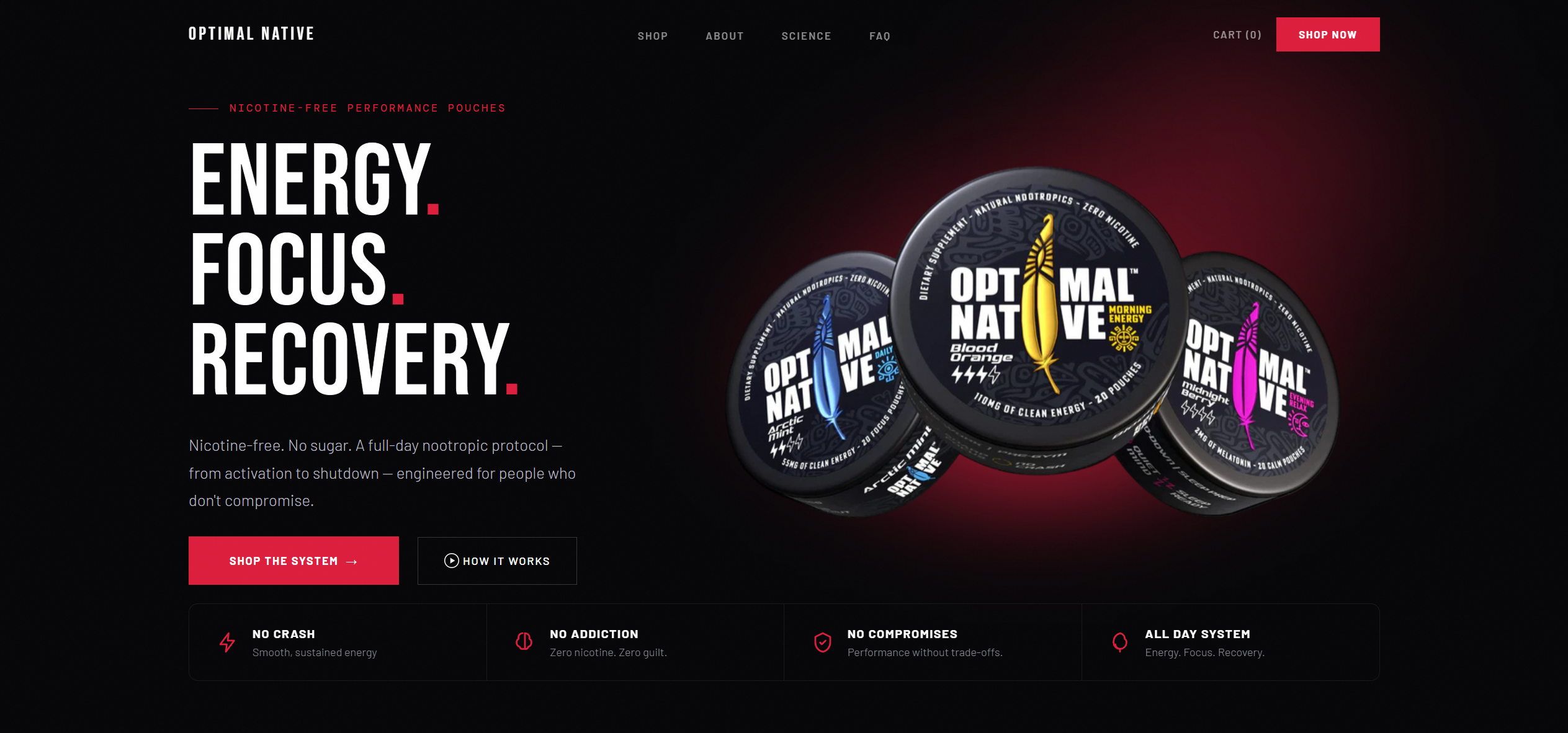
Optimal Native’s nicotine-free performance pouch system was built specifically for people who are tired of the caffeine trap. Each pouch delivers a curated blend of nootropics and adaptogens, including compounds that support acetylcholine and dopamine pathways without blocking adenosine receptors. That means no tolerance buildup, no withdrawal fog, and no sleep disruption. Users report sustained focus and clean energy throughout the day, backed by a 4.9 out of 5 star rating from over 300 reviews. If you are ready to stop borrowing energy and start generating it, explore the Optimal Native Morning Energy formula or lock in your supply with the Subscribe and Save program for consistent daily support.
FAQ
How quickly does caffeine dependency develop?
Physiological dependency can develop from as little as 100 mg of caffeine per day, roughly one cup of coffee. Tolerance to caffeine’s cognitive benefits typically sets in within two to three weeks of daily use.
Why does skipping coffee cause brain fog?
Skipping caffeine when dependent causes adenosine to flood the brain’s upregulated receptors all at once, producing fatigue, difficulty concentrating, and headaches. This is withdrawal, not a sign that you need caffeine to function normally.
Does caffeine affect creative work differently than routine tasks?
Yes. Caffeine supports vigilance and reaction speed for repetitive tasks but impairs complex cognitive tasks requiring creative or flexible thinking, particularly at higher doses where anxiety and jitteriness increase.
How long does it take to reset caffeine tolerance?
The brain typically takes two to nine days to stabilize energy regulation after stopping caffeine. Planning a reset during a lower-demand period and tapering gradually rather than stopping abruptly reduces the severity of symptoms.
Can you improve focus without caffeine?
Natural nootropics like L-theanine, Lion’s Mane mushroom, and Rhodiola rosea support focus and mental clarity without creating adenosine receptor dependency. Pairing these with consistent sleep and ultradian work rhythms produces more stable cognitive performance than habitual caffeine use over time.