

How to Choose a Non-Addictive Energy Supplement
TL;DR:
- Non-addictive energy supplements support sustained focus without causing dependence or crashes.
- They include nutrient correctors like B vitamins and CoQ10, and stress-modulating adaptogens such as rhodiola and ashwagandha.
A non-addictive energy supplement is any formulation that supports sustained energy and focus without triggering physical dependence, withdrawal, or crash cycles. The difference between a safe supplement and a problematic one often comes down to a single ingredient. Busy professionals, students, and health-conscious consumers are increasingly turning away from caffeine-heavy energy drinks toward evidence-backed alternatives like CoQ10, ashwagandha, and rhodiola rosea. Knowing how to choose a non-addictive energy supplement means understanding what your body actually needs, not just what the label promises.
What types of non-addictive energy supplements exist?
Two major categories cover most of what you will find on the market: nutrient-correcting supplements and adaptogens. Each works through a different mechanism, and knowing the difference saves you money and frustration.
Nutrient-correcting supplements address deficiencies that directly impair energy production. The most common include:
- B vitamins (B6, B12, folate): Drive cellular energy metabolism through the Krebs cycle. Low B12 is one of the most common causes of fatigue in adults over 40.
- Iron: Carries oxygen to muscles and the brain. Iron supplements improve energy only in individuals who are anemic, with no significant benefit seen in non-anemic adults.
- CoQ10: Supports mitochondrial energy production. CoQ10 is generally safe at doses up to 1,200 mg per day for adults.
- Magnesium: Activates ATP, the molecule your cells use for energy. Deficiency is widespread and often undiagnosed.
- Vitamin D: Frequently low in adults who spend most of their time indoors. Vitamin D supplementation is a well-supported exception to general supplement caution, especially for aging adults.
Adaptogens work differently. They do not correct a nutrient gap. Instead, they modulate your body’s stress response systems, which is why they can help even when your bloodwork looks normal. Adaptogens like rhodiola support cognitive performance under stress, while ashwagandha helps balance cortisol and build stress resilience. Ashwagandha is considered safe at doses up to 1,000 mg per day for up to 12 weeks. Rhodiola is generally well-tolerated and non-habit forming, making it one of the best non-addictive supplements for focus under pressure.
The critical distinction: adaptogens modulate stress responses independently of nutrient status. You can benefit from rhodiola even if your iron and B12 are fine. That makes adaptogens a genuinely different tool, not just a natural alternative to vitamins.
Pro Tip: Before spending money on any supplement, get a basic blood panel that checks iron, B12, vitamin D, and magnesium. You may be paying for something your body does not need.
How do you know if you actually need an energy supplement?
The most common mistake people make is treating a supplement like a performance drug when it is actually a corrective tool. Most energy supplements only work if there is a metabolic bottleneck. Without a deficiency or a stress-related impairment, supplementation rarely produces measurable energy gains. That is not a marketing caveat. It is the core principle that separates informed buyers from disappointed ones.
Start by identifying the root cause of your fatigue. The most useful diagnostic steps are:
- Get a blood biomarker panel. Test for ferritin (stored iron), B12, vitamin D, and magnesium. These four deficiencies account for a large share of unexplained fatigue in otherwise healthy adults.
- Review your medications. Medications for conditions like high blood pressure or depression often cause fatigue as a side effect. A conversation with your doctor about your current prescriptions can reveal a fixable cause that no supplement will address.
- Audit your lifestyle basics. Sleep quality, hydration, and diet quality all affect energy more than any supplement. Incorporating raw fruits and vegetables in at least 50% of each meal renews energy through natural vitamins, minerals, and hydration, according to Johns Hopkins Medicine.
- Identify stress patterns. Chronic stress depletes cortisol regulation and impairs sleep architecture. If stress is your primary driver, adaptogens are a more logical starting point than B vitamins.
“Testing biomarkers is crucial to avoid unnecessary supplementation. Consumers often miss that many supplements are ineffective without deficiencies.” — Superpower.com
Supplements are unlikely to help if your fatigue stems from untreated sleep apnea, thyroid dysfunction, or a medication side effect. In those cases, the right move is a medical evaluation, not a trip to the supplement aisle.
How to choose a safe non-addictive energy supplement step by step
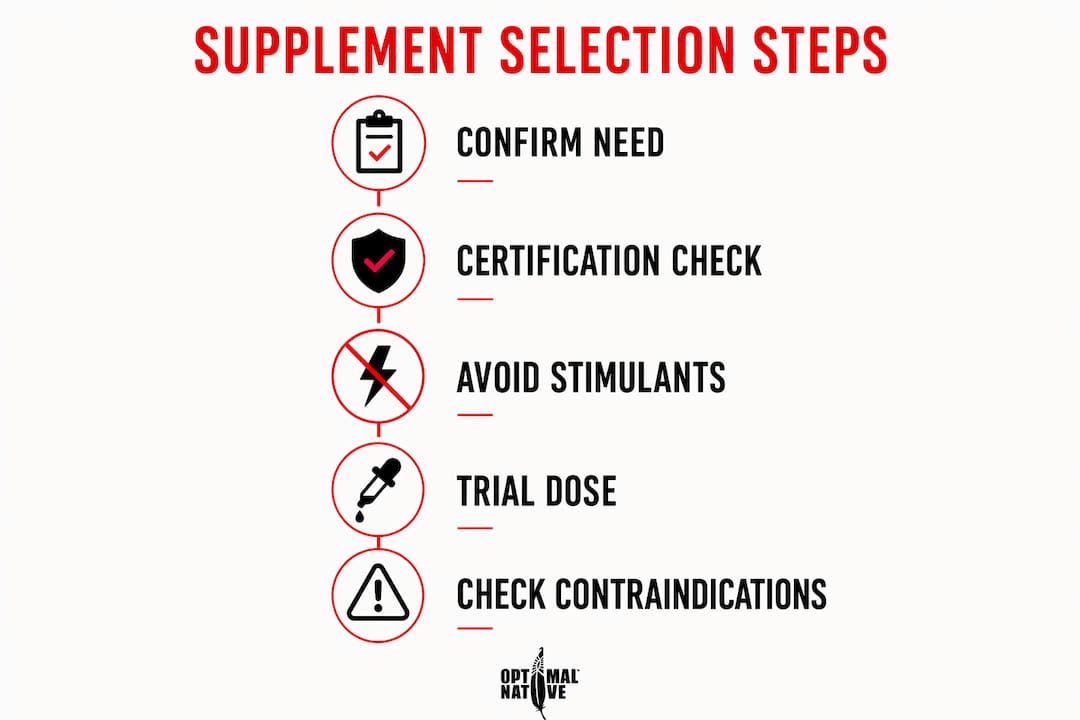
Once you have identified a genuine need, the selection process becomes straightforward. Follow these steps to avoid wasting money and to stay safe.

Step 1: Confirm the ingredient category matches your need. If blood tests show a deficiency, a nutrient-correcting supplement is the right tool. If your labs are normal but you struggle with stress-related fatigue and brain fog, an adaptogen-based formula is the better fit. Mixing both categories without a clear reason adds cost and complexity.
Step 2: Check for third-party certification. Supplement quality varies significantly because the FDA does not regulate supplements the way it regulates drugs. Third-party certifications from NSF International, USP (United States Pharmacopeia), or ConsumerLab confirm that what is on the label is actually in the bottle. Third-party certification reduces the risk of mislabeling and contamination that is common in unregulated markets.
Step 3: Avoid stimulants with addictive potential. Caffeine, guarana, and tianeptine all carry real dependency risks. Caffeine produces tolerance within days and withdrawal symptoms within 12–24 hours of stopping. Tianeptine, sometimes marketed as a nootropic, has been flagged by the FDA for serious addiction risk. Guarana is simply concentrated caffeine under a different name. None of these belong in a non-habit forming energy aid.
Step 4: Start with a trial dose and track your response. Begin at the lower end of the recommended range for any new supplement. Give it two to four weeks before evaluating results. Energy changes are gradual with adaptogens and nutrient supplements. If you notice jitteriness, disrupted sleep, or mood changes, stop and reassess.
Step 5: Check for contraindications. Ashwagandha may be unsafe for individuals with prostate cancer, thyroid disorders, or liver conditions. Always review the contraindication list before starting, especially if you take prescription medications.
| Supplement Type | Best For | Addictive Risk | Certification to Look For |
|---|---|---|---|
| B vitamins | Deficiency-related fatigue | None | USP, NSF |
| CoQ10 | Mitochondrial support | None | ConsumerLab, USP |
| Ashwagandha | Stress and cortisol balance | None | NSF, USP |
| Rhodiola rosea | Cognitive focus under stress | None | NSF, ConsumerLab |
| Caffeine-based products | Short-term alertness | High | N/A (avoid for non-addictive use) |
Pro Tip: Look for products that publish their Certificate of Analysis (COA) from a third-party lab. If a brand will not share this document, that tells you something important about their quality standards.
Common mistakes people make when choosing energy supplements
Even well-informed buyers fall into predictable traps. Understanding these mistakes before you shop protects both your health and your wallet.
- Assuming supplements boost energy beyond your natural baseline. They do not. A well-nourished, well-rested person will not get a meaningful energy lift from CoQ10 or B12. Supplements restore function. They do not create it.
- Ignoring stimulant crash cycles. Many products marketed as “natural energy” contain caffeine, green tea extract, or guarana. These produce a real lift followed by a real crash, and over time they require higher doses to achieve the same effect. That is the definition of tolerance and dependency.
- Skipping the label. Unregulated supplements frequently contain undisclosed ingredients. Contamination with stimulants, heavy metals, and even prescription compounds has been documented in products sold through major retailers.
- Treating adaptogens as medical treatment. Rhodiola and ashwagandha support stress resilience. They do not treat anxiety disorders, depression, or adrenal insufficiency. If your fatigue has a clinical cause, a supplement is not a substitute for medical care.
“Before starting any new supplement, consult a healthcare provider, especially if you take medications or have a chronic health condition.” — Johns Hopkins Medicine
The supplement market rewards confident marketing over clinical evidence. Your best defense is a clear understanding of what you actually need and a commitment to third-party verified products. For guidance on plant-based energy approaches that avoid stimulant dependency, the research points consistently toward whole-food nutrition combined with targeted supplementation.
Key takeaways
Non-addictive energy supplements work best when matched to a confirmed need, verified by blood testing, and sourced from third-party certified brands.
| Point | Details |
|---|---|
| Match supplement to root cause | Blood testing for iron, B12, vitamin D, and magnesium should come before any purchase. |
| Adaptogens vs. nutrients | Adaptogens like rhodiola and ashwagandha address stress-driven fatigue; nutrients correct deficiencies. |
| Third-party certification matters | NSF, USP, and ConsumerLab certifications confirm label accuracy and reduce contamination risk. |
| Avoid stimulant-based products | Caffeine, guarana, and tianeptine carry real dependency risk and do not qualify as non-habit forming. |
| Start low and track results | Begin at the lower recommended dose and evaluate over two to four weeks before adjusting. |
What i have learned from watching people choose the wrong supplement
Most people who come to Optimal Native have already tried two or three other products. The pattern is almost always the same. They started with a caffeinated energy drink or a stimulant-heavy pre-workout, got a good result for a few weeks, then needed more to feel the same effect, and eventually felt worse than when they started. That cycle is not a personal failure. It is a predictable pharmacological outcome.
What actually works is less exciting to market but far more durable. Fixing a vitamin D deficiency, adding rhodiola during a high-stress quarter, or switching to a caffeine-free energy approach produces results that compound over weeks rather than spiking and crashing within hours. The people who report the best outcomes are the ones who got their bloodwork done first, addressed the obvious lifestyle gaps, and then added a targeted supplement with realistic expectations.
The hardest thing to accept is that patience is part of the protocol. Adaptogens take two to four weeks to show meaningful effects. Nutrient repletion can take six to eight weeks. Anyone selling you a product that promises results in 24 hours is selling you a stimulant, not a supplement. The distinction matters more than most people realize until they have experienced both sides of it.
— Optimal Native
Why optimal native fits this approach
Optimal Native’s performance pouch system is built around the principles covered in this article. The formula uses adaptogens and nootropics with no caffeine, no nicotine, and no addictive stimulants. Every batch is designed for clean, sustained energy that aligns with your body’s natural states rather than overriding them.
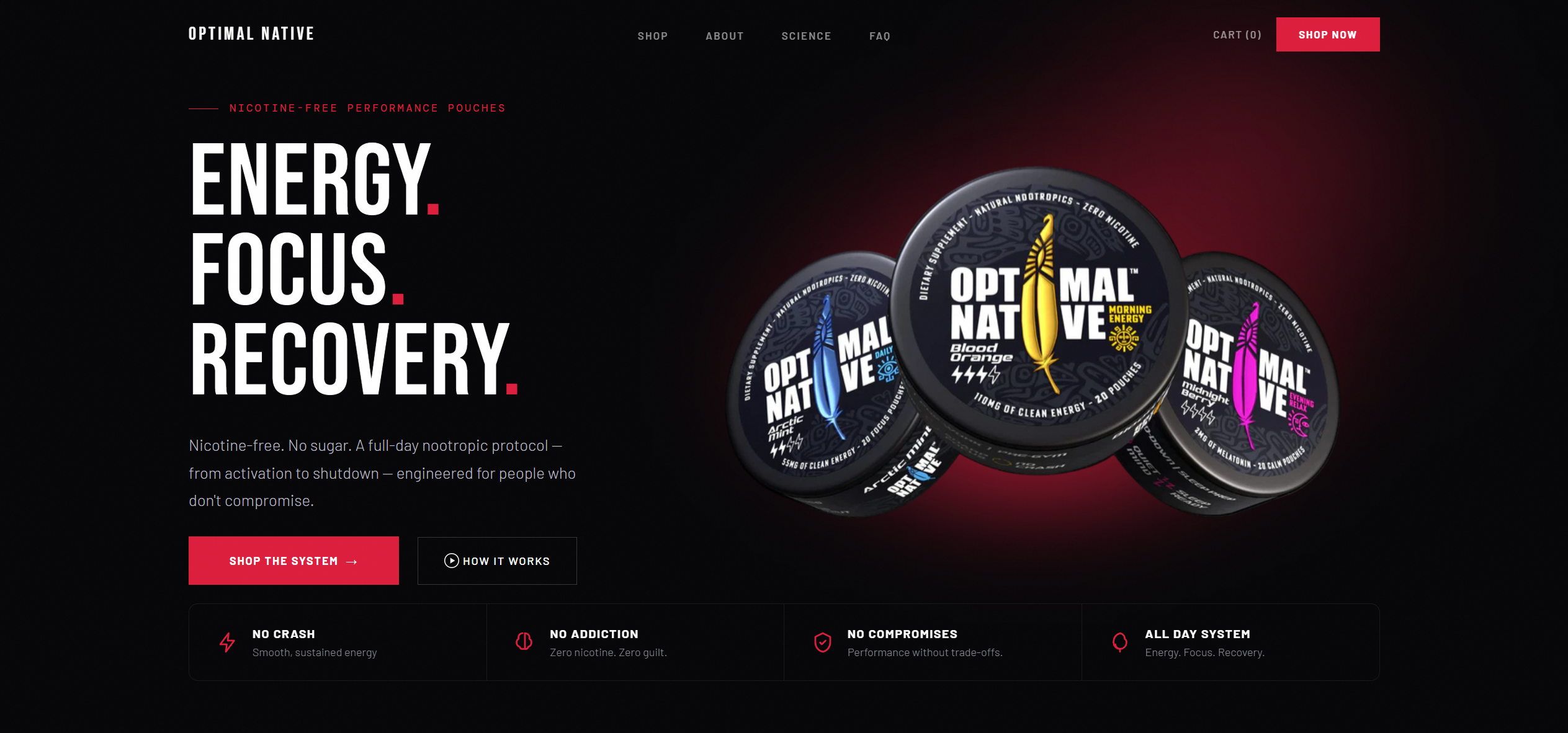
With 4.9 out of 5 stars from over 300 verified reviews, users consistently report improved focus and energy without jitters or crashes. If you are ready to move away from stimulant dependency and toward a protocol that actually holds up over time, explore the Subscribe and Save options for the best value on Optimal Native’s full lineup. You can also check out the Optimal Native Bundle for a complete starting point.
FAQ
What makes an energy supplement non-addictive?
A non-addictive energy supplement contains no compounds that produce tolerance, withdrawal, or craving cycles. Ingredients like ashwagandha, rhodiola, CoQ10, and B vitamins meet this standard, while caffeine, guarana, and tianeptine do not.
Do adaptogens work for energy supplements for focus?
Yes. Adaptogens like rhodiola rosea improve cognitive performance under stress and support sustained mental clarity without stimulating the central nervous system. They are among the most well-researched non-stimulant energy options available.
How long before a non-addictive supplement shows results?
Nutrient-correcting supplements typically show results within four to eight weeks of consistent use. Adaptogens generally require two to four weeks before noticeable effects on stress resilience and focus appear.
Should i test my blood before choosing an energy supplement?
Testing for iron, B12, vitamin D, and magnesium before supplementing is the most reliable way to avoid wasting money. Supplements only correct deficiencies; they do not enhance energy in people who are already replete.
Are plant-based energy supplements safe for daily use?
Most plant-based energy supplements, including ashwagandha and rhodiola, are safe for daily use within recommended dose ranges. Ashwagandha is studied at up to 1,000 mg per day for 12 weeks, though individuals with thyroid, liver, or prostate conditions should consult a doctor first.