

Benefits of Smooth Energy Without Caffeine: 2026 Guide
TL;DR:
- Smooth energy without caffeine relies on natural sources, adaptogens, and circadian habits to promote stable, jitter-free alertness. Incorporating nutrient-dense foods, morning sunlight, aerobic exercise, and correcting deficiencies can replace stimulant dependency and improve overall energy. Small lifestyle adjustments and targeted supplements foster long-lasting, reliable focus without the drawbacks of caffeine.
Smooth energy without caffeine refers to stable, jitter-free alertness and focus obtained from non-caffeinated natural sources, lifestyle practices, and emerging compounds like paraxanthine and adaptogenic herbs. The benefits of smooth energy without caffeine extend well beyond avoiding the afternoon crash. Busy professionals, students, and health-conscious individuals are shifting toward caffeine-free energy sources because the science now supports what many have suspected: natural energy boosters produce cleaner, more reliable output than stimulant dependency. This guide breaks down exactly what works, why it works, and how to apply it.
1. Paraxanthine: the emerging caffeine-free stimulant
Paraxanthine is a primary metabolite of caffeine that delivers alertness and focus without the jitter profile associated with caffeine itself. Small trials show effects lasting several hours, with participants reporting cleaner mental clarity and fewer side effects than caffeine at equivalent doses. This matters because it suggests the alertness benefit of caffeine is separable from its anxiety-inducing properties.
The caveat is real: paraxanthine lacks large-scale, long-term safety data. Cautious use is the right call, and combining it with other stimulants is not advised. For professionals and students who want a targeted cognitive lift without overstimulation, paraxanthine represents the most scientifically interesting caffeine-free energy source available in 2026.
2. Adaptogenic herbs for stress-resilient focus
Adaptogens like ashwagandha, rhodiola rosea, and panax ginseng work by modulating the hypothalamic-pituitary-adrenal axis, which controls your stress response and, by extension, your mental energy. Rather than forcing alertness the way caffeine does, adaptogens help your body maintain baseline function under pressure. The result is focus that holds up during a long workday without the spike-and-crash pattern.
Rhodiola rosea, in particular, has a strong evidence base for reducing mental fatigue in demanding cognitive tasks. Panax ginseng appears in herbal energy drinks reviewed for their antioxidant and phytochemical profiles, where it contributes to stable, sustained alertness. These herbs are the backbone of any serious caffeine-free energy protocol. Optimal Native’s performance pouch system is built around exactly this category of ingredient.
3. Nutrient-dense foods that prevent energy crashes
Blood sugar stability is the single most underrated factor in sustained energy. Foods high in soluble fiber, such as oats, lentils, black beans, and apples, slow glucose absorption and prevent the insulin spikes that cause energy crashes. 150 minutes of aerobic activity weekly combined with fiber-rich foods maximizes mitochondrial energy output and keeps blood sugar balanced throughout the day.

Nuts, seeds, and whole grains add healthy fats and B vitamins that support cellular energy production at the mitochondrial level. This is not about eating perfectly. It is about removing the blood sugar volatility that makes you reach for a second cup of coffee at 2 p.m. When your meals are structured around fiber and balanced macronutrients, your energy becomes predictable.
Pro Tip: Build every meal around a fiber source first. Add protein and fat second. This sequence slows digestion and keeps blood glucose stable for three to four hours, eliminating the mid-morning and mid-afternoon slumps most people blame on poor sleep.
4. Morning sunlight exposure as a natural alertness trigger
Morning sunlight within 30 to 60 minutes of waking stops melatonin production and triggers cortisol release in a healthy, controlled pattern. This is your body’s built-in wake signal, and it works more reliably than any stimulant because it operates through your circadian biology rather than overriding it.
The practical application is simple: step outside for 10 minutes after waking, without sunglasses, and let natural light hit your retinas. On cloudy days, 20 minutes achieves the same effect. This single habit, according to gut health expert Dr. Amy Shah, provides a stable energy foundation that reduces stimulant reliance over time. Professionals who travel across time zones report that morning light exposure resets their alertness faster than any supplement.
5. Aerobic exercise as a caffeine-free energy source
Exercise is the most evidence-backed non-caffeine energy booster available. Aerobic activity increases mitochondrial density in muscle cells, improves oxygen delivery, and triggers endorphin and dopamine release, all of which translate directly to higher baseline energy and better mood throughout the day. The effect is cumulative: people who exercise consistently report needing less caffeine to function at the same level.
The threshold for benefit is not high. Walking briskly for 30 minutes, cycling, or swimming at moderate intensity five days a week produces measurable improvements in daily energy within two to three weeks. For students and professionals who sit for long periods, even a 10-minute walk between work blocks resets mental fatigue more effectively than a coffee refill.
6. Metabolic rest and the 12-hour fasting window
A 12-hour fasting window allows the gut to complete repair cycles and improves metabolic efficiency, which directly impacts alertness the following day. This is not aggressive intermittent fasting. Finishing dinner by 7 p.m. and eating breakfast at 7 a.m. qualifies. The mechanism involves gut microbiome repair and reduced systemic inflammation, both of which are linked to brain fog and low energy.
Dr. Amy Shah specifically identifies circadian rhythm synchronization as a key driver of sustained energy, discouraging constant stimulant use as a substitute for metabolic health. When your gut is functioning efficiently, nutrient absorption improves, which means the B vitamins and minerals that power cellular energy production actually reach your cells. This is the physiological foundation that makes every other caffeine-free strategy work better.
7. Herbal energy drinks with antioxidants and phytochemicals
Caffeine-free herbal alternatives with antioxidants support metabolic and immune function while providing stable, jitter-free energy. Ingredients like yerba mate (in low-caffeine or decaffeinated forms), rooibos, tulsi, and green tea extract without caffeine deliver polyphenols that reduce oxidative stress and support mitochondrial health. These are safer for long-term use than traditional sugar-laden energy drinks.
The practical advantage over conventional energy drinks is the absence of cardiovascular and metabolic side effects. Traditional energy drinks may cause cardiovascular, digestive, and metabolic disorders when overused. Herbal alternatives maintain balanced pH and provide a nutritional benefit beyond simple alertness, including immune support and anti-inflammatory effects that compound over time.
8. Addressing nutrient deficiencies that drain energy
Low energy is often a deficiency problem, not a stimulant deficiency. B12 and vitamin D deficiencies affect alertness even in people who eat varied diets, and they are more common than most people realize. Johns Hopkins Medicine experts note that aging affects nutrient absorption and hormone synthesis, making regular blood panels a practical tool for anyone experiencing persistent fatigue.
Magnesium, iron, and folate are three additional nutrients that directly affect energy metabolism. A simple blood test identifies deficiencies that no amount of caffeine can compensate for. Correcting a B12 deficiency, for example, often produces a more dramatic improvement in sustained energy than switching from coffee to a caffeine-free alternative.
9. Caffeine-free vs. caffeine-based energy: a direct comparison
The core difference between smooth caffeine-free energy and traditional caffeine is duration and stability. Caffeine produces a sharp alertness spike followed by a rebound crash, while natural caffeine-free energy sources provide a flatter, more sustained curve.
| Factor | Caffeine-based | Caffeine-free alternatives |
|---|---|---|
| Energy duration | 4 to 6 hours with crash | 6 to 8 hours, stable decline |
| Jitter and anxiety risk | High, especially above 200mg | Low to none |
| Cardiovascular safety | Concerns at high doses | Generally safe for most adults |
| Nutritional benefit | Minimal | Antioxidants, vitamins, adaptogens |
| Dependency risk | High with daily use | Low |
Pro Tip: If you are transitioning away from caffeine, replace your morning coffee with an adaptogen-based drink for two weeks before removing caffeine entirely. This prevents withdrawal headaches and gives your adenosine receptors time to recalibrate.
10. Who benefits most from caffeine-free smooth energy
Not everyone has the same reason to seek out non-caffeine energy solutions, but several groups see the most dramatic benefit:
- Busy professionals who need stable focus across an eight to ten hour workday without the 2 p.m. crash that disrupts afternoon productivity. Caffeine dependency reduces productivity over time as tolerance builds and withdrawal symptoms interfere with baseline function.
- Students who experience caffeine-induced anxiety during exams or study sessions. Caffeine-free study strategies produce better retention because anxiety impairs working memory.
- Health-conscious individuals with caffeine sensitivity, cardiovascular concerns, or anxiety disorders for whom stimulant use carries real risk.
- Older adults, for whom Johns Hopkins Medicine recommends regular assessments because medications for blood pressure, allergies, and depression commonly cause energy depletion that caffeine masks rather than resolves.
- Anyone using stimulants late in the day, since caffeine consumed after noon disrupts sleep architecture and creates a fatigue cycle that requires more caffeine the next morning.
11. How to build a caffeine-free energy routine
Building a sustainable caffeine-free energy practice requires sequencing habits in a way that supports your biology rather than fighting it.
- Start with morning sunlight. Ten minutes outside within an hour of waking sets your circadian clock and initiates natural cortisol release.
- Eat a fiber-first breakfast. Oats with nuts and berries, or eggs with vegetables and whole grain toast, stabilizes blood sugar for the first four hours of your day.
- Use adaptogens mid-morning. Rhodiola rosea or ashwagandha taken with water around 9 to 10 a.m. supports stress resilience during peak work hours.
- Schedule a 20-minute walk at midday. This resets mental fatigue, boosts dopamine, and prevents the post-lunch energy dip without any stimulant.
- Finish eating by 7 to 8 p.m. A consistent 12-hour fasting window allows gut repair and improves next-day energy.
- Get a blood panel annually. Identify B12, vitamin D, magnesium, or iron deficiencies before they become chronic fatigue.
Pro Tip: Paraxanthine supplements should be capped at the manufacturer’s recommended dose and never combined with other stimulants. The absence of large-scale safety data means conservative use is the right default until more research is published.
Key takeaways
Stable, crash-free energy comes from supporting your body’s natural biology through adaptogens, nutrient-dense food, circadian habits, and targeted supplementation, not from replacing one stimulant with another.
| Point | Details |
|---|---|
| Paraxanthine shows promise | Small trials confirm cleaner alertness than caffeine, but long-term safety data is still limited. |
| Adaptogens outperform stimulants | Rhodiola and ashwagandha sustain focus under stress without the spike-and-crash pattern. |
| Blood sugar stability is foundational | Fiber-rich meals prevent the crashes that drive most caffeine dependency. |
| Circadian habits reduce stimulant need | Morning sunlight and a 12-hour fasting window address root causes of low energy. |
| Deficiencies undermine every strategy | B12 and vitamin D gaps must be corrected before supplements or habits can work fully. |
Why the shift away from caffeine is worth the effort
From where Optimal Native sits, working with entrepreneurs and athletes who have tried every energy protocol available, the most consistent finding is this: caffeine solves a symptom while often worsening the underlying problem. People who rely on it daily are frequently masking poor sleep, nutrient gaps, or metabolic dysfunction. The stimulant keeps them functional, but it does not make them better.
The shift to cellular nourishment over stimulant dependency is not a wellness trend. It is a functional health principle backed by growing evidence. What Optimal Native has observed in users who commit to adaptogens, circadian habits, and nutrient-dense eating is a qualitative change in how energy feels. It becomes reliable. It does not require management. You stop watching the clock for when your next dose wears off.
The honest advice: do not try to overhaul everything at once. Pick morning sunlight and one adaptogen. Run that for three weeks. The compounding effect of small, biology-aligned habits is more powerful than any single supplement, and it builds a foundation that caffeine never could.
— Optimal Native
Discover Optimal Native’s caffeine-free performance system
Optimal Native was built for people who want output without the dependency. The nicotine-free performance pouch system combines nootropics and adaptogens in a format designed for busy schedules, delivering clean, sustained energy that aligns with your body’s natural states rather than overriding them.
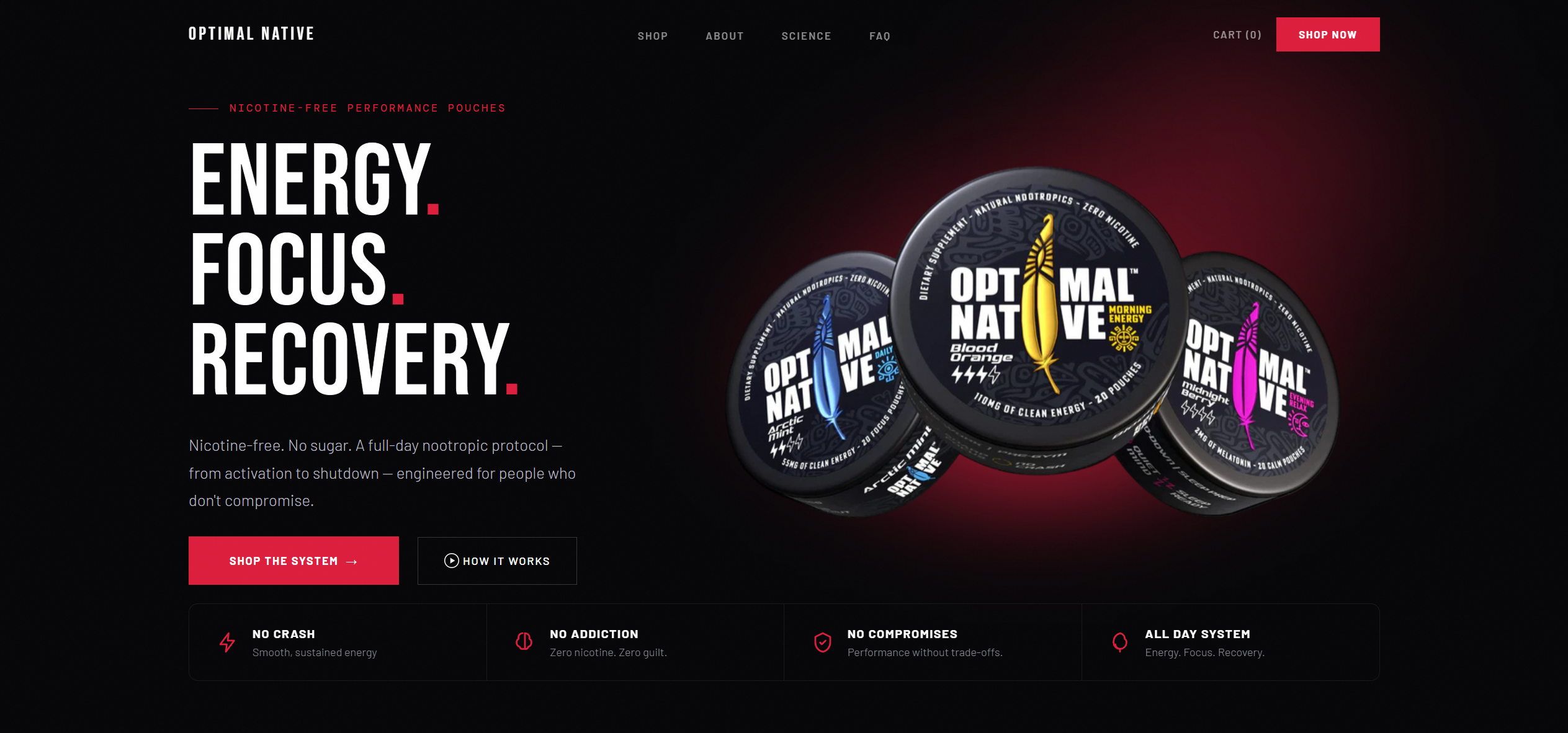
With 4.9 out of 5 stars from over 300 verified reviews, users consistently report improved focus and energy with no jitters or crashes. Whether you are a professional managing a full calendar or a student pushing through a study block, Optimal Native gives you a caffeine-free energy option built around real ingredients and real results. Explore the Subscribe and Save program to lock in consistent access at a lower cost and keep your energy protocol running without interruption.
FAQ
What are the main benefits of smooth energy without caffeine?
Smooth caffeine-free energy provides stable alertness without jitters, crashes, or dependency. Natural sources like adaptogens, fiber-rich foods, and circadian habits deliver sustained focus that holds up across a full workday or study session.
Is paraxanthine safe as a caffeine alternative?
Paraxanthine shows promising results in small trials for clean, jitter-free alertness, but large-scale long-term safety data does not yet exist. Use it conservatively, follow manufacturer dosing, and avoid combining it with other stimulants.
How quickly can lifestyle changes improve energy without caffeine?
Morning sunlight and fiber-first meals produce noticeable improvements within one to two weeks. Adaptogen benefits typically build over three to four weeks of consistent use, with the most significant changes appearing after six weeks.
Who should avoid caffeine and switch to natural energy boosters?
People with caffeine sensitivity, cardiovascular concerns, anxiety disorders, or sleep disruption benefit most from switching to non-caffeine energy solutions. Older adults should also consider the interaction between caffeine and common medications for blood pressure and depression.
Can nutrient deficiencies cause low energy even with a healthy diet?
Yes. B12 and vitamin D deficiencies affect alertness even in people eating varied diets, and they are frequently missed without a blood panel. Johns Hopkins Medicine recommends regular medical reviews to identify and correct deficiencies that drain energy.