

Clean Stimulant Alternatives for Focus That Actually Work
TL;DR:
- Natural, non-addictive focus enhancers like black cardamom extract, L-Theanine, and Rhodiola Rosea support sustained mental clarity without caffeine crashes. Building structured routines, practicing mindfulness, and ensuring adequate sleep enhance their effectiveness over time. Using transparent, research-backed supplements alongside healthy habits optimizes focus and cognitive performance sustainably.
Clean stimulant alternatives for focus are natural, non-addictive compounds and practices that sharpen concentration and sustain mental energy without the crash cycle of caffeine or prescription stimulants. The category includes nootropics like L-Theanine and black cardamom extract, adaptogens like Rhodiola Rosea, and lifestyle systems that work with your brain’s biology rather than against it. A 2026 randomized clinical trial found that 250 mg of black cardamom extract (CardaMind) improved accuracy, speed, and reaction time for up to 8 hours when combined with caffeine. This guide covers the most effective compounds, how to build a daily routine around them, and the mistakes that derail most people making the switch.
What are the most effective clean stimulant alternatives for focus?
The science of non-stimulant cognitive support has matured considerably. Rather than flooding your system with adenosine blockers, these compounds work through neurotransmitter modulation, stress pathway regulation, and neuroprotection.

Black cardamom extract (CardaMind) is the most clinically validated new entry in this space. The 2026 double-blind trial confirmed that 250 mg daily improves focus accuracy and reaction time for up to 3 hours alone. That window extends to 8 hours when paired with low-dose caffeine, making it a strong candidate for anyone who wants to reduce caffeine intake without sacrificing performance.
L-Theanine is the most studied natural focus enhancer available without a prescription. It reduces mental fatigue and promotes calm attention by increasing alpha brainwave activity, the same state associated with relaxed alertness during meditation. At 100 to 200 mg, it does not sedate. It simply removes the mental noise that interrupts sustained work. You can read a detailed breakdown of L-Theanine’s calming mechanism to understand why the 2:1 L-Theanine to caffeine ratio has become a standard in clean energy formulations.
Rhodiola Rosea is an adaptogen that targets the stress axis directly. When cortisol spikes during high-pressure work or study sessions, Rhodiola blunts the cognitive drag that follows. It does not stimulate. It protects your existing mental capacity from being eroded by stress hormones.
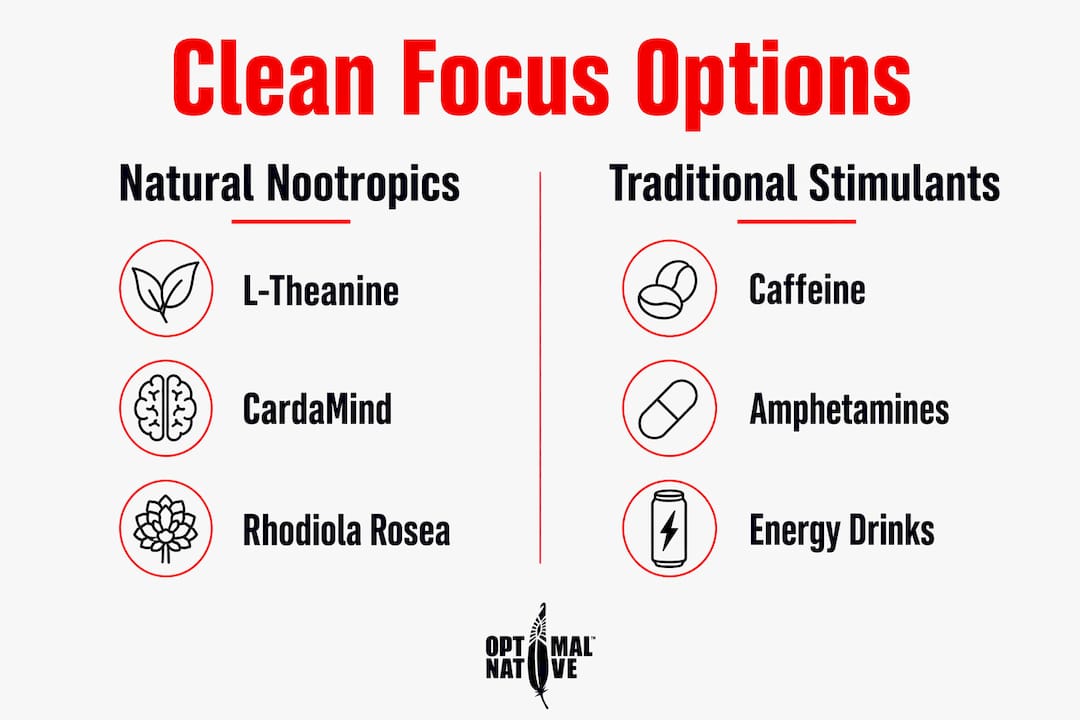
Bacopa Monnieri works differently. Its benefits are cumulative rather than immediate, building over 8 to 12 weeks of consistent use. Bacopa supports memory consolidation and processing speed, making it a better fit for students and knowledge workers than for anyone seeking an acute focus boost.
Omega-3 fatty acids, specifically DHA, are the structural foundation of neuronal membranes. Low DHA intake is directly correlated with slower processing speed and reduced working memory. This is not a supplement trend. It is basic brain maintenance.
- CardaMind (black cardamom extract): 250 mg daily, effects within 60 minutes, up to 8 hours with low-dose caffeine
- L-Theanine: 100 to 200 mg, best paired with 50 to 100 mg caffeine for synergistic calm focus
- Rhodiola Rosea: 200 to 400 mg standardized extract, most effective during high-stress periods
- Bacopa Monnieri: 300 mg daily, requires 8 to 12 weeks for measurable cognitive gains
- DHA (Omega-3): 1,000 mg daily as a baseline for neurological maintenance
Pro Tip: Stack L-Theanine with a half-dose of your usual caffeine rather than eliminating caffeine entirely. You get the alertness without the jitter or the crash, and you reduce dependency over time without a productivity gap.
How to build a daily routine to stay focused without caffeine
Compounds alone do not create sustained focus. The structure of your day determines whether those compounds have anything to work with. Non-stimulant alternatives deliver steadier mental clarity precisely because they support your brain’s natural rhythms rather than overriding them.
The most effective framework for cognitive performance without stimulants follows these steps:
-
Start with a 10-minute mindfulness session. Mindfulness meditation for 5 to 10 minutes daily strengthens attention networks and reduces mind-wandering, with effects that compound over weeks. This is not optional if you are serious about focus without stimulants.
-
Work in 90-minute focus blocks. Structured deep work-rest cycles improve concentration and reduce stress compared to fragmented, always-on work patterns. Set a timer for 90 minutes, close every tab you do not need, and treat the block as non-negotiable.
-
Take a 15 to 20-minute active break. Short bursts of moderate exercise improve attention and working memory for up to an hour post-activity. A brisk 10-minute walk beats a second cup of coffee for the afternoon slump, and it does not disrupt your sleep.
-
Design your environment deliberately. Adding a plant to your workspace, silencing non-urgent notifications, and using a single-purpose browser profile are low-effort changes with measurable impact on sustained attention. Environmental design is a powerful focus method that most people overlook because it feels too simple.
-
Hydrate before you supplement. Even mild dehydration reduces cognitive performance. Drink 500 ml of water before your first focus block and keep a bottle visible during work sessions. Thirst is a lagging indicator. By the time you feel it, your processing speed has already dropped.
-
Protect your sleep window. Sleep is the single highest-leverage intervention for cognitive performance. Seven to nine hours of consistent sleep does more for your focus than any supplement stack. A caffeine-free study block guide covers how to time your focus sessions around natural alertness peaks.
Pro Tip: If you hit an afternoon focus slump, try 4 to 7 minutes of box breathing (4 counts in, 4 hold, 4 out, 4 hold) before reaching for any stimulant. This resets your autonomic nervous system and restores attention faster than caffeine, with zero cost to your evening sleep.
Natural nootropics vs. traditional stimulants: which actually performs better?
This is the question most people avoid answering directly. The honest answer is: it depends on what you are optimizing for.
Traditional stimulants like caffeine and prescription amphetamines produce fast, powerful attention spikes. They are effective for acute, short-duration tasks. The problem is the trade-off profile. Caffeine blocks adenosine receptors, which delays fatigue but does not eliminate it. When the caffeine clears, adenosine floods back in. That is the crash. Prescription stimulants carry cardiovascular risk, mood disruption, and dependency potential that make them inappropriate for daily cognitive use in healthy individuals.
Multi-ingredient nootropics containing compounds like L-Theanine and tyrosine at defined doses deliver selective attention and inhibitory control improvements comparable to caffeine, without blood pressure spikes or negative mood effects. This matters because inhibitory control, the ability to block out distractions, is often more valuable than raw alertness for knowledge work.
| Attribute | Traditional stimulants | Natural nootropics |
|---|---|---|
| Onset speed | 15 to 45 minutes | 30 to 90 minutes (varies by compound) |
| Duration | 4 to 6 hours (caffeine) | 3 to 8 hours depending on compound |
| Crash risk | High (caffeine, amphetamines) | Low to none |
| Cardiovascular impact | Elevated heart rate and blood pressure | Minimal to none |
| Dependency potential | Moderate to high | Low |
| Long-term cognitive benefit | Neutral to negative | Positive (Bacopa, Omega-3, Rhodiola) |
The table above makes the trade-off clear. Natural nootropics are not weaker. They are differently optimized. They favor sustained, clean output over short spikes. For entrepreneurs, athletes, and students who need to perform across full days rather than 90-minute sprints, that profile wins.
One critical caveat: dose transparency matters. Proprietary blends that list ingredients without amounts are a red flag. Efficacy for compounds like L-Theanine and caffeine depends on specific ratios. A product that lists both without disclosing doses cannot be evaluated or trusted.
Common mistakes when switching from caffeine to clean alternatives
Most people who fail to maintain focus after dropping caffeine make the same set of errors. Understanding them in advance is the fastest way to avoid a frustrating two-week regression.
-
Going cold turkey on caffeine. Abrupt withdrawal causes headaches, brain fog, and irritability for 3 to 7 days. Gradual withdrawal supplemented with non-stimulant compounds avoids this entirely. Reduce your caffeine dose by 25% per week while introducing L-Theanine or Rhodiola.
-
Expecting supplements to compensate for poor sleep. Context-switching and erratic sleep undermine focus more than any lack of stimulants. No nootropic stack overcomes a chronic sleep deficit. Fix the foundation first.
-
Buying proprietary blends without dose disclosure. This is the most expensive mistake in the supplement space. A product with undisclosed ingredient amounts cannot be dosed correctly, and you cannot assess whether it contains enough of any compound to produce an effect.
-
Expecting immediate results from long-acting compounds. Bacopa Monnieri requires 8 to 12 weeks. Omega-3 DHA requires consistent daily intake over months. Judging these compounds after two weeks is like canceling a gym membership after three sessions.
-
Ignoring lifestyle as the primary variable. Nootropics work best as part of a healthy lifestyle that includes quality sleep, hydration, and structured breaks. Supplements are multipliers, not replacements. If your base habits are poor, you are multiplying a small number.
“The quality of concentration matters more than the quantity of hours. Focus training alongside supplementation is what creates durable cognitive performance.”
If you have tried multiple approaches and still struggle with sustained attention, consider a professional evaluation. Attention difficulties that persist despite good sleep, structured routines, and appropriate supplementation may reflect an underlying condition that benefits from clinical support.
Key takeaways
Clean, sustained focus without stimulants requires combining evidence-backed compounds with structured daily habits and dose-transparent supplements.
| Point | Details |
|---|---|
| CardaMind leads 2026 research | 250 mg black cardamom extract improves focus for up to 8 hours when paired with low-dose caffeine. |
| L-Theanine is the anchor compound | Use 100 to 200 mg daily to reduce mental fatigue and promote calm, distraction-free attention. |
| 90-minute work blocks outperform marathon sessions | Structured focus-rest cycles reduce cognitive overload and sustain output across full workdays. |
| Dose transparency is non-negotiable | Proprietary blends without disclosed amounts cannot be evaluated for efficacy or safety. |
| Lifestyle is the multiplier | Sleep, hydration, and movement determine how much any supplement can actually do for your focus. |
What we have learned from building a clean focus protocol
The conventional wisdom in the nootropics space treats supplementation as the primary variable. In our experience at Optimal Native, that framing gets it backwards. The compounds matter, but they are operating on a system that you either prepared or neglected.
When we first worked with CardaMind and L-Theanine stacks, the results were real but inconsistent. The users who saw the most dramatic improvements were not the ones taking the highest doses. They were the ones who had already cleaned up their sleep and built structured work routines. The supplements amplified what was already there.
What surprised us most was how quickly mental clarity improved once people stopped chasing energy spikes. The shift from “I need to feel wired” to “I need to feel clear” is not just semantic. It changes which compounds you reach for, how you structure your day, and what you measure as success. Calm, sustained attention feels different from caffeine-driven alertness. It is quieter. Less dramatic. And far more productive over a full day.
The other observation worth sharing: habit formation matters as much as the compounds themselves. A well-timed L-Theanine dose taken consistently at the start of a focus block becomes a behavioral cue over time. The supplement and the routine reinforce each other. That is where the real gains come from, not from finding a stronger pill.
— Optimal Native
How Optimal Native supports your focus without the crash
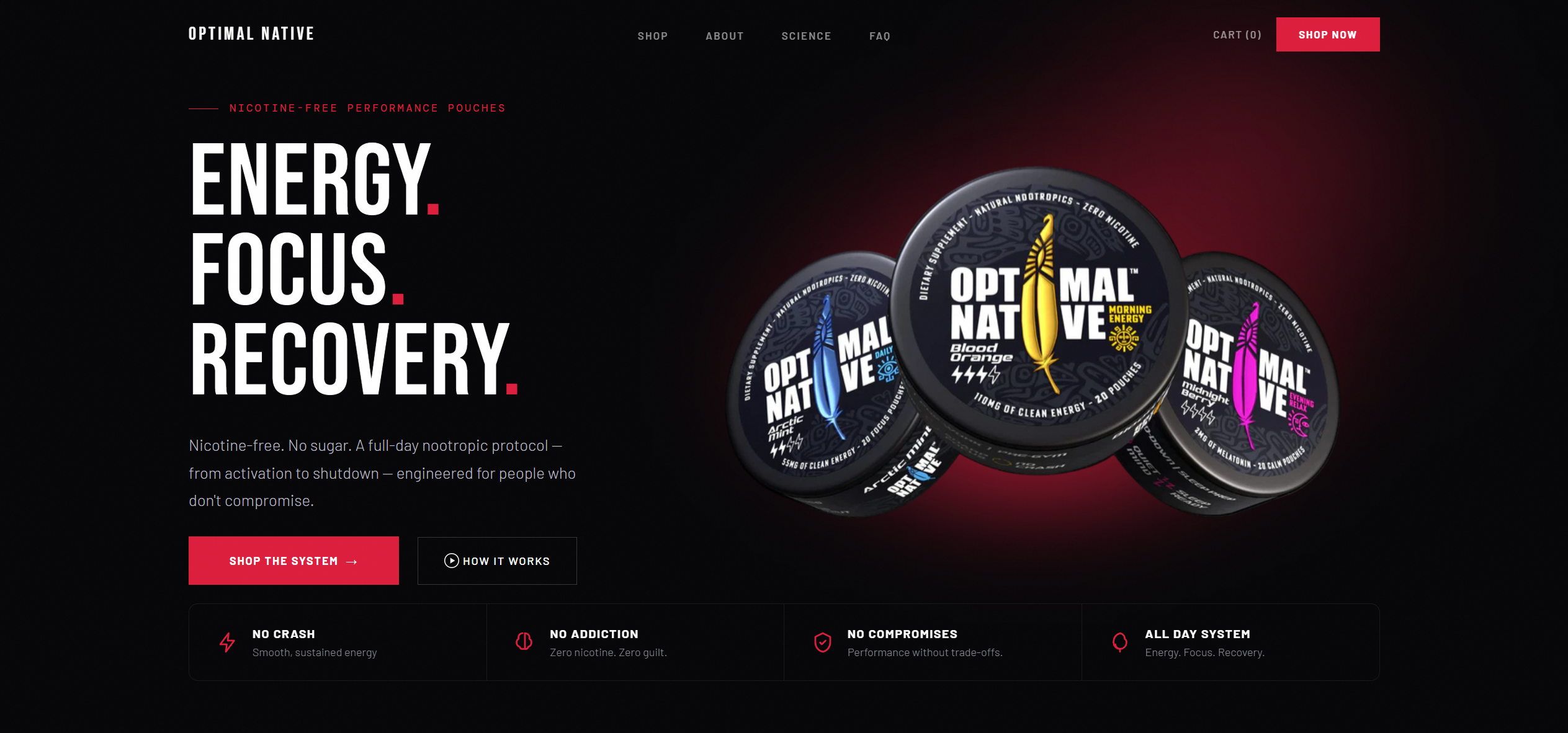
Optimal Native Daily Flow is built around exactly the compounds this article covers: a clean, caffeine-free formulation with disclosed doses of nootropics and adaptogens designed to support sustained attention across your full day. No proprietary blends. No hidden fillers. Every ingredient is listed with its amount so you can evaluate it against the research yourself. Customers consistently report improved focus and energy with no jitters or crashes, reflected in a 4.9 out of 5 star rating across more than 300 reviews. Explore the Daily Flow product for a clean entry point, or check the bundle options to build a full protocol. If you are committing to a consistent routine, the subscribe and save program makes daily use straightforward and cost-effective.
FAQ
What are the best natural focus enhancers without caffeine?
L-Theanine, black cardamom extract (CardaMind), and Rhodiola Rosea are the most research-supported options. A 2026 clinical trial confirmed CardaMind improves focus accuracy and reaction time for up to 8 hours when combined with low-dose caffeine.
How long does it take for nootropics to work?
Onset varies by compound. L-Theanine and CardaMind produce effects within 30 to 90 minutes. Bacopa Monnieri requires 8 to 12 weeks of consistent daily use before measurable cognitive improvements appear.
Can you stay focused without any caffeine at all?
Yes. Structured 90-minute work blocks, mindfulness practice, movement breaks, and compounds like L-Theanine and Rhodiola Rosea collectively support strong focus without any caffeine. The transition is easier with a gradual reduction rather than abrupt elimination.
What is the difference between adaptogens and nootropics?
Nootropics directly enhance cognitive functions like memory, attention, and processing speed. Adaptogens like Rhodiola Rosea and Ashwagandha protect cognitive performance by reducing the stress response that degrades it. Many effective focus protocols use both categories together.
Are clean energy supplements safe for daily use?
Compounds like L-Theanine, Rhodiola Rosea, and Bacopa Monnieri have strong safety profiles at standard doses and are appropriate for daily use in healthy adults. Always choose products with full ingredient disclosure and consult a healthcare provider if you have existing cardiovascular or neurological conditions.