

Caffeine-Free Focus Study Block: Your 2026 Guide
TL;DR:
- A structured 90-minute caffeine-free focus block aligns with the brain’s ultradian rhythms to optimize deep work and recovery. Managing interruptions and environment control are essential, as distractions significantly diminish cognitive performance. Incorporating specific supplements like L-Theanine and Lion’s Mane supports sustained focus without the crashes associated with caffeine dependence.
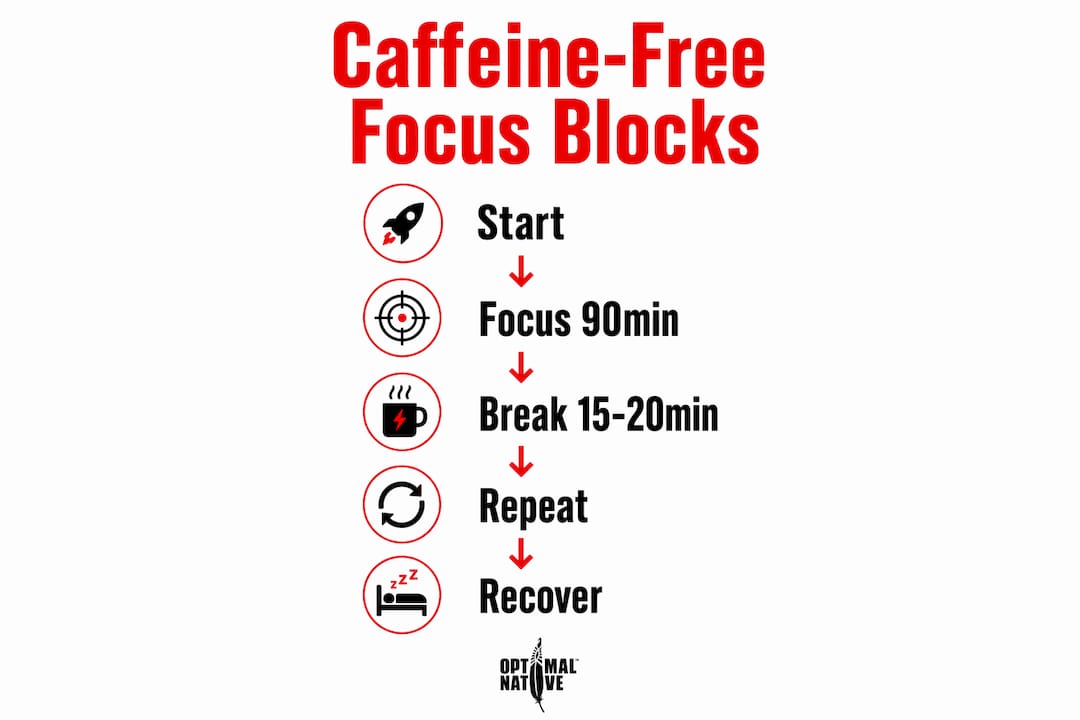
A caffeine-free focus study block is a structured 90-minute deep work session aligned with your brain’s natural ultradian rhythms, followed by a 15 to 20 minute screen-free recovery break, designed to maximize cognitive output without stimulants. This approach treats your brain’s biological cycles as the primary performance tool, not a cup of coffee. Research from UC Irvine confirms that interruptions cost far more than most people realize, making distraction control as critical as the work itself. Tools like FocusBlock, supplements like L-Theanine, and timing strategies rooted in neuroscience make this method practical for anyone ready to study without caffeine and still perform at a high level.
How do brain ultradian rhythms support caffeine-free focus blocks?
Your brain does not sustain peak attention indefinitely. It operates on ~90-minute ultradian cycles, alternating between high-alertness peaks and natural recovery troughs lasting 15 to 20 minutes. Working with these cycles, rather than against them, is the core principle behind every effective caffeine-free focus study block.

Caffeine’s role in this system is often misunderstood. It does not create energy. Caffeine blocks adenosine receptors, masking the fatigue signals your brain sends when it needs rest. The underlying fatigue still accumulates. When the caffeine clears, you feel the full weight of the fatigue you were suppressing, which is the crash most people dread.
Caffeine-free cycles respect the brain’s actual recovery needs. When you honor the trough by stepping away from cognitively demanding work, your brain resets neurochemically and returns to the next peak in better condition. Pushing through the trough without rest causes diminished returns, increased errors, and compounding mental fatigue. That is not a productivity strategy. It is a performance debt.
Here is what the ultradian cycle looks like in practice:
- Peak phase (0 to 90 minutes): High alertness, strong working memory, ideal for reading, writing, problem-solving, and memorization
- Trough phase (90 to 110 minutes): Reduced alertness, slower processing, increased error rate if you push through
- Recovery phase (15 to 20 minutes): Screen-free rest that resets the system for the next peak
Pro Tip: Set a recurring 90-minute timer at the start of each study session. When it goes off, stop immediately regardless of where you are in the task. Stopping at the trough, not when you feel like it, is what makes the system work.
What practical tools and techniques help maintain focus without caffeine?
The biggest threat to a caffeine-free study block is not low energy. It is interruption. The average worker is interrupted every three minutes, and recovering to the same depth of focus takes approximately 23 minutes and 15 seconds. A single notification can effectively end your productive block before you realize it happened.
Controlling your environment is the first line of defense. These are the tools and behavioral tactics that actually move the needle:
- Use FocusBlock or a similar site blocker. The FocusBlock browser extension automatically blocks distracting websites during your work timer and unblocks them during breaks. It removes the decision to resist temptation entirely.
- Write down every open task before you start. The Zeigarnik effect describes how unfinished tasks occupy mental bandwidth even when you are not actively working on them. Writing down open loops before beginning a block clears that cognitive load and lets you enter the session with a clean mental slate.
- Put your phone in another room. Not face-down on the desk. Another room. The mere presence of a smartphone on a desk reduces available cognitive capacity, even when it is silent.
- Close all browser tabs unrelated to the current task. Each open tab represents a potential context switch. Limiting your screen to one task eliminates the temptation to multitask.
- Set a specific intention for the block. Vague goals like “study chemistry” produce vague results. Specific goals like “complete practice problems 1 through 20 in chapter 7” give your brain a clear target and reduce decision fatigue during the session.
Pro Tip: Schedule your caffeine-free focus blocks to begin at the start of a natural alertness peak. For most people, these fall around 9 to 11 a.m. and 2 to 4 p.m. Aligning your blocks with these windows means you are working with your biology, not fighting it.
Here is how the major focus approaches compare:
| Approach | Work interval | Break length | Distraction control | Rhythm alignment |
|---|---|---|---|---|
| Ultradian block (caffeine-free) | ~90 minutes | 15 to 20 minutes | High (site blockers, phone away) | Yes, follows brain cycles |
| Pomodoro technique | 25 minutes | 5 minutes | Moderate | Partial |
| Unstructured study | Variable | Variable | Low | No |
The ultradian block outperforms Pomodoro for deep cognitive tasks because 25 minutes is rarely enough time to reach genuine flow state. Pomodoro works well for repetitive tasks. For reading, writing, and complex problem-solving, the 90-minute window is where real learning happens.
How to structure your caffeine-free study block and recovery breaks
Structure is what separates a productive caffeine-free study block from an unfocused hour of sitting at a desk. The timing is specific for a reason. Back-to-back study blocks without proper recovery reduce overall cognitive performance and lead to cumulative fatigue that compounds across the day.
The block structure works like this:
- Minutes 0 to 5: Write down your specific goal for the block, close irrelevant tabs, silence your phone, and start the timer
- Minutes 5 to 90: Deep work only. No checking messages, no switching tasks, no “quick” searches unrelated to the work
- Minutes 90 to 110: Full recovery break. Screen-free, low-decision, physically active if possible
What you do during the break determines how well the next block performs. Effective recovery activities include walking, light stretching, drinking water, looking out a window, or lying down with eyes closed. Ineffective activities that feel like rest but are not include scrolling social media, watching short videos, texting, or reading news. These activities keep your prefrontal cortex engaged and prevent the neurochemical reset your brain needs.
The distinction matters because many students treat any non-studying activity as a break. Cognitive rest means low stimulation and low decision-making. Social media is neither of those things. It is a high-stimulation, high-decision environment that competes directly with the recovery your brain is trying to complete.
Pro Tip: If you cannot take a full 20-minute break between blocks, a minimum of 10 minutes of screen-free rest still provides partial recovery. A partial reset is always better than no reset.
What caffeine-free alternatives and supplements can support focus during study blocks?
Removing caffeine does not mean removing all support. Several well-researched compounds and beverages can enhance alertness and cognitive performance without the adenosine-blocking mechanism that causes crashes.
The most practical caffeine-free study focus alternatives include:
- L-Theanine: An amino acid found in green tea that promotes calm, alert focus without sedation. It works by increasing alpha brain wave activity, which is associated with relaxed attention. For a detailed breakdown, see how L-Theanine supports focus without the stimulant effect.
- Lion’s Mane mushroom: A functional mushroom that supports nerve growth factor production and has shown promise for memory and concentration in multiple studies. It is best taken consistently over weeks rather than as an acute dose.
- Ashwagandha: An adaptogen that reduces cortisol and stress-related cognitive interference. High cortisol actively impairs working memory, so managing it during high-pressure study periods has a direct performance benefit.
- Decaffeinated coffee: Research published in Nature Communications found that decaf coffee improves mood and some cognition markers, comparable to caffeinated coffee in certain measures. The ritual of coffee preparation may itself trigger focus-related behavioral cues.
Timing these supplements to coincide with your natural alertness peaks potentiates their benefits without creating the crash or withdrawal cycle associated with caffeine. Taking L-Theanine 20 to 30 minutes before a block begins, for example, allows it to reach peak effect during your most demanding work period. For a broader look at clean energy sources that support this approach, the options go well beyond supplements alone.
Pro Tip: Avoid using supplements as a substitute for proper sleep or break structure. They work best as amplifiers of an already sound system, not as replacements for rest.
Key takeaways
A caffeine-free focus study block works because it aligns 90-minute deep work sessions with your brain’s ultradian rhythm, uses distraction control to protect cognitive depth, and treats recovery breaks as a required part of performance rather than optional downtime.
| Point | Details |
|---|---|
| Ultradian rhythm timing | Structure work in ~90-minute blocks followed by 15 to 20 minutes of screen-free recovery. |
| Interruption cost | A single distraction costs ~23 minutes of recovery time, making environment control non-negotiable. |
| Break quality matters | Social media and video are not recovery. Walk, stretch, or rest with eyes closed instead. |
| Caffeine-free supplements | L-Theanine, Lion’s Mane, Ashwagandha, and decaf coffee support focus without stimulant crashes. |
| Task offloading before blocks | Writing down open tasks before starting clears cognitive load and accelerates focus entry. |
What I’ve learned from ditching caffeine during deep work
At Optimal Native, we spent years watching high performers chase focus with more caffeine, only to hit harder crashes and diminishing returns. The shift to ultradian-aligned, caffeine-free blocks was not intuitive at first. The instinct when energy dips is to reach for another cup. What we found instead is that the dip is the signal, not the problem.
The most common mistake people make when starting caffeine-free study blocks is skipping breaks because they feel like they are “in the zone.” That feeling is real, but it is temporary. Pushing through the trough without rest does not extend the peak. It shortens the next one. The break is not a reward for finishing. It is the mechanism that makes the next block possible.
Managing attention residue changed everything for us. Starting a block with three unresolved tasks sitting in the back of your mind is like trying to run a program while other applications are consuming memory in the background. Writing those tasks down before you start is not a productivity trick. It is a neurological necessity. The brain cannot fully commit to the present task while it is tracking open loops.
The gradual habit formation piece is also underrated. Most people try to run four 90-minute blocks on day one and burn out by day three. Start with one protected block per day. Build the habit before you build the volume. Consistency over two weeks beats intensity over two days every time.
— Optimal Native
How Optimal Native supports your caffeine-free study sessions
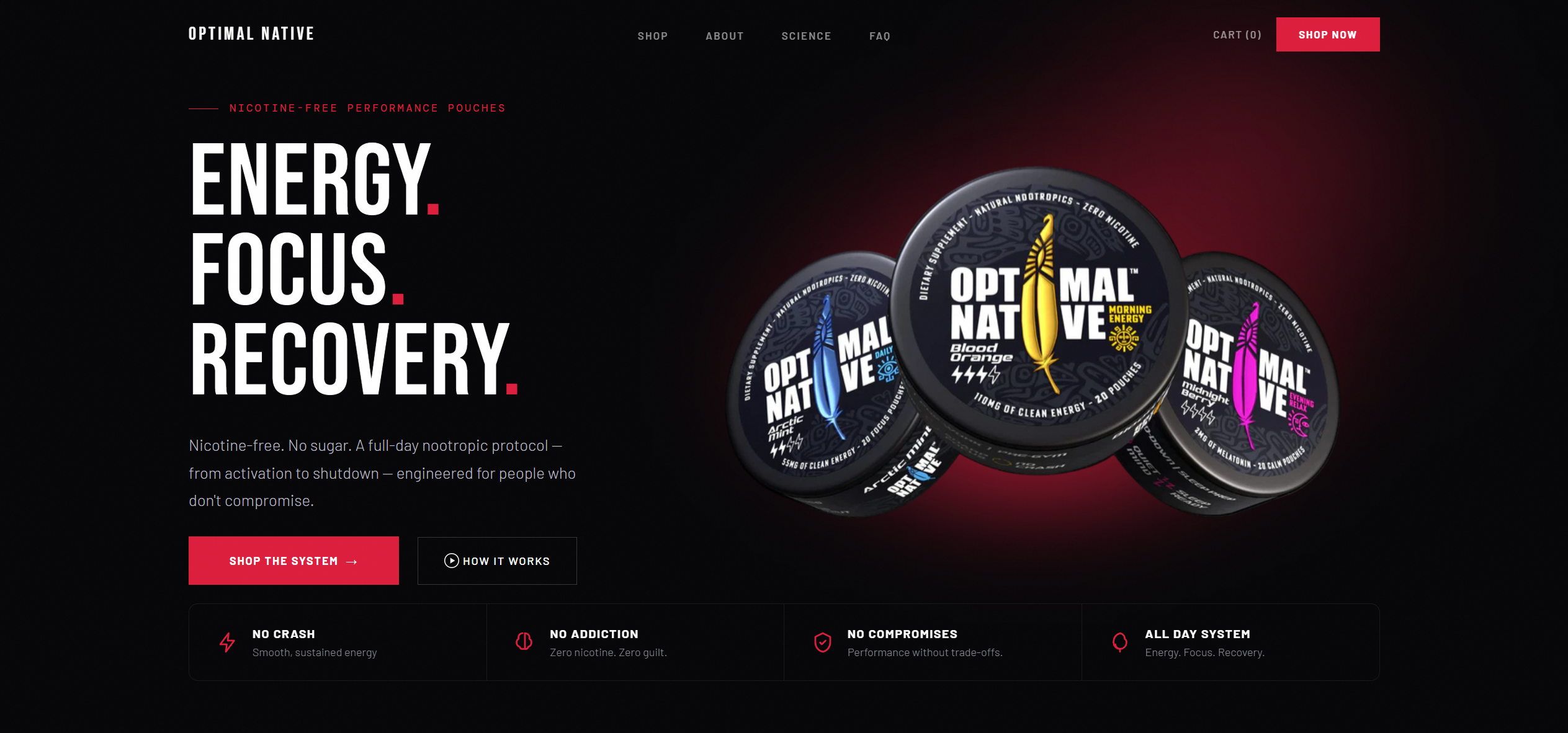
Optimal Native’s nicotine-free performance pouches are built specifically for the kind of sustained, stimulant-free focus this article describes. The formulation combines nootropics and adaptogens, including L-Theanine and Ashwagandha, timed to support your natural energy peaks without creating the crash cycle that caffeine dependence produces. Over 300 users rate Optimal Native at 4.9 out of 5 stars, reporting improved focus and zero jitters. The Optimal Native Morning Energy pouch fits directly into the pre-block preparation routine described above. For the best value, the subscribe and save option makes daily use simple and cost-effective.
FAQ
What is a caffeine-free focus study block?
A caffeine-free focus study block is a structured ~90-minute deep work session aligned with the brain’s ultradian rhythm, followed by a 15 to 20 minute screen-free recovery break. It is designed to maximize cognitive performance without relying on stimulants like caffeine.
How long should a caffeine-free study block last?
The optimal block length is approximately 90 minutes, matching the brain’s natural ultradian cycle peak. Shorter blocks often do not allow enough time to reach deep focus, while longer blocks push into the trough phase where error rates increase.
What should I do during the recovery break?
Walk, stretch, hydrate, or rest with eyes closed. Avoid screens, social media, and any high-decision activity, since these prevent the neurochemical reset your brain needs before the next block.
Can supplements replace caffeine for focus during study sessions?
Supplements like L-Theanine, Lion’s Mane, and Ashwagandha can support alertness and reduce cognitive interference without the crash cycle. Research in Nature Communications also shows decaf coffee improves mood and some cognition markers without caffeine’s side effects.
Why does interruption management matter so much for caffeine-free focus?
Research shows it takes approximately 23 minutes and 15 seconds to return to the same depth of focus after an interruption. In a 90-minute block, even two interruptions can eliminate most of your productive deep work time entirely.