

What Is a Caffeine Crash and How to Avoid It
A caffeine crash is the rebound fatigue, brain fog, and irritability that appears as caffeine wears off and accumulated adenosine reasserts itself, typically hours after a large dose. It isn't “running out of energy.” It's a temporary return of sleep pressure that caffeine had been masking.
The pattern often appears during an ordinary workday. Someone drinks coffee in the morning, clears messages, handles meetings, and feels unusually capable. Later, concentration slips, the body feels heavy, and even familiar tasks seem harder. Another coffee may seem like the obvious answer, but that can reinforce the same rise-and-fall cycle.
Table of Contents
- Introduction to What a Caffeine Crash Feels Like
- How Caffeine Works in Your Brain and Why Rebound Happens
- Common Caffeine Crash Symptoms and How Long They Last
- Why Some People Crash Harder Than Others
- How to Prevent and Manage a Caffeine Crash
- Building Steadier Energy Without the Crash Cycle
Introduction to What a Caffeine Crash Feels Like
A caffeine crash can feel surprisingly abrupt. One moment, a person is moving quickly through a task, and the next, the screen becomes harder to follow. Words need rereading, motivation drops, and small interruptions feel irritating. The experience can resemble ordinary tiredness, but the timing after caffeine and the combination of symptoms often make it feel more distinctive.
The brain isn't suddenly empty of energy. Caffeine has been temporarily changing how the brain receives one of its sleep-pressure signals. When that effect weakens, tiredness can return with extra force because the underlying signal has continued developing in the background.
That distinction helps explain why two people can drink similar beverages and experience different outcomes. A person who slept well and used a modest amount may notice only a gradual decline. Someone who is sleep-deprived, relies on caffeine habitually, or takes a large dose at once may feel a sharper contrast between alertness and fatigue.
The useful question: Did fatigue arrive as caffeine's effects faded, or has the person been tired continuously because of poor sleep, hunger, dehydration, stress, or illness?
The rest of the pattern becomes easier to understand through a simple brain-chemistry model. Adenosine creates sleep pressure, caffeine blocks its receptors for a while, and the eventual downslope allows that pressure to become noticeable again. From there, dose size, timing, tolerance, food, hydration, and sleep determine how dramatic the rebound feels.
In practical terms, what is a caffeine crash? It's a rebound state after caffeine's temporary blockade of adenosine receptors. Smaller doses, better timing, and adequate sleep can reduce the contrast, helping energy feel steadier without chasing stimulation with repeated cups.
How Caffeine Works in Your Brain and Why Rebound Happens
By late morning, you may feel unusually alert after coffee, then notice your focus sliding as the hours pass. That change reflects a shift in brain signaling, not caffeine suddenly removing or creating energy.
Adenosine records time spent awake. As wakefulness continues, this chemical increases sleep pressure, making drowsiness and slower alertness more likely. Caffeine changes whether the brain can detect that message. The process works like a temporary lock-and-key interruption:
- Adenosine is a key that fits receptors linked with sleepiness.
- Caffeine occupies those receptors, blocking the signal for a while.
- Adenosine itself does not disappear. It continues building as caffeine remains active.
- As caffeine levels fall, the blocked locks become available again. Adenosine can bind more fully, and fatigue, fogginess, or irritability may become noticeable.
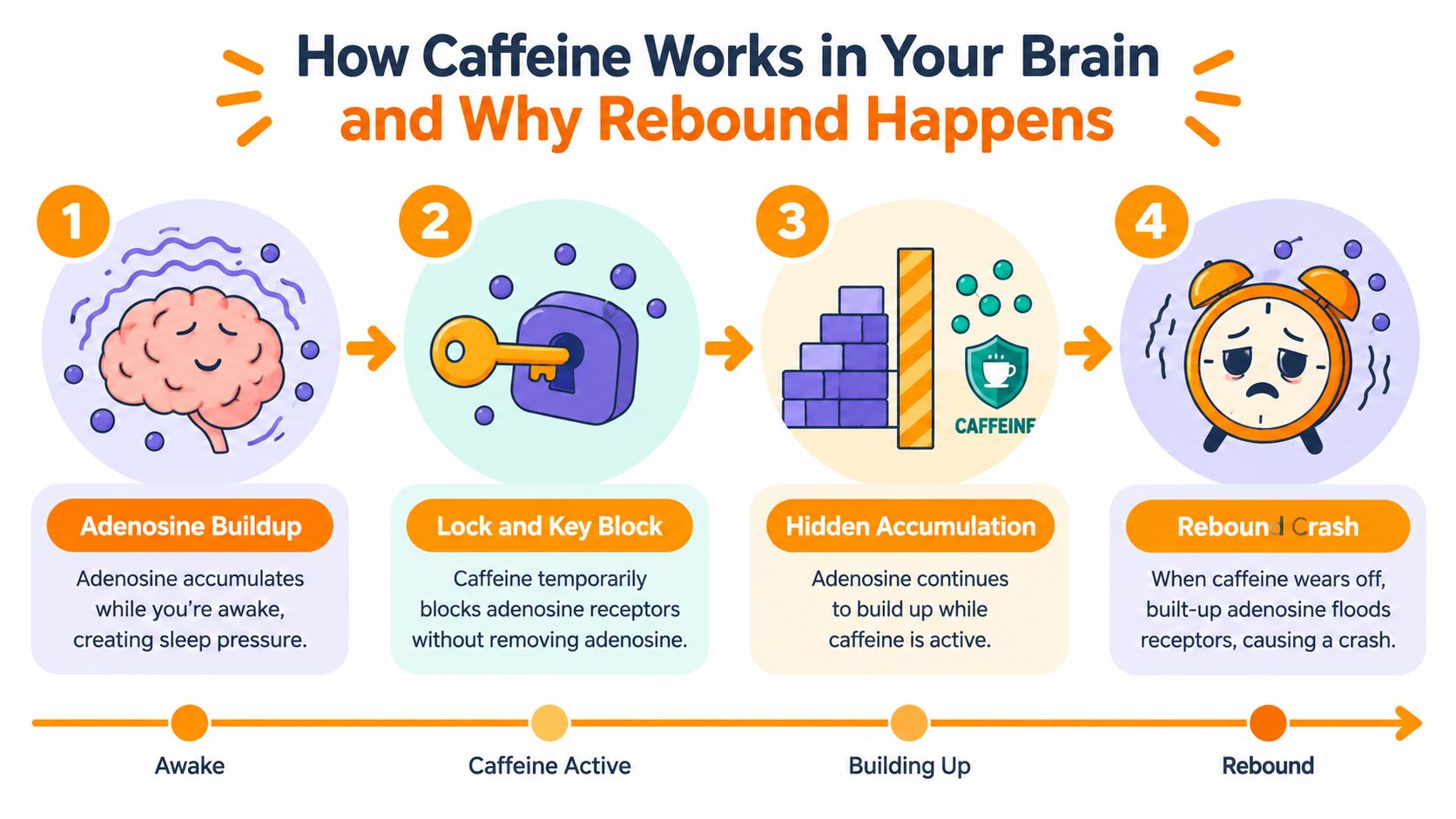
A crash is therefore better understood as an adenosine rebound than as caffeine “running out of energy.” Caffeine competitively antagonizes adenosine receptors, delaying drowsiness while endogenous adenosine continues accumulating, as described in the medical reference on caffeine's effects on adenosine signaling.
The downslope matters more than the peak
The strongest alerting sensation can occur while caffeine is blocking receptors. The dip often arrives later, during the downslope in caffeine concentration. At that point, the blockade weakens and the accumulated sleep-pressure signal becomes easier to feel.
Caffeine typically has a half-life of about 4 to 6 hours in healthy adults. A morning dose may therefore remain active later in the day even while its noticeable effect declines, according to clinical information on caffeine pharmacokinetics. The timing of the crash depends less on the highest point of stimulation than on the transition away from it.
Regular use may change the contrast. Chronic caffeine exposure has been associated with adenosine receptor upregulation, meaning the nervous system may adapt by making receptor availability more prominent. When caffeine clears, that adjustment can intensify withdrawal-like fatigue. A familiar dose may then feel less effective, while the post-caffeine dip remains noticeable.
Dose, timing, and existing sleep pressure shape the downslope. A large dose can create a sharper contrast, late use can preserve stimulation while sleep pressure keeps rising, and insufficient sleep gives adenosine more influence in the background.
For people using caffeine for headaches, the benefit and rebound pattern deserve separate consideration. A guide to caffeine for migraine relief offers more targeted context than treating every response as an energy problem.
Common Caffeine Crash Symptoms and How Long They Last
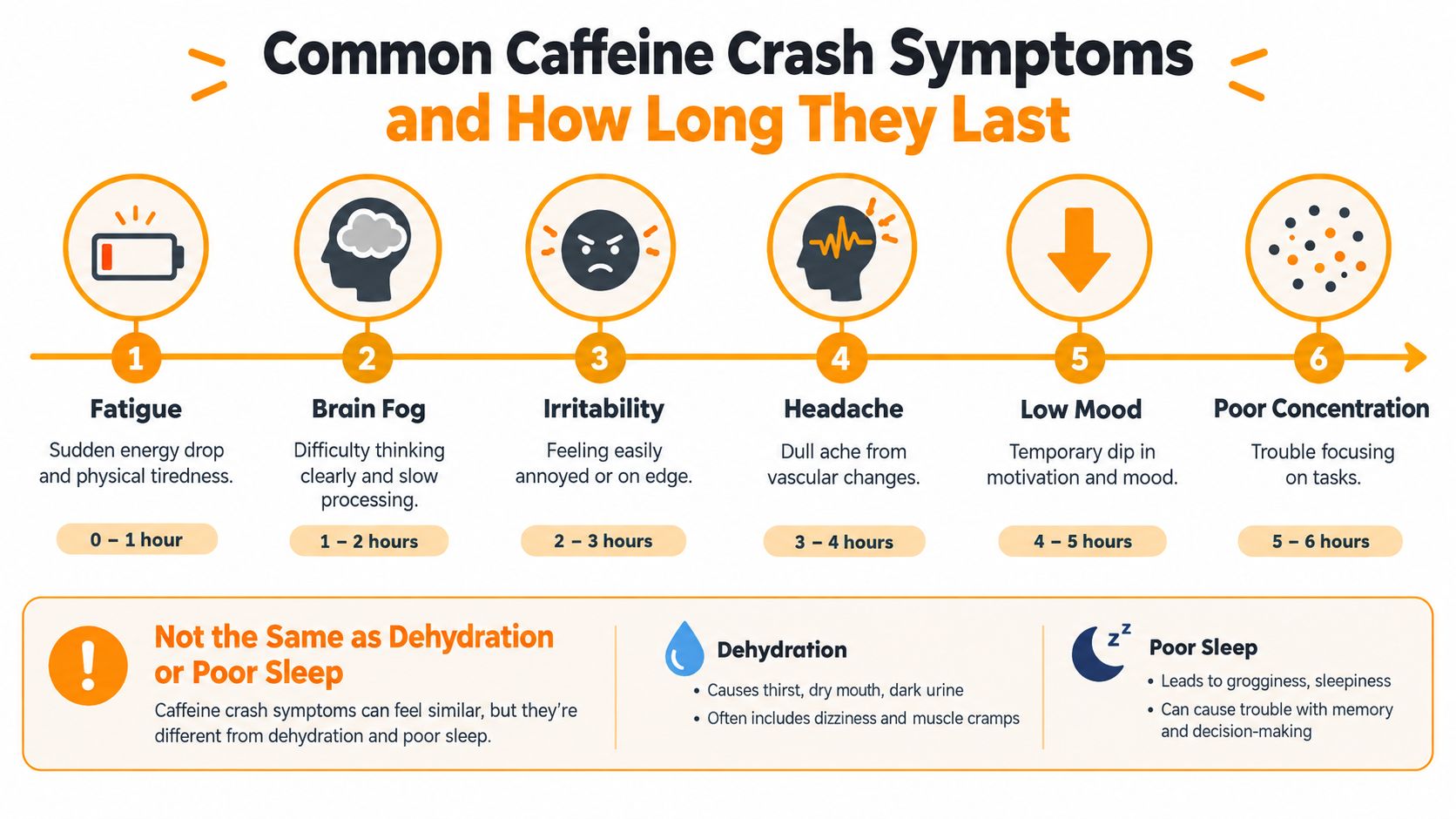
The symptoms usually involve both body and attention. A person may feel physically drowsy, mentally slow, and more emotionally reactive than usual. Common features include fatigue, low mood, headache, irritability, reduced concentration, and brain fog, although the exact mix differs between people.
A caffeine crash often feels like a sudden combination of sleepiness, slower thinking, reduced motivation, and a shorter temper after the stimulant effect begins to fade.
Crash or ordinary tiredness
Timing is the most useful clue, but it isn't perfect. A crash tends to follow the downslope of caffeine's effects, while ordinary tiredness may remain steady throughout the day. Dehydration, skipped food, emotional strain, and insufficient sleep can also create headaches or fog, so a person shouldn't assume caffeine is the only explanation.
A simple self-check can help:
- Timing: Symptoms appeared as the stimulating effect weakened.
- Cluster: Fatigue arrived with concentration problems, irritability, headache, or low mood.
- Pattern: The experience repeats after a similar dose or beverage.
- Context: Poor sleep, dose escalation, or a circadian dip made the contrast stronger.
The medical literature also distinguishes a short-term crash from broader caffeine withdrawal. A major review found that withdrawal typically begins 12 to 24 hours after abstinence, peaks at 20 to 51 hours, and lasts 2 to 9 days, according to the medical review of caffeine withdrawal. That longer pattern is more relevant when someone cuts down sharply or stops caffeine, rather than when a person feels tired as a single dose wears off.
Symptoms can therefore unfold on different timelines. The afternoon slump after coffee is a rebound pattern. A headache and fatigue that develop after skipping a usual daily beverage may reflect withdrawal. The two can overlap, especially in regular users, but the trigger helps separate them.
Why Some People Crash Harder Than Others
Crash intensity comes from contrast. A large dose taken quickly can push alertness up sharply, making the later downslope feel steeper than it would after a smaller amount spread across time. The starting point matters too. Someone who begins the morning with heavy sleep pressure may feel temporarily more awake, while the underlying fatigue continues underneath.
Timing can make that contrast larger. Because caffeine remains active for hours, a late dose may start weakening during the day while still interfering with nighttime sleep. That creates two connected problems: the day's adenosine rebound feels more noticeable, and poorer sleep raises the next day's sleep pressure.
Regular use changes the pattern. Repeated caffeine exposure can be associated with receptor upregulation, while tolerance may make the first lift feel less pronounced. A person may then increase the dose to recreate an earlier effect, widening the gap between the caffeinated state and the fatigue waiting underneath.
The drink itself can add another layer. A sweet coffee or energy beverage may combine stimulation with changing appetite and energy perception. Caffeine, sweet ingredients, an empty stomach, and inadequate sleep can arrive together, so the resulting dip feels like one event even when several factors are contributing.
| Factor | Higher Crash Risk | Lower Crash Risk |
|---|---|---|
| Dose pattern | One large bolus consumed quickly | Smaller amounts used more deliberately |
| Sleep pressure | Starting the day sleep-deprived | Entering the day with adequate rest |
| Timing | Caffeine used late or repeatedly to override fatigue | Earlier use that doesn't interfere with nighttime rest |
| Habit | Escalating intake to recover the same alertness | A stable, moderate routine |
| Food context | Sugary drink or caffeine on an empty stomach | Caffeine paired with a balanced meal |
| Monitoring | Reacting only after severe fatigue appears | Tracking sleep, intake, mood, and performance |
Tracking helps separate a dose problem from a recovery problem. People with demanding physical schedules can apply the same approach used in an athlete fatigue monitoring system, watching whether poor sleep, workload, caffeine timing, or limited recovery repeatedly comes before the dip. The goal is to identify the pattern early, not to treat fatigue as a personal failure.
If tolerance appears to be part of the cycle, review how to reset caffeine tolerance. A gradual reduction may be easier to manage than an abrupt change, since withdrawal symptoms can overlap with the tiredness someone is trying to understand.
How to Prevent and Manage a Caffeine Crash
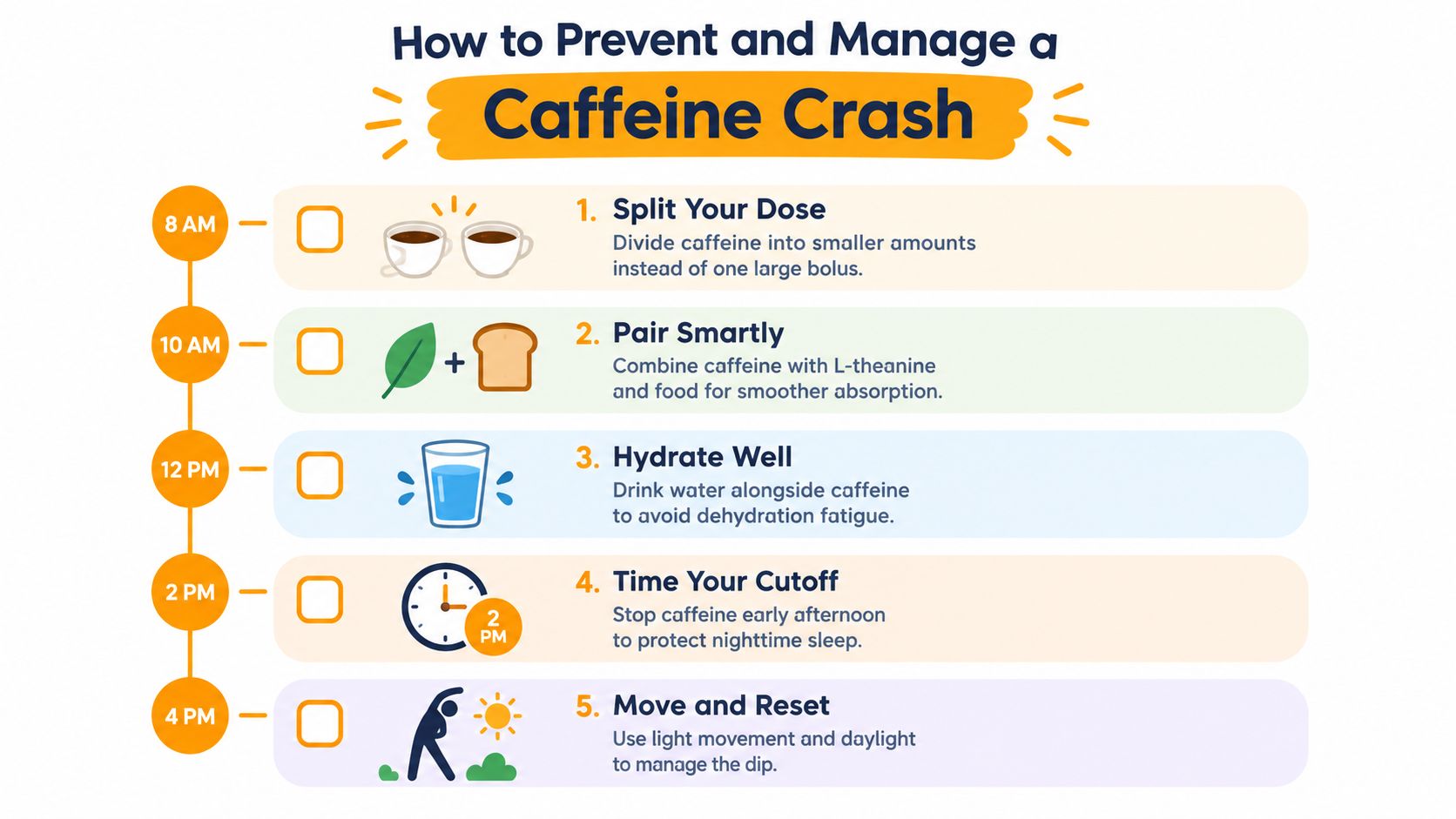
Prevention works best as a sequence rather than a list of disconnected wellness tips. The central aim is to reduce the gap between the caffeinated state and the underlying state, while protecting sleep so tomorrow doesn't require a larger stimulant dose.
A steadier daily protocol
Morning: Use less caffeine at once. Splitting a usual serving into smaller portions can reduce the sharpness of the initial rise and the later downslope. The point isn't to create a rigid schedule. It's to avoid treating one oversized dose as the only way to start the day.
With the first serving: Pair caffeine with food rather than using it as a substitute for breakfast. Protein, fiber, and a balanced meal can make the overall morning feel less volatile than caffeine combined with a sweet pastry or consumed on an empty stomach. Some people also explore L-theanine alongside caffeine. A detailed explanation of L-theanine and caffeine can help readers evaluate that combination more carefully.
During the work period: Keep water available and add light movement. A brief walk, daylight exposure, or gentle stretching won't remove accumulated adenosine, but these actions can support alertness and prevent a sedentary slump from being mistaken for a pure caffeine crash.
Early afternoon: Set a personal cutoff that protects nighttime sleep. The appropriate time differs by sensitivity and schedule, but late caffeine can remain active because its half-life is measured in hours. Protecting sleep reduces the baseline fatigue that makes the next rebound feel severe.
When the dip has already started
A person who is already foggy should avoid automatically responding with a large second dose. Water, a balanced snack, daylight, and light movement offer lower-stimulation first steps. If a nap fits the schedule, a brief, planned rest may be more useful than repeatedly extending caffeine exposure into the evening.
Withdrawal risk also deserves respect. In a population survey of 11,112 people, 61% reported daily caffeine use, and 11% of caffeine consumers reported symptoms after stopping, according to the population study of caffeine use and withdrawal. Among regular users, 0.9% of males and 5.5% of females said symptoms interfered with normal activities when they abruptly stopped. Those figures don't predict an individual response, but they show why gradual habit changes may feel more manageable than sudden elimination for some regular users.
If fatigue remains persistent outside the expected caffeine pattern, or if headaches, low mood, or concentration problems interfere with normal life, a healthcare professional can help look for causes beyond caffeine.
Building Steadier Energy Without the Crash Cycle
A sustainable routine treats caffeine as one input, not as a replacement for sleep, food, movement, or recovery. The adenosine model gives a practical rule: reduce large single boluses and avoid building deep sleep debt. Those two changes lower the contrast that makes a rebound feel dramatic.
A structured day can include an earlier stimulant window, food and water around intake, movement during predictable dips, and an evening wind-down that protects the next sleep period. People who want an alternative format may also review energy drinks without the crash, especially if sugary beverages or repeated high-stimulation servings are part of the current routine.
Optimal Native offers nicotine-free, sugar-free oral pouches organized around morning activation, daytime focus, and evening relaxation, including caffeine, L-theanine, theacrine, B vitamins, and an evening formula with melatonin, magnesium, and apigenin. Anyone considering a change can first track caffeine timing, sleep quality, and crash symptoms, then adjust gradually and seek medical support when fatigue persists despite better recovery.
Optimal Native provides nicotine-free pouch options for morning energy, daytime focus, and evening wind-down, giving readers a structured alternative to repeated coffee or sugary energy drinks. Visit Optimal Native to review the daily protocol and choose a routine that fits the demands of long shifts, deep work, training, or recovery.