

Coffee vs Energy Drink Caffeine: What Actually Works
A nurse at 3 a.m. stands in front of a vending machine with two obvious options: drip coffee that may taste like burnt cardboard, or an energy drink promising a cleaner hit. The label comparison looks simple until the shift runs long, sleep starts in a few hours, and the question becomes whether the stimulant arrives smoothly or lands as a spike.
The useful comparison isn't “which beverage has more caffeine?” It's a formulation and timing problem. Dose per ounce, serving size, absorption pattern, added ingredients, sugar, and the amount of caffeine still active near bedtime all change the outcome.
Coffee remains the foundational caffeine benchmark. In a U.S. survey summarized by the Harvard T.H. Chan School of Public Health, adults consumed an average of 135 mg of caffeine per day, coffee supplied 69% of caffeine intake, and energy drinks supplied 6.3%. Energy drinks have grown rapidly from a smaller base, but coffee still defines what people typically mean by a normal caffeine dose.
This guide avoids brand rankings and medical dosing protocols. It focuses on operator-level decisions for shift workers, deep-work professionals, athletes, and anyone trying to stay alert without wrecking sleep.
Table of Contents
- Why This Comparison Matters More Than You Think
- Caffeine Content by the Numbers
- Onset, Duration, and the Crash Curve
- Sugar, Sweeteners, and Other Actives
- Best Choice by Use Case
- Where Oral Pouches Fit In
- How to Choose Without Second-Guessing
- Switching Formats Without Wrecking Your Week
Why This Comparison Matters More Than You Think
The same labeled caffeine dose can feel different depending on how quickly someone consumes it. A mug of coffee sipped over an hour creates a different experience from a can consumed in minutes, even when the total milligrams look similar.
Four variables matter most:
- Dose density: Milligrams per ounce show how concentrated the drink is. A small shot can deliver a meaningful dose in very little liquid, while a large coffee may spread the same caffeine across a bigger volume.
- Onset speed: Fast delivery is useful before physical work or an abrupt slump, but it can also produce more noticeable jitters.
- Sleep-window overlap: Caffeine can remain active long after the subjective lift fades. A late serving may feel mild while still interfering with sleep.
- Crash profile: The crash depends on dose, absorption speed, sugar, meal timing, tolerance, and whether the person keeps adding more caffeine to chase the first effect.
A coffee-versus-energy-drink decision also includes everything surrounding caffeine. Black coffee has no added sugar, while many energy drinks combine caffeine with sweeteners, taurine, guarana, B vitamins, or other compounds. Some products are sugar-free, but that doesn't make every formulation interchangeable with coffee.
Practical rule: Choose the delivery pattern first, then choose the beverage.
Coffee is usually the better default for a controlled morning dose. Energy drinks become more useful when portability, fast consumption, or a clearly labeled serving matters. Neither format automatically wins for every schedule.
The operator's job is to match the product to the task. A long overnight shift needs a different strategy from a short lifting session, and a late study block needs a different ceiling from an early deep-work session.
Caffeine Content by the Numbers
The label number matters, but serving size changes the interpretation. An 8-ounce brewed coffee commonly contains about 95 to 96 mg, while an 8-ounce energy drink contains about 79 to 85 mg, according to the Harvard caffeine overview. A standard 16-ounce energy drink can reach about 170 mg, and the Mayo Clinic caffeine guide notes that energy drinks commonly span roughly 80 to 200 mg per serving, with some 2-ounce energy shots reaching 200 mg.
That means coffee often has greater caffeine density per ounce, while energy drinks offer a wider range of total doses per container. The container, not the category name, determines the actual exposure.
The useful math
| Beverage | Serving size | Caffeine | Approximate mg per oz |
|---|---|---|---|
| Brewed coffee | 8 oz | 95 to 96 mg | About 12 mg |
| Energy drink | 8 oz | 79 to 85 mg | About 10 mg |
| Energy drink | 16 oz | About 170 mg | About 11 mg |
| Energy shot | 2 oz | Up to 200 mg | Up to 100 mg |
The table uses the verified ranges for coffee, energy drinks, and shots. It doesn't assign universal values to individual brands because recipes and container sizes vary.
A large coffee can hide a substantial dose, while a small espresso-based drink can deliver caffeine with very little liquid. An Americano also illustrates the dilution issue. Adding water increases volume, but it doesn't automatically increase the caffeine total. The person predicting effects should track total milligrams and consumption speed, not just ounces.
Readers comparing coffee with other beverages can also use this guide to caffeine content in green tea as a broader reference point. For espresso-specific serving math, the espresso caffeine guide adds useful context without treating every café recipe as identical.
Coffee and energy drinks overlap more than the marketing suggests. The difference is that energy drinks make high-dose, fast-consumption formats easier to carry and repeat, while coffee often gives the user more control over dilution and pacing.
Onset, Duration, and the Crash Curve
A stimulant curve has three practical stages: the initial rise, the useful alertness window, and the decline. The mistake is treating the printed milligrams as the entire experience.
Coffee generally arrives as a slower ritual. The person brews it, drinks it over time, and often consumes it with food. An energy drink is easier to finish quickly, so the same category can feel more abrupt even when its nominal caffeine is close to coffee. A shot concentrates the dose into a very small volume, which makes accidental overconsumption easier.
Independent human-testing data adds another layer. A study indexed by PubMed found energy-drink caffeine bioaccessibility of 94% to 104%, but bioavailability of only 52% to 76%, with a whole can estimated to deliver up to 115 mg of bioavailable caffeine. The practical point isn't that one beverage always produces a stronger effect. It's that the label dose doesn't map perfectly to systemic exposure.
Three phases to track
- Onset: The first noticeable rise in alertness, focus, or stimulation.
- Duration: The period when the dose supports the intended task.
- Crash curve: The decline, which may include fatigue, irritability, headache, or a desire for another serving.
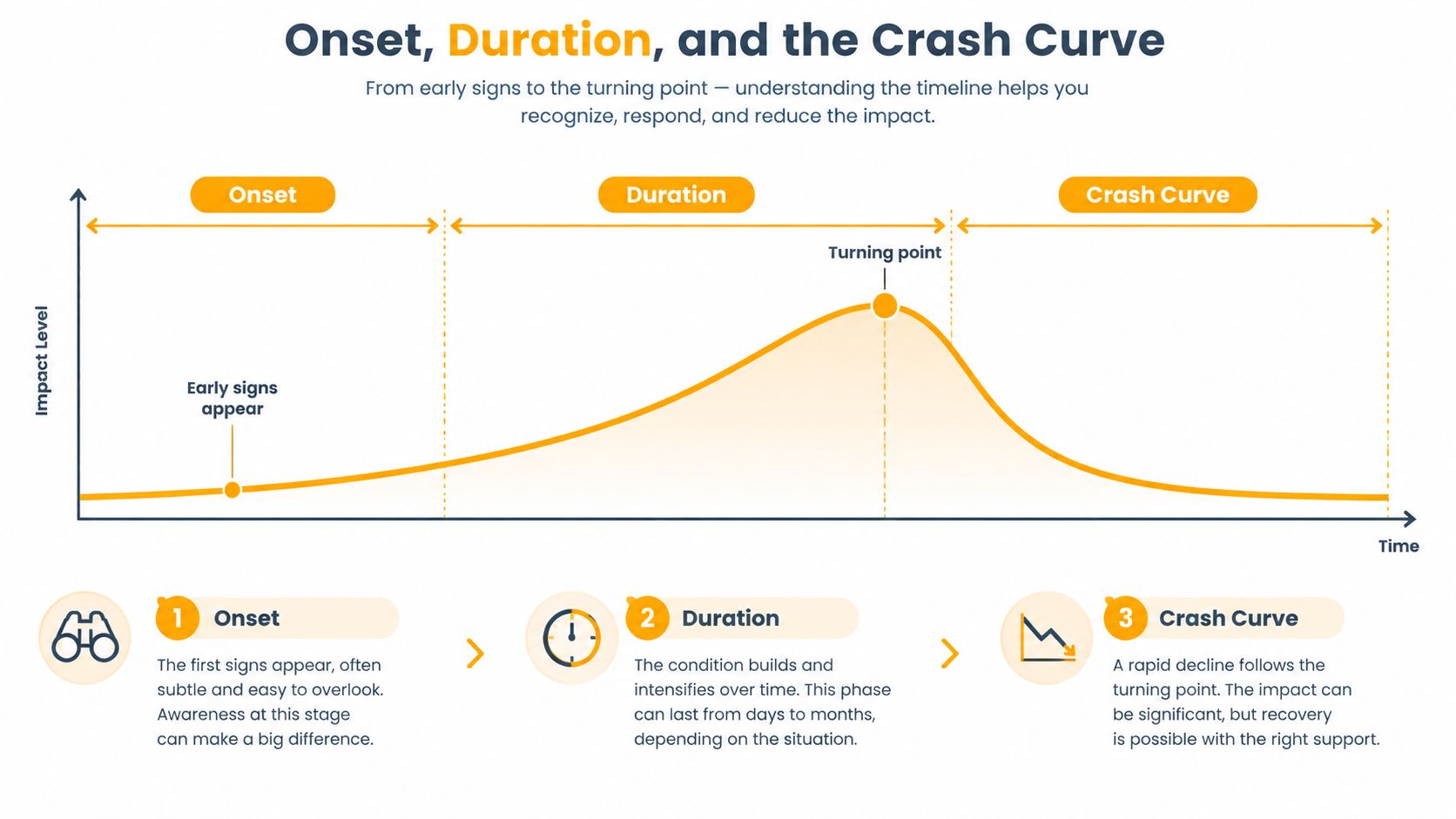
A sharp crash usually reflects more than caffeine alone. Rapid intake, sugar, sleep debt, inadequate food, and tolerance can all distort the curve. A sugar-free energy drink removes the sugar variable, but it still may deliver a concentrated stimulant dose quickly.
The cleanest operating rule is simple: total caffeine affects sleep exposure, while absorption speed affects how volatile the experience feels. Someone who gets shaky from fast delivery should lower the serving size or slow the intake before switching brands.
For readers refining their timing, this caffeine-crash prevention guide offers a practical framework for reducing the spike-and-chase cycle. The goal isn't to eliminate every dip. It's to avoid needing a second stimulant solely because the first one arrived too aggressively.
Sugar, Sweeteners, and Other Actives
Black coffee is a simple vehicle. It can be consumed without added sugar, and the drinker can add milk, cream, or sweetener separately. Energy drinks bundle the stimulant with a complete flavor system, which makes them convenient but reduces control over the formulation.
The important distinction isn't “natural versus artificial.” It's whether the added ingredients support the task or make the dose harder to manage.
| Format | Sugar | Calories | Sweetener | Added actives | Best for |
|---|---|---|---|---|---|
| Black coffee | None added | Low | None required | Coffee compounds | Controlled daily caffeine |
| Coffee with additions | Depends on recipe | Depends on recipe | Optional | Milk, cream, syrups | Taste and satiety |
| Traditional energy drink | Varies by product | Varies by product | Often sugar | Taurine, B vitamins, guarana, or others | Portable stimulation |
| Zero-sugar energy drink | None added | Low or minimal | Sucralose, acesulfame potassium, erythritol, monk fruit, or blends | Taurine, B vitamins, guarana, ginseng, or others | Portable stimulation without sugar |
Some added compounds have plausible roles in energy metabolism or exercise formulations. Others mainly support flavor, label appeal, or product identity. Taurine, guarana, ginseng, L-carnitine, and inositol shouldn't be treated as interchangeable, and a longer ingredient panel doesn't automatically mean a stronger nootropic effect.
The broader user pattern also matters. A 2025 U.S. caffeine survey summary reported that regular coffee typically ranged from 113 to 247 mg per 12 fluid ounces, while energy drinks ranged from 41 to 246 mg, as reported by BeverageDaily. Those ranges overlap heavily, so “coffee is always mild” is a poor operating assumption.
Sugar-free products remove added sugar, but they don't erase dose density or rapid consumption. Non-nutritive sweeteners may also change taste expectations and hunger perception for some people, especially during fasted work. Anyone tracking appetite should evaluate the complete drink, not just the calorie line.
Best Choice by Use Case
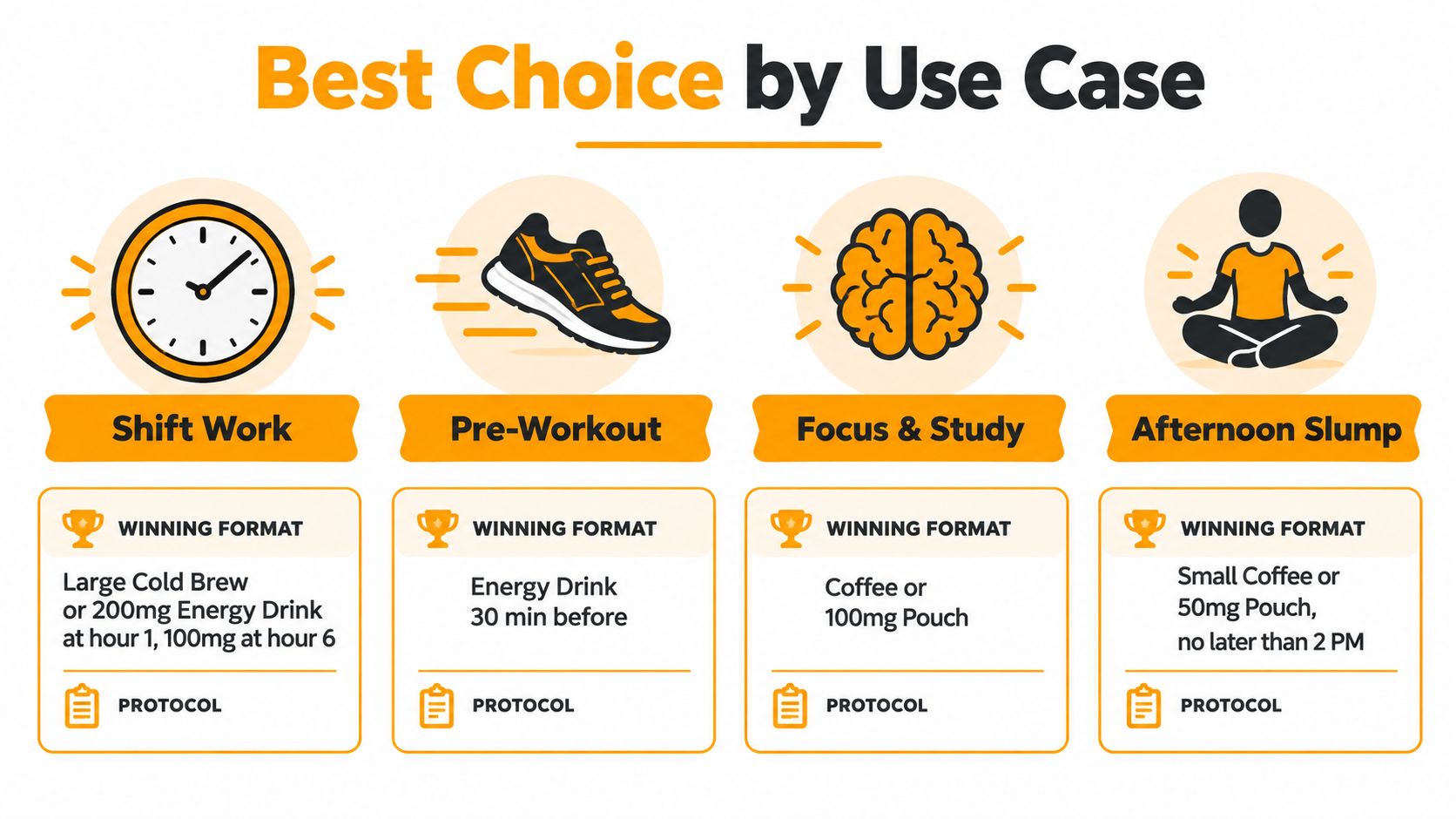
“Just drink coffee” is lazy advice. Coffee is often the best default, but a default isn't a protocol. The winning format depends on how long the task lasts, how quickly the person needs stimulation, and when sleep begins.
Shift work
For a long overnight block, the first serving should arrive near the start of the demanding period rather than after exhaustion has already taken over. A large coffee or a clearly labeled energy drink can work, but the operator should avoid turning the entire shift into repeated unmeasured refills.
A staged approach is more controllable than a single oversized hit. A lower later serving makes more sense than repeatedly topping up with full cans, particularly when the next sleep window begins soon after the shift.
Deep work
Coffee usually wins for a focused cognitive block because it can be consumed gradually and separated from the distraction of a highly sweet beverage. The relevant stack is often caffeine plus L-theanine, not caffeine alone. L-theanine changes the character of the protocol, but it shouldn't be used to justify unlimited caffeine.
A moderate coffee serving at the beginning of the work block gives the user time to assess the response before adding anything else. If the first serving produces tension, jaw clenching, or rapid task-switching, more stimulation is the wrong correction.
Workouts
An energy drink can be useful before training when portability and a predictable label matter. Coffee can work just as well for someone who tolerates it, especially when the workout starts after enough time for digestion.
The format should stay sugar-free when the goal is stimulation without a heavy beverage load. A strong espresso-based drink also gives a compact dose, but the exact amount depends on the preparation, so the label or recipe needs checking.
Late-night study
Late study is where beverage loyalty causes the most damage. A smaller serving, half-cup, or carefully measured pouch can be more rational than a full can, especially when sleep quality matters the next day.
A nine-hour cutoff rule is a conservative scheduling tool, not a medical protocol. Anyone with high sleep sensitivity should finish caffeine well before the intended sleep period and should treat delayed sleep onset as evidence that the current timing is too late.
The video below provides another visual comparison of caffeine formats and use cases.
Where Oral Pouches Fit In
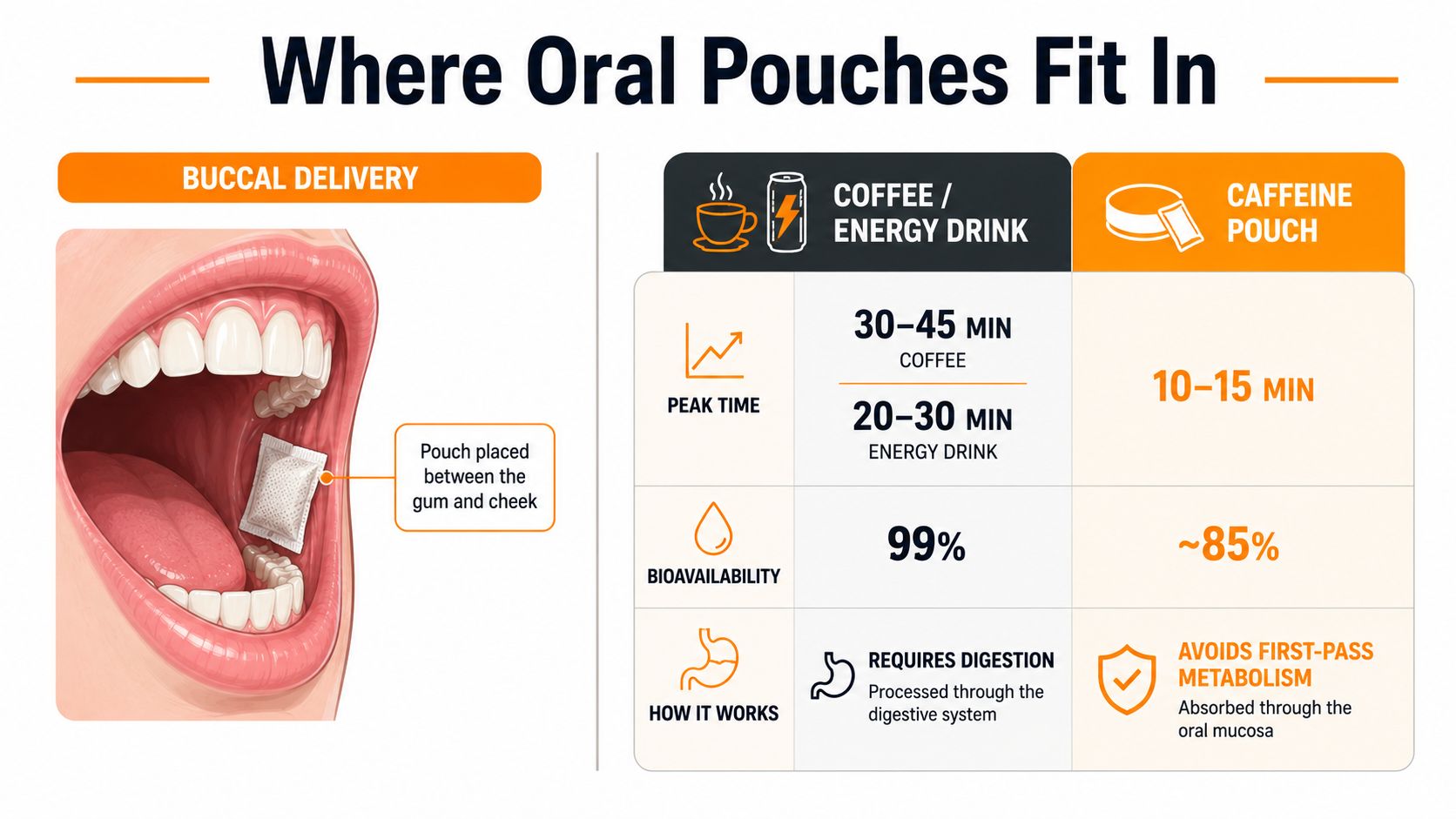
Oral caffeine pouches create a third category that the coffee-versus-energy-drink debate usually ignores. They deliver a measured amount through the mouth without requiring liquid, sugar, or a large container.
That makes them useful for micro-dosing, not for pretending that caffeine has no tradeoffs. A pouch can top off a coffee routine without committing the user to another full beverage, and the format fits environments where carrying or drinking a can is inconvenient.
The primary benefit is control. If each pouch contains a modest labeled amount, the user can add one unit, wait, and decide whether another is necessary. That is easier to audit than drinking an energy drink while distracted and realizing later that the entire container is gone.
The tradeoffs are real
Buccal delivery may feel faster than swallowing a capsule because the active ingredients don't have to travel through the same digestive process. The exact onset depends on the product, dose, saliva, placement, and individual response, so pouch marketing shouldn't replace label reading.
Extended contact can irritate the gum or cheek. Non-users may also confuse caffeine pouches with nicotine products, and many caffeine pouches don't include L-theanine, which means the user has to assess the stimulation profile separately.
A nootropic pouch line such as Optimal Native uses nicotine-free oral delivery and combines caffeine with ingredients including theacrine and L-theanine in selected daytime products. That makes it one option for people evaluating a controlled pouch protocol, but the same rules still apply: check the serving label, track total caffeine, and don't stack automatically. Readers comparing this category can review the caffeine pouch format before deciding whether portability outweighs the gum and dosing tradeoffs.
How to Choose Without Second-Guessing
A reliable choice requires three inputs: sleep sensitivity, task type, and schedule. Ignore any one of them and the recommendation becomes generic.
| Sleep sensitivity | Task type | Recommended format | Max caffeine per serving | Latest intake time |
|---|---|---|---|---|
| Low | Morning cognitive work | Brewed coffee | Keep the serving moderate | Early work period |
| Medium | Physical task | Labeled energy drink or espresso | Use the product's stated serving | Well before sleep |
| High | Cognitive work | Half-caf coffee or low-dose pouch with L-theanine | Stay below 100 mg | Earlier than the normal cutoff |
| Medium or high | Alertness needed after 2 p.m. | Lower-dose format | Below 100 mg per serving | Stop early enough to protect sleep |
The table is a decision framework, not a medical dosing prescription. The below-100-mg threshold for people needing alertness after 2 p.m. and reporting medium or high sleep sensitivity is a practical ceiling derived from the scheduling logic in this guide, not a universal safety rule.
Coffee is the cleanest pick for a low-sensitivity user handling a morning cognitive block. Its main advantage is not that it contains less caffeine in every situation. Its advantage is that the user can prepare, dilute, sip, and stop with relatively little friction.
Energy shots fit a different problem. They make sense when the task is short, the user needs compact portability, and the label clearly states the dose. That same concentration makes them a poor choice for casual sipping or untracked repetition.
Pouches fit the person who wants smaller increments and no liquid. A caffeine-plus-L-theanine stack may suit a user who dislikes the sharper edge of a standalone stimulant, but the combination still needs to be tested during a low-consequence work period before deployment on an overnight shift.
Decision test: If the format makes the dose difficult to count, it isn't the right format for a sensitive schedule.
Switching Formats Without Wrecking Your Week
Format changes should be treated like an operating-system migration. Change one variable, preserve the rest, and collect enough observations to separate withdrawal from a better routine.
Start with a three-day baseline. Log every caffeinated drink, serving size, time, sleep onset, and afternoon energy. Then make one format swap while keeping total daily caffeine close to the baseline. Changing coffee, sleep time, meal timing, and training simultaneously creates useless data.
Use this sequence:
- Log first: Record the current pattern before changing it.
- Swap one format: Replace one serving, not the entire routine.
- Audit timing: Avoid caffeine close to the intended sleep period, especially when sleep sensitivity is high.
- Track the crash: Rate jitters, focus quality, fatigue, and sleep latency in plain language.
- Adjust slowly: Reduce the total dose if headaches, irritability, or fatigue appear after a change.
Anyone moving away from multiple energy-drink servings shouldn't replace them with unlimited coffee. A slower reduction, smaller servings, and earlier timing usually produce cleaner feedback than an abrupt switch. Withdrawal symptoms can appear for several days, so the first bad day isn't proof that the new format failed.
For coffee drinkers concerned about visible staining during a heavy workweek, a dedicated product such as Mouthology stain-fighting toothpaste addresses the appearance issue separately from the caffeine decision. Dental care doesn't make excessive caffeine timing harmless, but it can remove one practical objection to using plain coffee.
The final test is simple. The new routine should support the task, keep the dose countable, and leave sleep intact. If it fails one of those tests, the operator should change the serving size or timing before changing brands.
Optimal Native offers nicotine-free nootropic pouches designed around portable daytime energy, focus, and evening recovery routines, including caffeine, theacrine, and L-theanine in selected daytime formulas. Visit Optimal Native to compare the pouch format with coffee and energy drinks, then choose the protocol that matches the schedule rather than the marketing.