

Coffee Pouches: Formats, Benefits & Use
Most advice about coffee pouches gets the first question wrong. It assumes everyone means the same thing, when the phrase can point to two very different products, a flexible bag that holds coffee beans or grounds, or a small oral pouch that delivers caffeine through the mouth. If you're trying to buy the right one, or just trying to understand why search results feel so messy, the fastest way forward is to separate those meanings first.
That confusion isn't small. Coffee packaging has been evolving for centuries, from beeswax-lined sacks in the early 18th century to modern flexible pouches, while the oral pouch category borrows the same shape language but serves a totally different job, putting caffeine under the lip instead of beans on a shelf coffee packaging history. Once you see that split, the rest gets much easier.
Table of Contents
- What a Coffee Pouch Actually Means
- The Packaging Format That Holds the Beans
- The Oral Coffee Pouch and How It Works
- How Oral Coffee Pouches Compare to Other Caffeine Formats
- Real Benefits and Honest Drawbacks of Oral Coffee Pouches
- Choosing and Using Oral Coffee Pouches Safely
- A Smarter Way to Think About Coffee Pouches
What a Coffee Pouch Actually Means
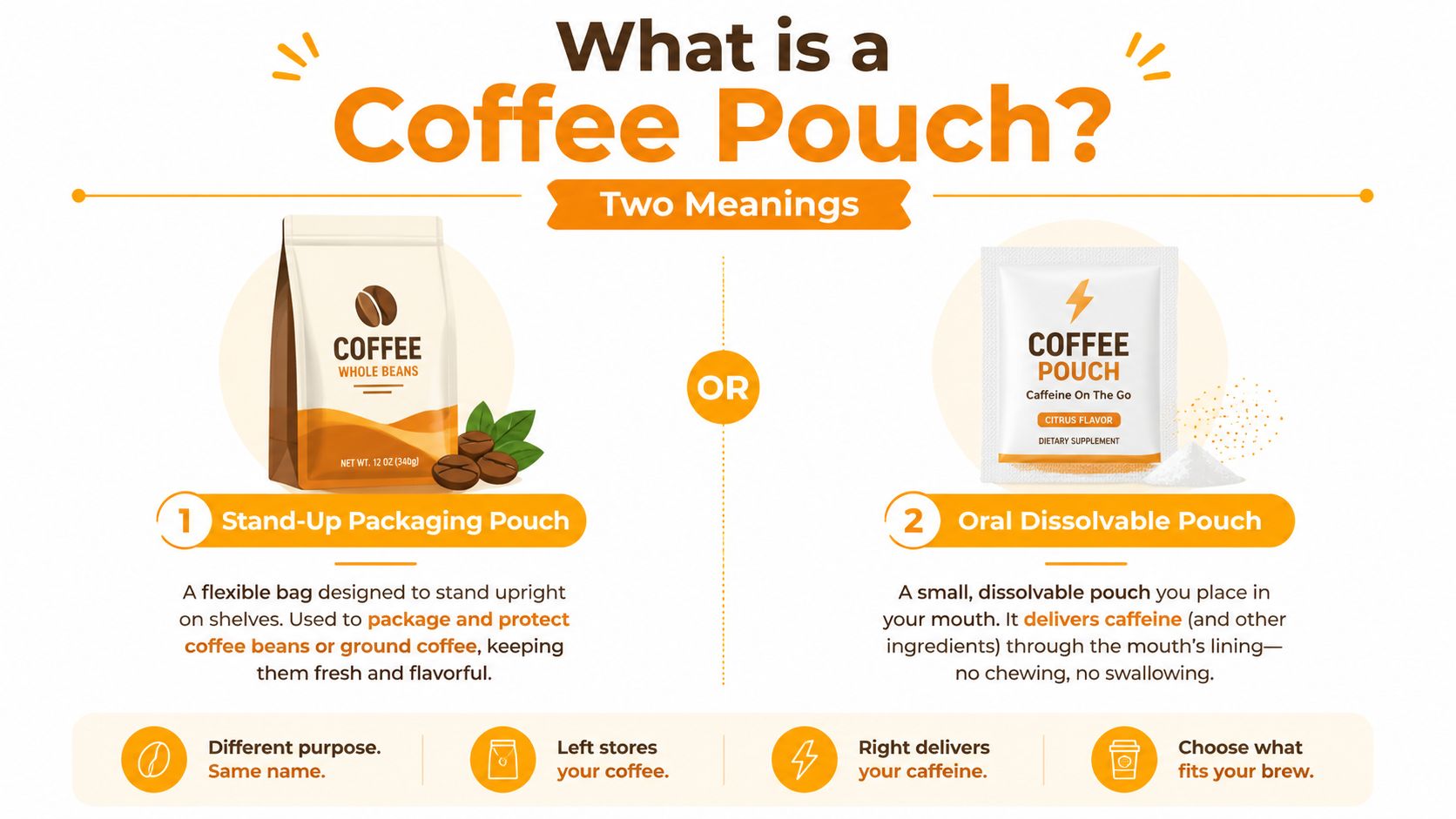
The keyword coffee pouches hides a fork in the road. One version is a stand-up packaging pouch for beans or grounds, the kind roasters use on shelves and in shipping boxes. The other is an oral caffeine pouch, a small pouch you tuck under your lip to take in caffeine without brewing anything.
That split explains why so many readers feel disoriented. A packaging article assumes you're shopping for bags, while a stimulant article assumes you're already familiar with the oral format. Neither one helps if you typed the same phrase and expected a simple answer.
Two meanings of coffee pouches
| Dimension | Stand-Up Coffee Packaging Pouch | Oral Caffeine Pouch |
|---|---|---|
| What it is | A flexible bag for storing and selling coffee | A small oral pouch used under the lip |
| Main job | Protect freshness and present the brand | Deliver caffeine without brewing |
| What's inside | Whole beans or ground coffee | Caffeine-focused ingredients |
| Buyer's goal | Storage, retail display, shelf life | Convenience, timing, and dose control |
If you meant packaging, you can skip the consumer-use advice and focus on freshness, barrier layers, and degassing. If you meant the oral format, keep reading, because the key questions are dose, timing, and whether it fits your routine better than coffee or energy drinks.
Practical rule: If the product opens with laminate layers, a valve, or shelf stability, you're looking at packaging. If it opens with caffeine, placement under the lip, and absorption through the mouth, you're looking at the oral format.
For readers who still want a quick visual reference, the clearest separation is a bag that stores coffee versus a pouch that delivers caffeine. That distinction is also why a single keyword can create so much search confusion, and why a niche guide often misses half its audience. The internal breakdown at Optimal Native's discussion of non-tobacco pouches makes the product-side meaning easier to place in context.
The Packaging Format That Holds the Beans
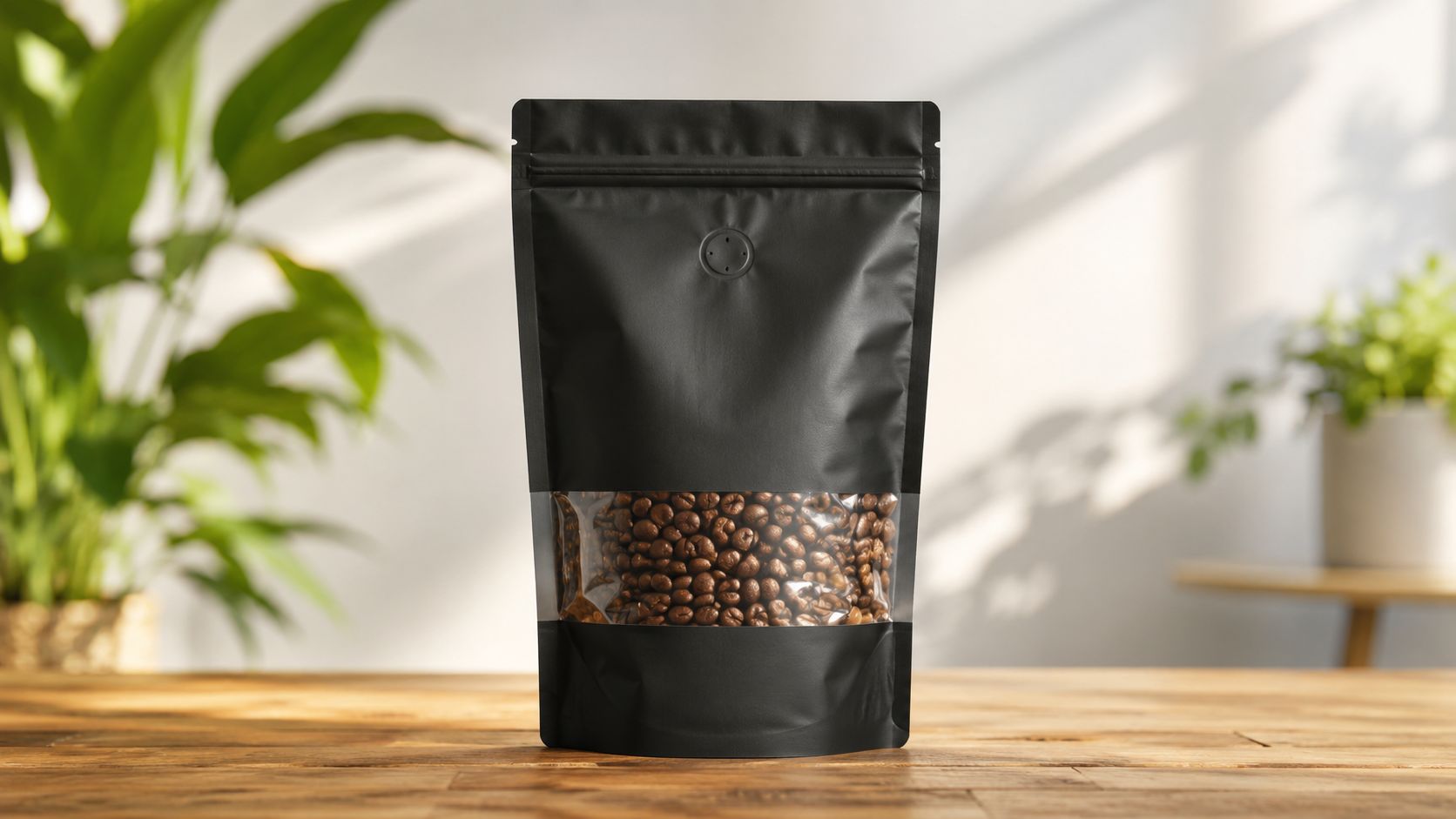
A coffee packaging pouch has a different job from the oral product people sometimes also call a coffee pouch. This format holds beans or ground coffee, keeps them protected from air and moisture, and gives roasters a clean way to present the product on a shelf or in shipping. The common version is a laminated flexible pouch with a bottom gusset, a resealable closure, and a degassing valve.
The valve is there for a simple reason. Freshly roasted coffee keeps releasing CO₂ after roasting, so the pouch needs a way to vent that gas without letting oxygen rush back in. A coffee-grade standing pouch is typically built with a one-way valve in the 12 to 18 mm range and burst strength of at least 1.2 bar, so gas can leave safely coffee pouch technical specs. The laminate is also meant to block oxygen and moisture, with OTR ≤1.0 cm³/m²·24h·atm and WVTR ≤0.3 g/m²·24h in the cited reference, because once oxygen gets in, freshness fades faster.
Why the shape changed over time
Coffee packaging did not always look like this. A packaging history source traces the move from early beeswax-lined sacks to today's sustainable flexible pouches, and the shift reflects a broader change in how coffee is sold. The package is no longer just a transport layer, it now helps with freshness control, retail presentation, and brand storytelling.
That is why the stand-up pouch became so common in specialty coffee. It ships well, prints well, and reads clearly on a crowded shelf. The shape is doing real work, not just looking tidy.
Coffee packaging improved when it started protecting the roast and helping the product stand out at the same time.
For roasters, the pouch is not a cheap substitute for a tin or jar. It is the format that lets beans stay protected while still looking premium, and it also helps buyers tell at a glance that they are looking at coffee for brewing, not an ingestible caffeine product. If you want a closer look at how the bean-or-grind side of the format is described, this coffee pouch guide focused on grinds is a useful reference.
The Oral Coffee Pouch and How It Works
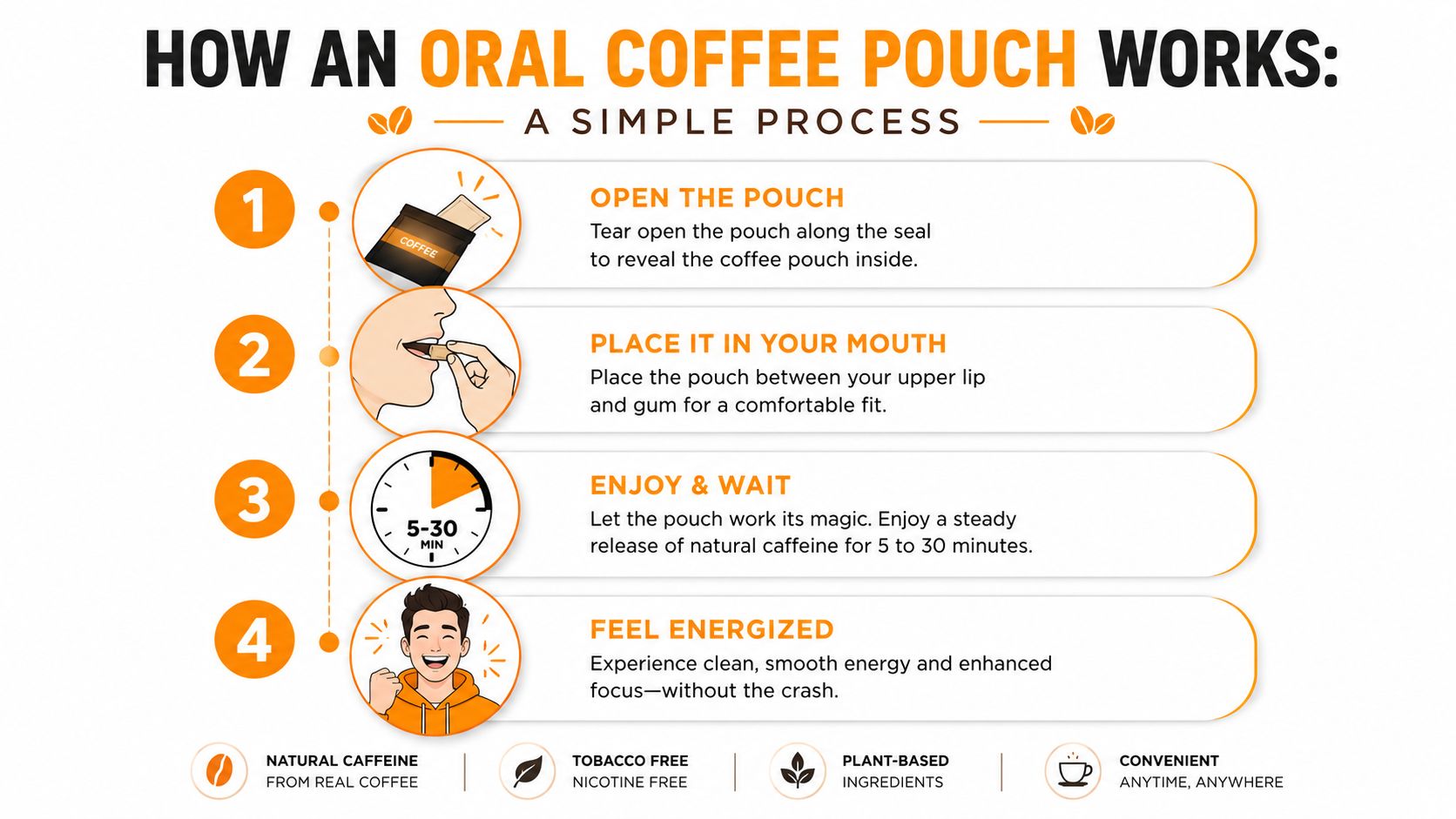
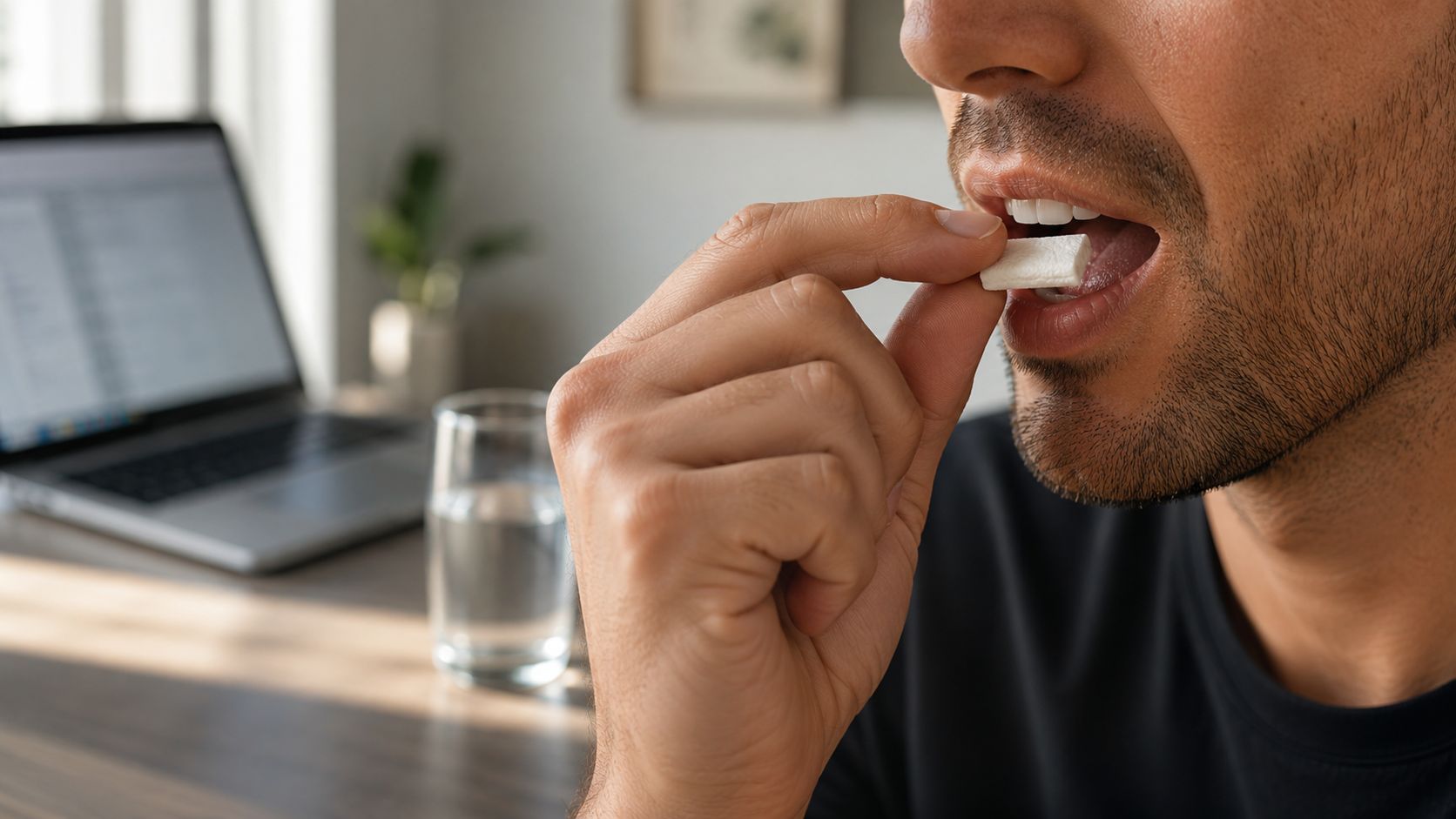
An oral coffee pouch is small, soft, and meant to sit between the gum and upper lip. It isn't brewed, swallowed like a capsule, or chewed like gum. The point is to let ingredients move through the mouth lining, which is why the format feels closer to a nicotine pouch than a cup of coffee.
How the delivery works
The mouth has a shortcut. When a compound is absorbed buccally, it can enter circulation without first passing through the digestive system in the same way a swallowed pill does. That's why pouch users often describe a faster ramp than they get from capsules or drinks.
The contents vary by formula. Daytime versions often center on caffeine, theacrine, L-theanine, and B vitamins, while evening-oriented versions swap stimulants for ingredients such as melatonin, magnesium, and apigenin. The point isn't novelty, it's timing, one formula for activation, another for wind-down.
Using one usually follows a simple sequence.
- Open the pouch.
- Place it under the upper lip.
- Leave it in place for the recommended time.
- Remove it once the effect window or mouth feel tells you it's done.
Practical rule: Don't treat the pouch like a snack. It's a timed delivery format, so placement and duration matter more than chewing or moving it around.
A video walkthrough can help if you've never seen the format in use, especially if you're used to coffee, gum, or nicotine pouches and want to compare the ritual walkthrough video. If you're curious about the nicotine-free side of the category, this guide to coffee dip pouches helps separate the oral ritual from tobacco use.
How Oral Coffee Pouches Compare to Other Caffeine Formats
Oral coffee pouches make the most sense if you compare them by dose, onset, duration, and crash risk, not by branding. That is the part people usually miss. The pouch format looks simple, but the key question is whether you need a small, predictable burst of caffeine, a slower drink, or a stimulant source you can carry without brewing anything.
The confusing part is that the term itself is split in two. Some people mean packaging for coffee beans or grounds, while others mean an oral pouch that delivers caffeine through the mouth. Once you separate those two meanings, the comparison gets much clearer. A coffee pouch in the oral sense is closer to a nicotine pouch in ritual, but it behaves differently because the active ingredient is caffeine, not nicotine.
A small coffee has about 100 mg caffeine, while cola sits around 35 to 45 mg dose comparison reference. Oral pouches can be much stronger, with one cited range reaching 25 to more than 200 mg per pouch in broader reporting on the category oral caffeine pouch overview. That spread matters because one pouch can be a light lift for one person and a heavy hit for another.
Caffeine delivery formats compared
| Format | Typical Caffeine | Onset | Duration | Crash Risk |
|---|---|---|---|---|
| Oral coffee pouch | Varies widely, can be high | Often faster than swallowed formats | Depends on formula | Can rise if dose stacks up |
| Brewed coffee | About 100 mg in a small coffee dose comparison reference | Moderate | Familiar and predictable | Moderate, especially with repeated cups |
| Cola-sized soft drink | About 35 to 45 mg dose comparison reference | Slower, because it is usually sipped | Shorter stimulant feel | Lower per serving, but easy to overconsume |
| Energy drink | Varies by brand and size | Often quick because people drink it fast | Can feel stronger up front | Can be higher if the serving is large |
| Nicotine pouch | Not a caffeine format | Different stimulant pathway | Different effect profile | Not comparable in a direct caffeine sense |
Nicotine pouches deserve separate treatment because the ritual looks similar, but the active ingredient is different. Oral coffee pouches are usually designed to be nicotine-free, so they function as a substitute for the pouch habit, not a nicotine stand-in. That distinction matters if you want the format's convenience without bringing nicotine back into the routine.
The comparison also changes once you think about dose management instead of convenience marketing. Coffee gives you a familiar baseline, but it is easy to lose track if you pour a second cup or keep sipping a large mug. Energy drinks often hide the same problem in a sweeter package, because people finish them quickly and may not notice how much caffeine has already landed. Oral pouches make the dose more visible as a single unit, which can help if you want a clean start and stop, but that same clarity can also make it tempting to add one more pouch on top of everything else you already drank.
For practical use, that is the main trade-off. If you need something for a meeting block, a long drive, or a night shift handoff, an oral pouch can make sense because it separates stimulation from brewing and from carrying a drink around. If you are already using coffee, tea, or energy drinks, the pouch is not a free extra. It adds to the day's total, and that is the point where jitters, sleep disruption, or a harsher drop-off can show up.
Real Benefits and Honest Drawbacks of Oral Coffee Pouches
The best argument for oral coffee pouches is simple, they make caffeine more portable and more precisely portioned than a cup you have to brew or a can you have to finish. There's no kettle, no machine, and no sugar by default if the formula is clean. For someone working a long shift or moving between places, that convenience is real.
The downside is just as real. A pouch doesn't erase caffeine math. If you add it to coffee, tea, or energy drinks without tracking the rest of your day, the total can climb fast, and that's where users run into jitters, sleep disruption, or just feeling overstimulated.
Where the format helps and where it doesn't
- Good fit for portability: It's easy to carry a few pouches in a pocket or bag, so the format suits travel, shift work, and situations where brewing isn't realistic.
- Good fit for dose control: A single pouch can be easier to count than half-finished drinks, especially when you want a clear start and stop.
- Weak point for taste tolerance: Some users like the mouthfeel, others don't. If you dislike anything sitting under your lip, you probably won't stick with it.
- Weak point for stacking risk: The format can tempt people to add it on top of what they already drink, which is where overuse creeps in.
Health reporting on oral caffeine pouches also raises a caution that's easy to ignore when the product feels modern and discreet. Caffeine-naive users and younger users can react strongly, and mixing pouches with other sources is where the trouble often starts oral caffeine pouch safety discussion. That doesn't make the format bad, it just means it should be treated like a stimulant, not a novelty.
The biggest mistake isn't the pouch itself. It's assuming a new format changes the rules of caffeine.
There's also a practical sustainability question. A pouch may reduce cups and cans, but packaging still has trade-offs, and what matters most is whether the format fits the routine you keep. If you won't use it consistently, convenience doesn't help much.
Choosing and Using Oral Coffee Pouches Safely
The right pouch depends on your use case. A shift worker usually needs predictable timing, a knowledge worker usually wants smoother focus, and a nicotine-free pouch switcher wants the ritual without the tobacco or nicotine. Those three buyers should not shop the same way.
What to check before you buy
- Caffeine amount per pouch: Make sure you know the dose before the first use, because the difference between a light daytime pouch and a strong one can be large.
- Supporting ingredients: Look for formulas that clearly list L-theanine or theacrine if the product is meant for daytime balance, or non-stimulant ingredients if it's for evening use.
- Manufacturing transparency: A serious brand should tell you what's in each pouch, not just promise energy.
- Daily protocol design: Products that map to morning, daytime, and evening use are easier to plan around than a single all-purpose pouch.
- Nicotine-free labeling: If you're using pouches as a replacement ritual, this needs to be obvious, not buried.
For actual use, timing matters more than hype. If you're trying a pouch for the first time, start with one and leave enough space in your schedule to notice how it feels before adding coffee or an energy drink on top. If you already know your caffeine tolerance, count the pouch as part of your total day, not as a bonus.
A simple safety check
- Check your current caffeine sources.
- Choose the lowest practical dose first.
- Avoid late-day use if sleep matters that night.
- Skip high-dose variants if you're caffeine-naive or sensitive.
- Stop if the mouth feel, heart rate, or jitters feel off.
A structured approach is usually better than impulse use. If you need a pouch for focus, decide in advance whether it belongs in the morning, mid-shift, or after lunch, then keep that timing consistent. If you're looking at a product page and can't tell the dose, the ingredients, or the intended time of day, that's a warning sign.
A Smarter Way to Think About Coffee Pouches
The smartest way to read the phrase coffee pouches is to treat it as a question about format, not just product. If you need storage, freshness, and retail presentation, you want the packaging pouch. If you need timed caffeine delivery, you want the oral pouch, and the decision becomes how that dose fits your day.
That's the useful rule most articles skip. They try to sell convenience, but they don't tell you whether the format matches your schedule, your sensitivity, or your habit loop. For a lot of people, the better choice isn't one pouch in isolation, it's a simple protocol that separates morning activation from daytime focus and evening wind-down.
Buy the format that solves the problem you actually have, not the one that sounds coolest on the product page.
If you're comparing options, use this filter. Choose packaging when your goal is shelf life and branding. Choose oral pouches when your goal is dose-managed stimulation without brewing. Avoid stacking if your coffee, energy drink, and pouch habits all show up in the same afternoon.
For people who want a cleaner daily system, a three-part routine is usually easier to live with than a random grab-and-go approach. Morning, midday, and evening serve different jobs, and the format should match the job rather than fight it. That's the simplest way to keep convenience from turning into overuse.
If you want a nicotine-free pouch routine built around that kind of structure, take a look at Optimal Native and compare its day-part approach to your current caffeine habits.