

Biohacking Supplements: A Practical 2026 Guide
A night-shift nurse drinks coffee before handover, a programmer considers an L-theanine capsule before an afternoon coding block, and a parent reaches for magnesium before bed. Each person is trying to solve a different problem, yet all three are making the same basic decision: which input might help the body perform better at a specific time?
That's the useful starting point for biohacking supplements. They aren't magic shortcuts or automatic replacements for sleep, food, movement, or medical care. They're targeted compounds used within a measured routine for goals such as alertness, focus, sleep timing, recovery, and resilience. The category has moved well beyond fringe wellness. Federal data show that 60.2% of U.S. adults aged 20 and older used a dietary supplement in the past 30 days during August 2021 to August 2023, compared with 57.6% in 2017 to 2018, while use of four or more products rose from 10.0% to 16.2% over the same periods, according to the CDC/NCHS supplement trend analysis.
Table of Contents
- What Biohacking Supplements Actually Are
- The Biology Behind Why They Work
- Core Ingredients, Mechanisms, and Evidence
- Delivery Formats and the Food vs Supplement Question
- Stack Templates for Shift Work, Deep Work, and Evening Reset
- Safety, Cycling, and Common Misconceptions
- Building Your Own Personalized Stack
What Biohacking Supplements Actually Are
Biohacking supplements are tools for targeted experimentation. A person chooses a compound, links it to a defined time or task, observes an outcome, and decides whether the input belongs in the routine. That outcome might be easier alertness at the start of a shift, steadier concentration during deep work, or a smoother transition into sleep.
The term overlaps with several supplement categories, but it isn't identical to any of them:
- Vitamins and minerals correct or prevent nutritional inadequacy. Vitamin D, magnesium, and B vitamins fit this foundation.
- Nootropics are compounds marketed or studied for cognitive functions such as attention, memory, or mental energy. Caffeine, L-theanine, and creatine often appear in this group.
- Adaptogens usually refer to botanical ingredients associated with stress-response support, although evidence and definitions vary widely.
- Performance supplements support exercise capacity, strength, recovery, or body composition. Creatine and protein are familiar examples.
- Biohacking supplements describe the protocol around the ingredient. The same caffeine capsule can be a morning habit, a shift-work tool, or an ill-timed sleep disruptor depending on the user's schedule.
A key distinction is nutritional sufficiency versus performance optimisation. If a person lacks a nutrient, replenishing it addresses a basic biological need. If nutritional status is already adequate, adding more may offer little value and may create unnecessary complexity. That's why the right question isn't “What's the strongest stack?” It's “What bottleneck is limiting this part of the day?”
A developer who struggles to protect a focus block may benefit more from cognitive performance supplements after fixing notifications, meal timing, and sleep. A worker whose attention is repeatedly interrupted may first need environmental control, such as learning to commit to blocking apps, before adding another stimulant.
The category becomes clearer when viewed through three layers: biology first, ingredients second, stack assembly third. Mechanisms explain what a compound may influence. Evidence determines how much confidence it deserves. Timing and personal response determine whether it belongs in a daily protocol.
The Biology Behind Why They Work
The body doesn't experience a supplement as a marketing label. It experiences molecules interacting with receptors, enzymes, neurotransmitters, blood vessels, nutrient pathways, and circadian signals.
Caffeine illustrates the principle. During waking hours, adenosine gradually accumulates and acts like a sandbag pressing down on the alertness pedal. Caffeine occupies adenosine receptors without producing the same sleep-pressure signal, which can promote wakefulness. The underlying sleep pressure continues to build, however, and repeated exposure can contribute to tolerance because the nervous system adapts to the blocked signal.
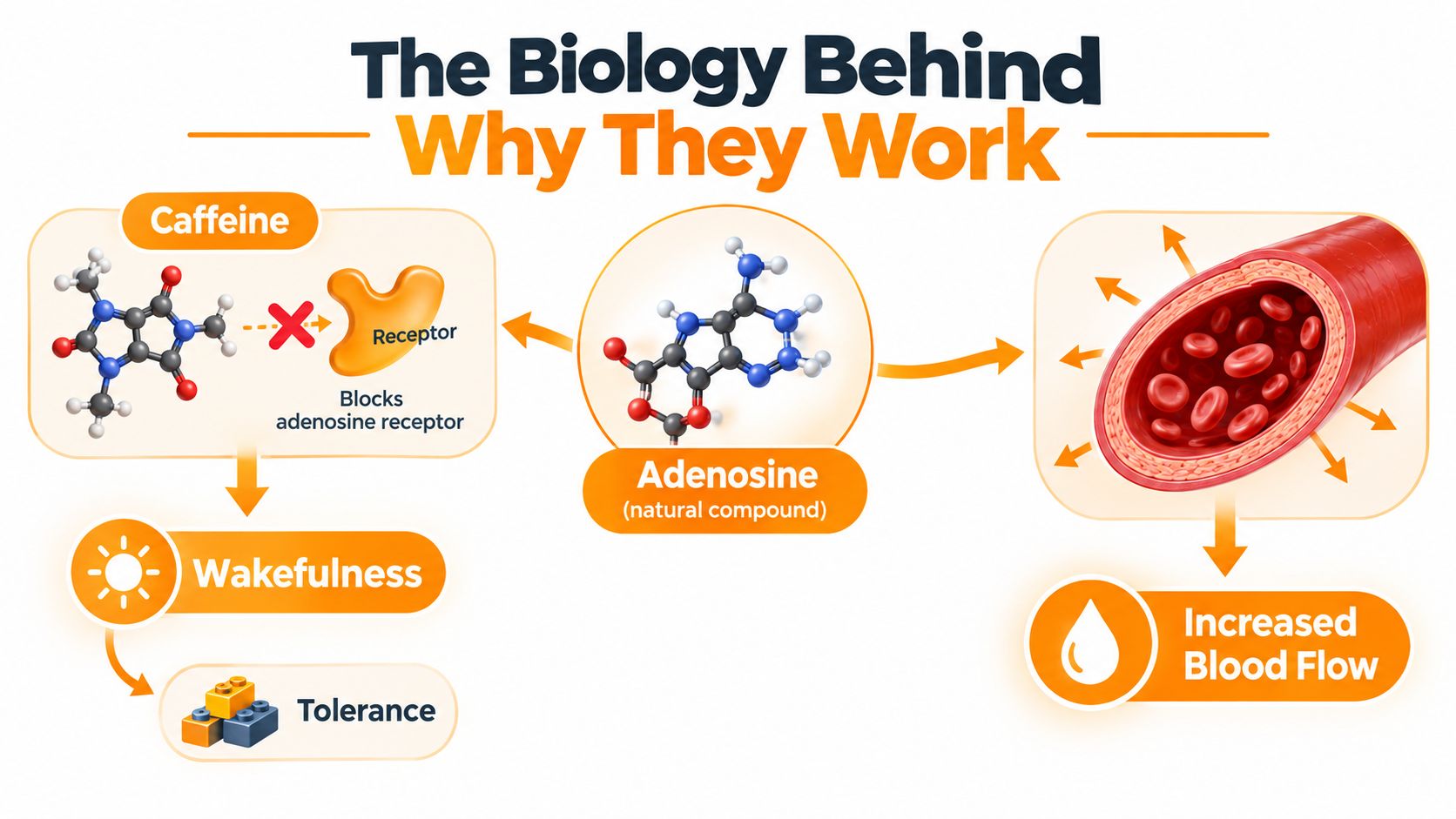
The systems behind focus and recovery
Attention also depends on stable energy availability. Large swings in blood glucose can make concentration feel less predictable, while balanced meals, adequate protein, fiber, and sufficient hydration give the brain a steadier metabolic base. A capsule can't reliably compensate for an irregular food pattern.
Sleep pressure works alongside the circadian system. Adenosine functions like a balloon that inflates across the day and must deflate during sleep, while light exposure and melatonin signalling help set the timing of that sleep window. Melatonin is therefore better understood as a timing signal than as a sedative that overwhelms wakefulness.
GABA and glutamate provide another useful calibration metaphor. Glutamate supports excitatory signalling, while GABA helps restrain neural activity. L-theanine is often discussed in relation to calmer alertness because it may influence this balance, but “calm focus” doesn't mean every user will experience the same result.
Dopamine acts more like an ignition key for motivation and salience than a simple happiness chemical. Caffeine and tyrosine can influence systems related to motivation or alertness indirectly, but that doesn't make them universal solutions for low drive.
Omega-3 fatty acids and B vitamins function as metabolic enablers within broader cellular and neurotransmitter pathways. Their role is less dramatic than a stimulant's immediate sensation, yet foundational nutrition can determine whether a more targeted input feels useful.
Mechanism is not proof of outcome. A plausible pathway explains why an ingredient might work. Controlled human evidence and a tracked personal response determine whether it deserves a place in the routine.
Core Ingredients, Mechanisms, and Evidence
The core list below separates mechanism, practical dose, timing, and evidence strength. The evidence labels are intentionally conservative. Stronger evidence for one use, such as caffeine paired with L-theanine for attention, doesn't automatically validate every claim attached to an ingredient.
The most specific evidence in this group concerns caffeine and L-theanine. A 2025 systematic review and meta-analysis examined 49 randomized trials, with 16 included in pooled analyses, and concluded that the combination likely improves attentional task performance versus placebo, with effects most apparent in the second hour after intake, according to the Nutrition Reviews analysis. The most studied relationship is approximately 2:1 L-theanine to caffeine, although the practical plan below uses a closer pairing for a moderate starting point.
| Ingredient | Primary mechanism | Effective dose | Optimal timing | Evidence strength |
|---|---|---|---|---|
| Caffeine | Adenosine receptor antagonism | 100 to 200 mg | Morning or work block | Strong for alertness |
| L-theanine | Supports relaxed attention and inhibitory signalling | 200 mg with caffeine | With daytime caffeine | Moderate to strong for paired attention |
| Theacrine | Adenosine-related stimulant activity | 50 to 100 mg | Morning or early afternoon | Moderate |
| Creatine | Supports cellular energy availability | 3 to 5 g daily | Any consistent time | Moderate for strength, emerging for cognition |
| Magnesium glycinate or threonate | Supports neuromuscular and nervous-system function | 200 to 400 mg | Evening | Moderate when intake or status is low |
| Melatonin | Circadian timing signal | 0.3 to 1 mg | Before the intended sleep window | Moderate for timing |
| Apigenin | Possible GABA-related calming activity | 50 mg | Evening | Limited to moderate |
| Omega-3 EPA/DHA | Supports membrane and inflammatory signalling | 2 g combined | With a fatty meal | Moderate, context-dependent |
| Vitamin D3 with K2 | Supports vitamin D-dependent processes | 1000 to 4000 IU based on status | With food | Strong for correcting low status, not universal optimisation |
| Methylated B-complex | Supplies active vitamin forms for metabolic pathways | Label-dependent | Morning with food | Strong for deficiency, variable for optimisation |
Caffeine is the most predictable acute tool, but it also deserves cycling because tolerance can reduce its perceived effect. L-theanine is a logical companion when caffeine feels sharp or jittery. For additional context on botanical performance support, readers can review rhodiola rosea for performance support, while keeping in mind that a botanical's reputation doesn't remove the need to check interactions and individual tolerance.
Creatine has a valuable food-versus-supplement position. Meat and fish provide some, but a consistent daily target is often easier to reach with a supplement. Magnesium is more useful when a person's diet or status leaves a gap, while vitamin D should be guided by status rather than treated as an automatic high-dose add-on.
Melatonin isn't a stronger version of a sleeping pill. A low amount may be more appropriate for shifting the sleep window, while larger amounts can create unwanted morning effects. Apigenin has a narrower evidence base, so it belongs in a cautious evening experiment rather than an unquestioned foundation.
Delivery Formats and the Food vs Supplement Question
A supplement's format changes the experience. Capsules and tablets are convenient and familiar, but they must disintegrate and pass through digestion. Powders can make dose adjustment easier, although taste, measuring, and adherence become part of the protocol. Liposomal liquids may be attractive for specific formulation goals, but a premium format doesn't prove superior clinical value.
Buccal delivery uses the oral mucosa. Active compounds can cross that tissue by passive diffusion, drain toward the jugular vein, and bypass hepatic first-pass metabolism, according to a review of buccal drug delivery. That route can support faster systemic entry than swallowing for suitable compounds, which may matter to a shift worker who needs a portable option before a demanding block. A practical comparison of route-specific tradeoffs appears in this guide to sublingual versus oral delivery.
Three useful ingredient tiers
The food-versus-supplement question prevents a long ingredient list from becoming the goal.
| Ingredient tier | Examples | Best delivery format | Why |
|---|---|---|---|
| Food-superior | Omega-3-rich foods, magnesium-rich foods, vitamin D through sun-first habits | Food first, supplement when a gap is identified | Whole foods provide broader nutritional context |
| Food-partial | Creatine, omega-3s for people who rarely eat fish | Food plus capsule or powder | Diet supplies some, but a target dose may be impractical |
| Supplement-essential for precise protocols | Melatonin, apigenin, theacrine | Capsule, powder, or validated buccal format | The desired timing or studied amount is difficult to obtain from ordinary meals |
Spermidine, alpha-GPC, fisetin, and sulforaphane deserve the same scrutiny. The useful commercial and educational question is whether a realistic diet can provide enough for the proposed protocol, not whether the ingredient sounds advanced. A 2026 stack-analysis framework separates compounds into “supplement essential,” “food superior,” and “food partial” categories for precisely this reason.
Buy a supplement when the target dose is impractical from food, the compound is unstable in cooked food, or timing precision matters. Otherwise, the food base usually deserves priority.
Stack Templates for Shift Work, Deep Work, and Evening Reset
A stack should follow the day's bottleneck. The same ingredient can help at one time and interfere at another, so protocols need a schedule rather than a shopping list.
Shift worker protocol
At shift start, a cautious template uses 200 mg caffeine with 200 mg L-theanine. The pairing aims to provide alertness without making stimulation feel unnecessarily abrupt. If the shift continues, a second caffeine input can come 6 to 8 hours later, capped at 100 mg, but only when the remaining sleep window can tolerate it.
Creatine can be taken consistently with a meal at 3 to 5 g daily. Magnesium glycinate may fit 1 to 2 hours before daytime sleep at 300 mg, with 0.5 mg melatonin 30 minutes before the planned sleep window when circadian timing is the problem. Workers should adjust the plan if sleep becomes shorter, sleep onset becomes harder, or resting heart rate trends upward.
Deep-work operator protocol
A deep-work block can begin with caffeine and L-theanine within 30 minutes of the planned work period. A secondary theacrine trial at 50 to 100 mg belongs earlier in the day, not as an automatic escalation when the first dose feels inadequate.
Creatine with breakfast, omega-3s with a fatty meal, and a methylated B-complex in the morning create a simpler foundation. People who want more ingredient-specific discussion can compare this approach with a guide to nootropics for energy, while still treating the individual response as the deciding factor.
Evening reset protocol
An evening plan starts by protecting sleep rather than adding sedating ingredients. No caffeine after 2 pm is a practical boundary for this template. A person may then trial 50 mg apigenin with chamomile tea, 200 to 400 mg magnesium glycinate, and an optional 0.3 mg melatonin when sleep timing needs support.
Dimmer evening light, a consistent meal cutoff, and a quiet transition often matter more than another capsule. Caffeine can be used for 5 days followed by 2 days off, while melatonin works better as a pulse for a timing need than as an unquestioned nightly habit. Theacrine can be reserved for an 8 to 12 week trial before a reassessment rather than used indefinitely.
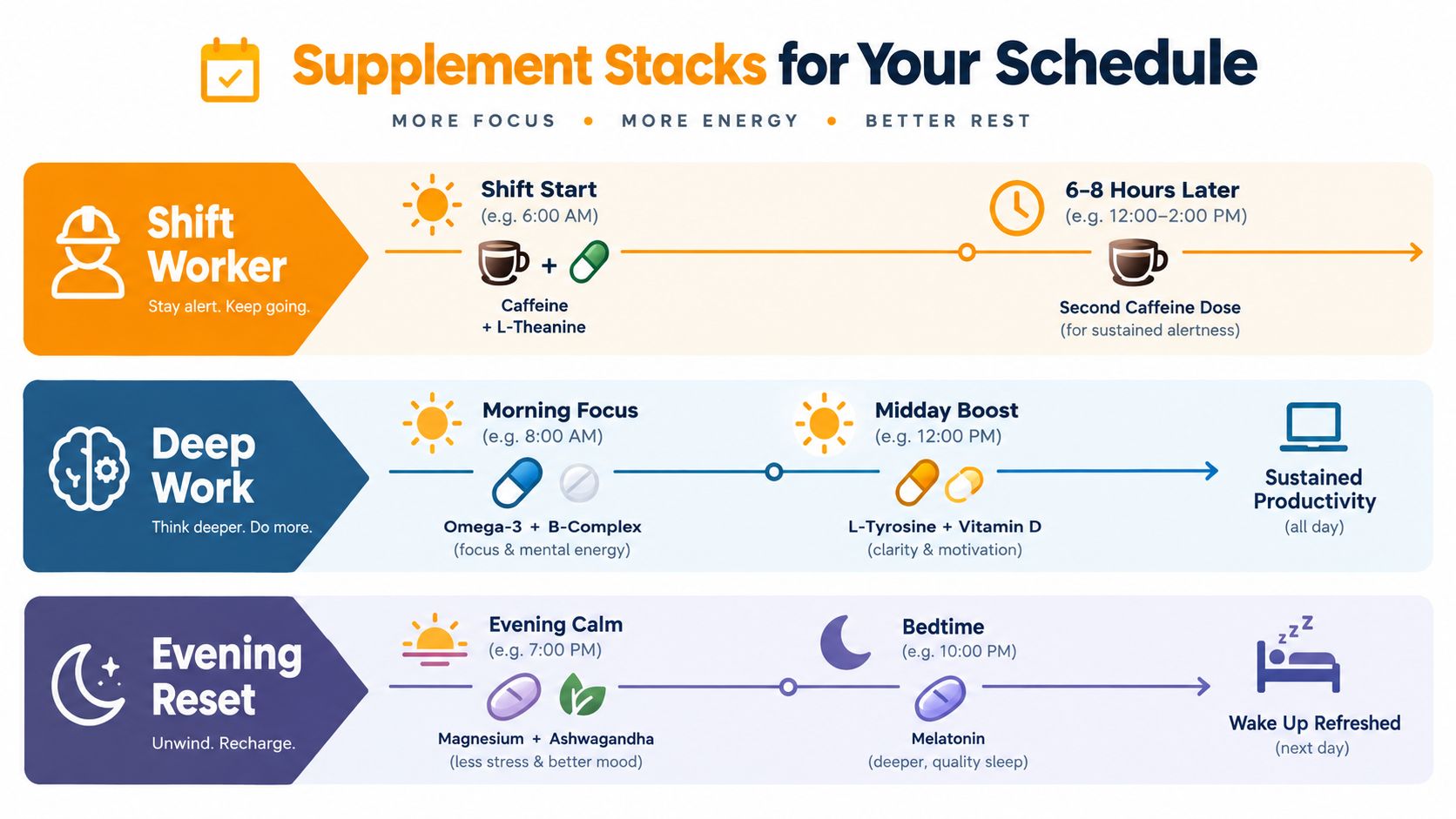
If sleep latency rises above 30 minutes, the plan needs simplification. A useful adjustment is removing the newest compound first, then reviewing caffeine timing, total stimulation, meal timing, and light exposure before adding anything else.
Safety, Cycling, and Common Misconceptions
Biohacking fails when users treat tolerance and contraindications as minor details. Caffeine and theacrine can be poor choices for people with significant anxiety, arrhythmia, or pregnancy unless a clinician has approved their use. Melatonin requires extra caution in autoimmune conditions, high-dose magnesium can be unsafe with kidney disease, and omega-3 supplements warrant medical review when a person uses anticoagulants.
Cycling exists for a biological reason. Repeated caffeine exposure can alter the response to adenosine blockade, while regular use of other signalling compounds may change perceived effects. The exact response varies, so cycling should be treated as a reset and reassessment strategy, not as a guarantee that tolerance will never develop.
Five assumptions that need correction
- More is better: Higher doses can add side effects without improving the target outcome.
- A longer ingredient list is superior: More compounds create more interaction points and make it harder to identify the cause of a benefit or problem.
- Supplements fix poor sleep: Melatonin, magnesium, or apigenin can't replace a stable sleep window and appropriate light exposure.
- An influencer's stack fits everyone: Genetics, medications, diet, shift pattern, and baseline status change the response.
- Clean labels guarantee effectiveness: An attractive label doesn't prove that the product contains a useful dose or has a meaningful delivery advantage.
A person should introduce a new compound alone and observe the response for at least three days before adding another. Elevated resting heart rate, sleep latency above 30 minutes, and gastrointestinal distress are reasons to pause and reassess, not signals to increase the stack.
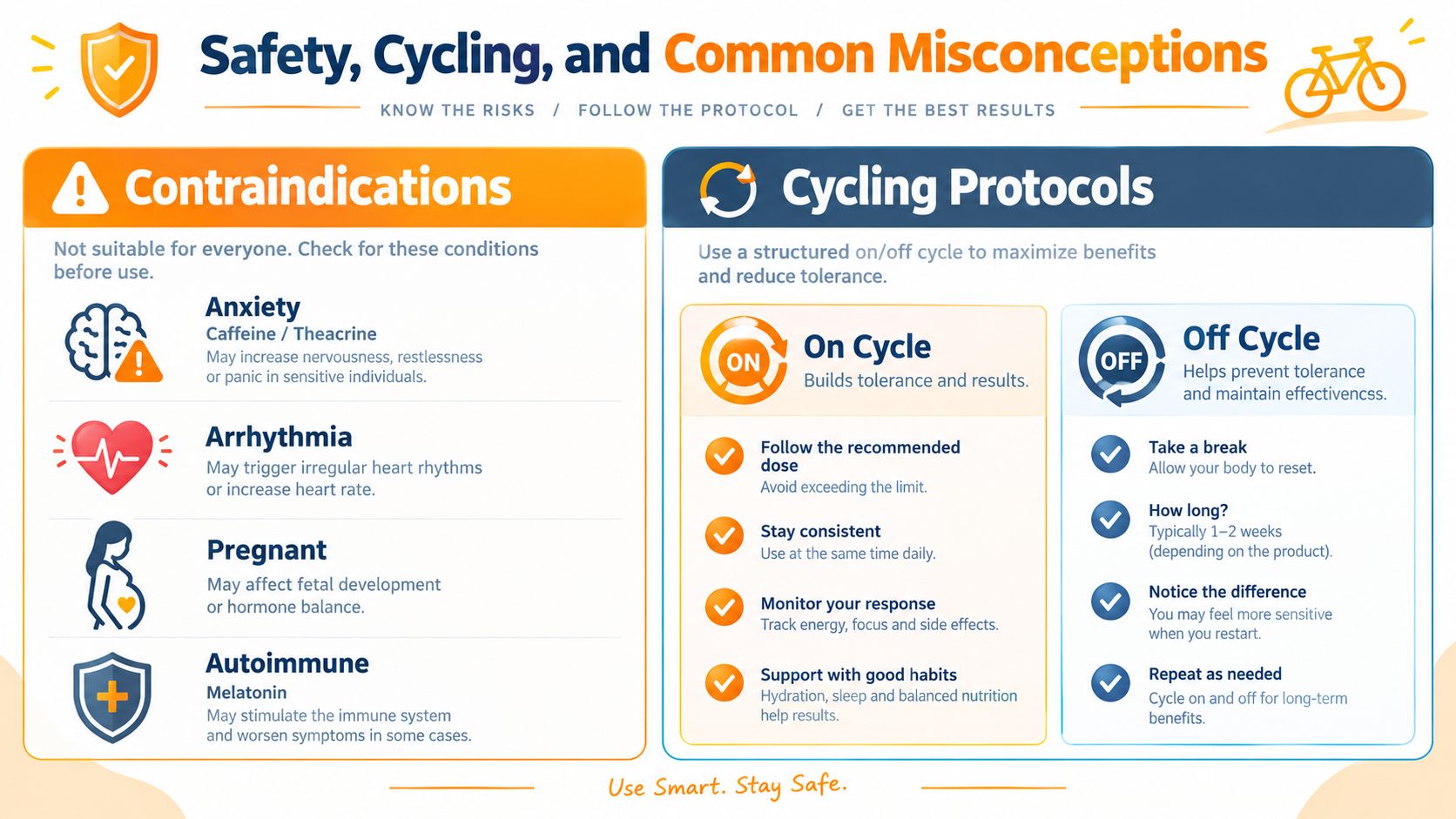
The video below provides another visual explanation of safety and cycling considerations.
Building Your Own Personalized Stack
Personalisation works best as a controlled process rather than a dramatic launch. A six-step workflow keeps the experiment interpretable.
- Audit current intake. Log meals, supplements, caffeine timing, sleep, training, and symptoms for 7 to 14 days.
- Choose one primary goal. Focus, sleep, recovery, or shift-work alertness should come first. Add one secondary metric, such as sleep onset or perceived concentration.
- Repair the food base. Prioritise protein, fiber, omega-3-rich foods, and micronutrient density before adding capsules. A practical resource on how to boost energy with smart nutrition can help organise that foundation.
- Add foundational supplements selectively. Vitamin D, magnesium, and omega-3s belong in this layer only when diet, lifestyle, or testing identifies a reason. Assess the result at 4 weeks.
- Introduce advanced compounds separately. Add caffeine with L-theanine, creatine, or apigenin one at a time, leaving 7 to 10 days between meaningful changes.
- Retest and remove. Compare the new baseline with the original log. Any compound that doesn't move the chosen metric should leave the routine, regardless of how popular it is.
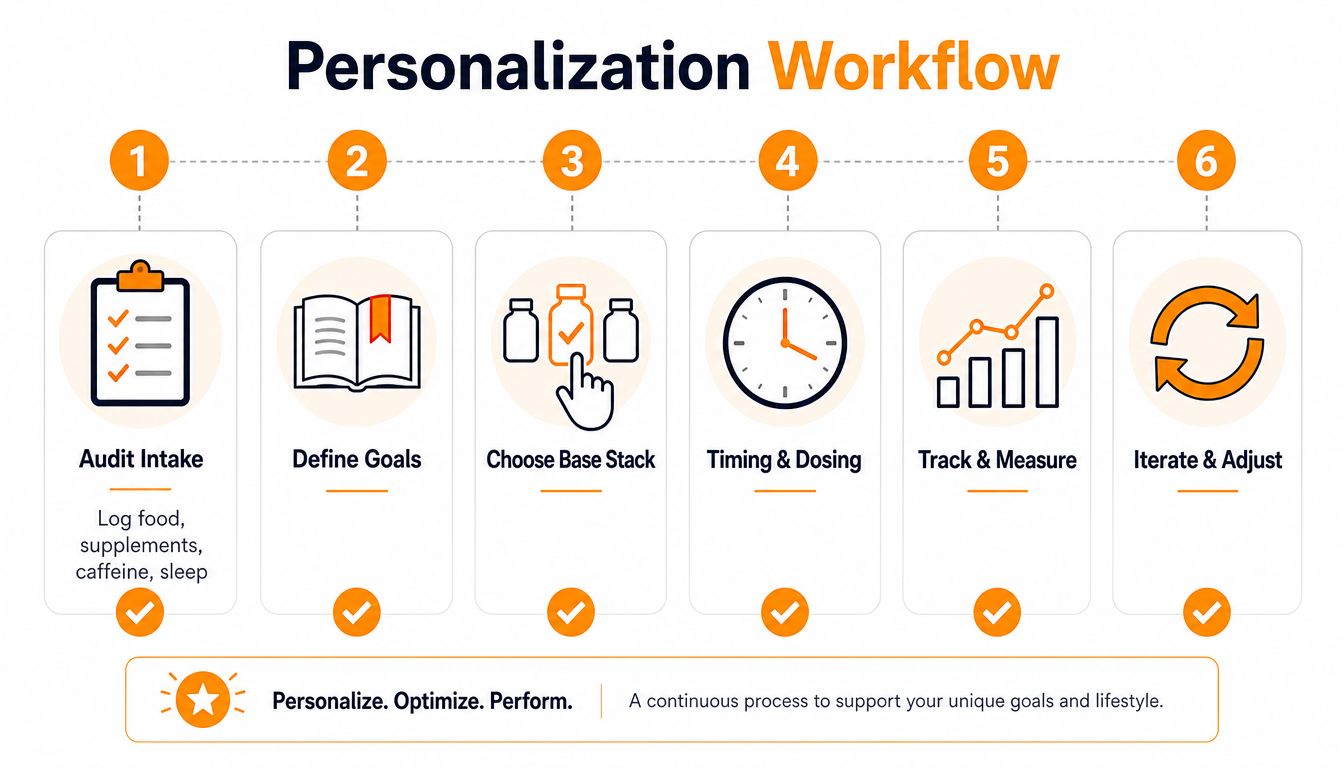
A weekly checklist can stay simple:
- Audit log: Record caffeine, supplements, food quality, sleep timing, and symptoms.
- Food-first anchor: Confirm that meals support the stated goal.
- Timing review: Check whether each compound still matches the relevant day block.
- Safety screen: Look for a resting heart rate that is higher than normal, delayed sleep, or GI distress.
- Review trigger: Pause, remove the newest addition, or seek clinical advice when the metric worsens.
Optimal Native offers nicotine-free oral pouches organised around morning activation, daytime focus, and evening recovery, using ingredients such as caffeine, theacrine, L-theanine, B vitamins, melatonin, magnesium, and apigenin across its product formats. Readers comparing delivery options and time-anchored routines can visit Optimal Native to review the system alongside capsule, powder, and food-first alternatives.
A practical next step is to record one week of caffeine timing, sleep, meals, and focus before buying another ingredient. Then visit Optimal Native to compare a time-based pouch protocol with the rest of the stack, and choose only the format that matches a clearly defined part of the day.