

Replace Energy Drinks on Duty: Smarter Shift Fuel
TL;DR:
- Replacing energy drinks on duty involves precise caffeine timing, electrolyte hydration, and natural sources for sustained focus without crashes. Energy drinks often deliver imprecise doses and contain additives that raise heart rate and blood pressure, especially problematic for stressed shift workers. Using controlled caffeine intake, hydration strategies, and discreet supplements like tablets or pouches enhances performance and sleep recovery without relying on convenience-engineered products.
Replacing energy drinks on duty is achievable through controlled caffeine timing, electrolyte hydration, and natural energy sources that deliver sustained focus without crashes. Energy drinks are an imprecise delivery system. A standard 16 oz can packs 150 to 300 mg of caffeine alongside sugar loads that spike blood glucose and trigger the familiar mid-shift collapse. Caffeine tablets, black coffee, and electrolyte drinks each offer cleaner, more predictable alternatives. The goal is not to eliminate caffeine. It is to use it precisely, pair it with proper hydration, and stop relying on a product engineered for convenience rather than performance.
Why energy drinks cause problems for shift workers
The core problem with energy drinks is not caffeine. Additives like taurine, guarana, and ginseng raise heart rate and blood pressure beyond what caffeine alone produces. For a paramedic or firefighter already operating under physical and psychological stress, that cardiovascular load compounds quickly.
Sugar is the second problem. Energy crashes come from the combination of high caffeine doses and blood sugar spikes caused by sugar additives. You feel sharp for 45 minutes, then foggy and irritable at exactly the moment your shift demands the most from you.
Dosing is the third problem. A single energy drink might contain 200 mg of caffeine. Drink two across a 12-hour shift and you are at 400 mg before accounting for any coffee consumed at the station or precinct. That level of untracked intake disrupts sleep architecture even when you feel like you slept. Imprecise caffeine dosing is the primary reason shift workers report poor recovery sleep despite feeling exhausted.
The additives in energy drinks also create specific risks for sleep-deprived individuals. Palpitations, anxiety, and elevated blood pressure are documented responses in people who are already fatigued. For first responders who need calm, precise decision-making, that is a direct performance liability.
“The main issue with energy drinks on shifts is additive content and imprecise caffeine dosing rather than caffeine itself.” — Caffeine, Energy Drinks, or Nothing?
Key warning signs that your current energy drink habit is working against you:
- Afternoon or mid-shift energy crashes following an initial surge
- Difficulty falling asleep within 90 minutes of ending a night shift
- Resting heart rate noticeably elevated during or after consumption
- Relying on a second can to sustain what the first one started
How to build a controlled caffeine strategy on shift
The most effective approach to replacing energy drinks on duty starts with timing. Start caffeine 30 to 60 minutes before your shift and keep total daily intake around 300 to 400 mg. That window lets caffeine reach peak plasma concentration right as your shift demands begin. It also means you are not chasing alertness reactively with a second or third drink at 2 a.m.
Here is a practical framework for a 12-hour night shift:
- Pre-shift (30 to 60 minutes before start): 100 to 150 mg caffeine from black coffee or a measured caffeine tablet. This is your primary dose.
- Hour 3 to 4: If alertness dips, add 50 to 100 mg from green tea or a second half-cup of coffee. Do not exceed 200 mg total at this point.
- Hour 6 to 8: Switch to electrolyte hydration only. No additional caffeine. This is where most shift workers make the mistake of reaching for another energy drink.
- After 3 to 4 a.m.: Avoid caffeine entirely to protect your post-shift sleep window. Caffeine’s half-life is 5 to 6 hours, meaning a 200 mg dose at 3 a.m. still has 100 mg active in your system at 9 a.m.
Caffeine tablets are the most underused tool in this protocol. A standard tablet contains 100 to 200 mg of caffeine with no sugar, no additives, and no caloric load. You know exactly what you are taking. For a firefighter who cannot always access a coffee maker mid-shift, a tablet in a chest pocket is discreet, fast, and precise.
Pro Tip: Try a caffeine nap during a break. Take approximately 100 mg of caffeine, then sleep for 15 to 20 minutes. Caffeine takes 20 to 30 minutes to absorb, so you wake up as it peaks. This technique improves alertness more effectively than either caffeine or a nap alone.
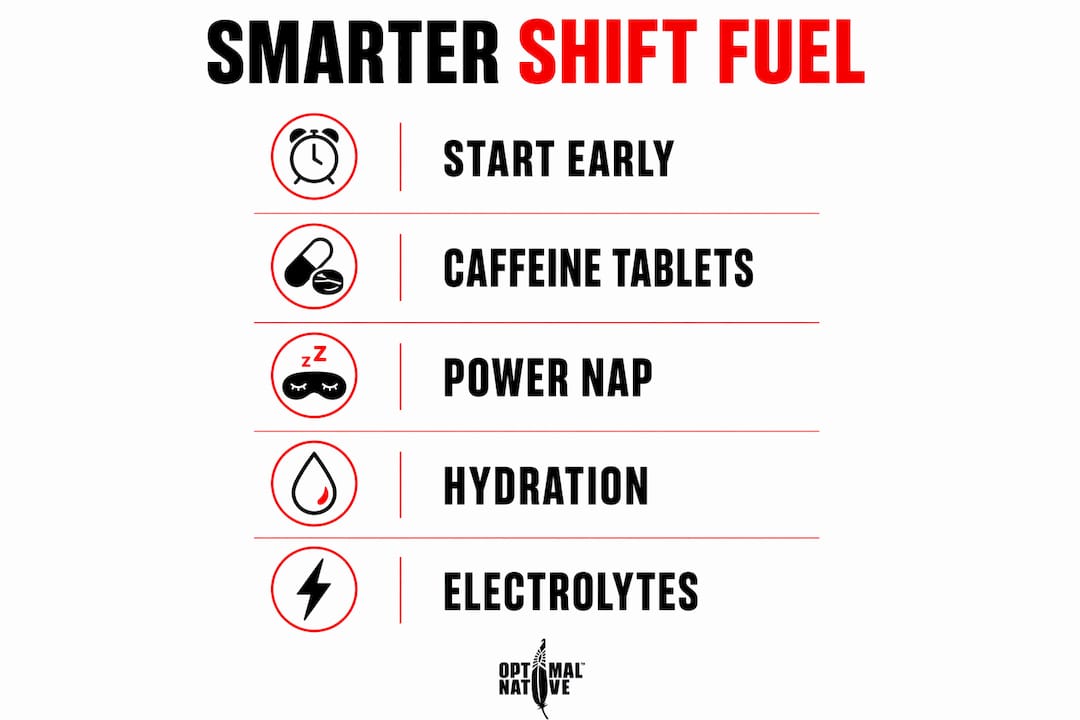
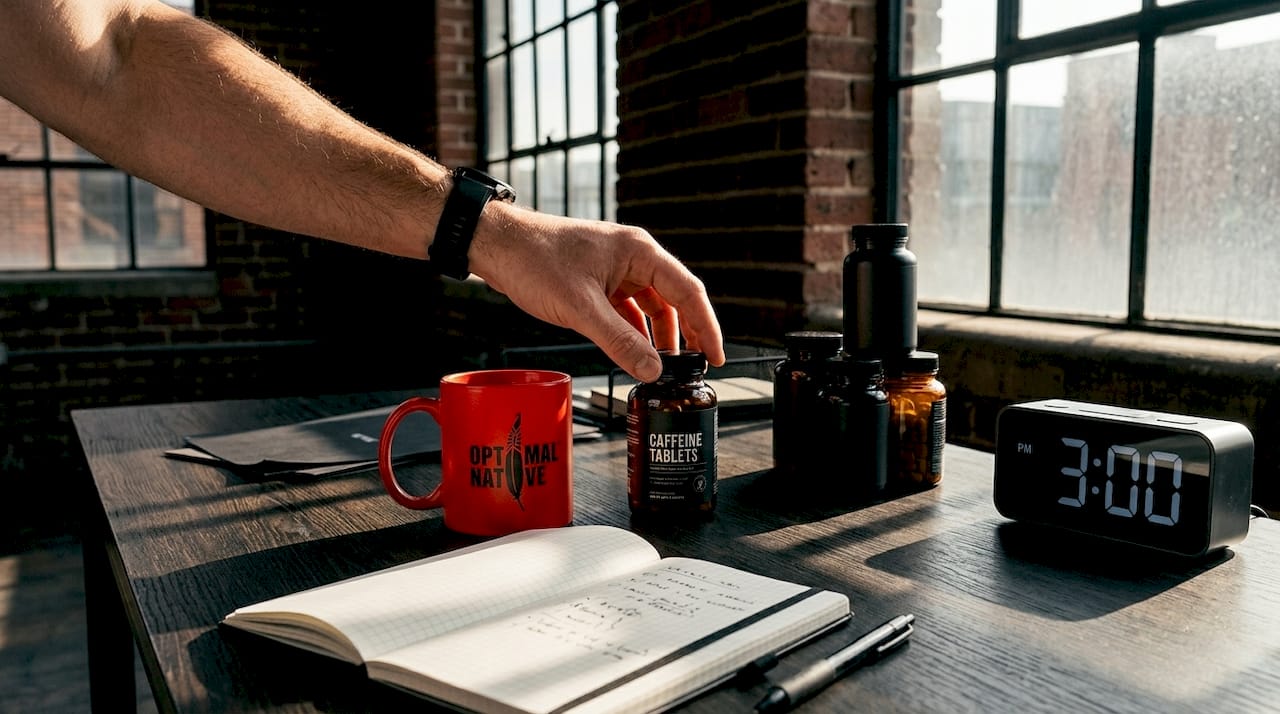
Matching caffeine timing with shift demands and sleep windows is the single most effective change most shift workers can make. It costs nothing and requires only a small amount of planning.
Does hydration actually replace the need for stimulants?
Hydration does not replace caffeine, but dehydration mimics fatigue so closely that many shift workers reach for a stimulant when what they actually need is water and electrolytes. On hot or physically demanding shifts, hydration and electrolyte replenishment can be more critical for sustained energy than any stimulant.
Plain water alone creates a specific risk during heavy sweating. Drinking large volumes of water without replacing sodium and potassium dilutes electrolyte concentration in the blood, a condition called hyponatremia. Symptoms include confusion, nausea, and fatigue. For a first responder working a wildfire or a construction supervisor in July heat, that is a serious operational hazard.
Electrolyte-containing fluids are the standard recommendation for any work lasting more than two hours in heat or involving significant physical output. Drink approximately one cup of cool water every 20 minutes, and transition to an electrolyte drink when work extends past that two-hour threshold.
| Condition | Recommended fluid | Frequency |
|---|---|---|
| Standard indoor shift | Plain water | Every 30 to 60 minutes |
| Outdoor shift above 80°F | Water plus electrolytes | Every 20 minutes |
| Heavy physical labor or sweat | Electrolyte drink | Every 15 to 20 minutes |
| Shift exceeding 2 hours in heat | Electrolyte drink as primary | Continuous sipping |
“Operational hydration programs must provide accessible water and electrolytes at the worksite. Relying on self-monitoring is insufficient.” — Heat Stress Prevention Guide
OSHA recommends 1 quart of water per worker per hour during heat conditions. That standard exists because self-reported thirst is an unreliable indicator of hydration status. By the time you feel thirsty, you are already mildly dehydrated and your cognitive performance has already declined.
What are the best healthy energy drink substitutes for duty?
The best alternatives to energy drinks for on-duty use share three characteristics: moderate caffeine content, zero added sugar, and hydration support. Options like clean energy sources that skip the additive load are gaining traction among first responders for exactly this reason.
Here are the most practical substitutes, ranked by discreetness and performance value:
- Green tea: Contains 30 to 50 mg of caffeine per cup plus L-theanine, which produces calm focus without the jitter profile of coffee. The role of L-theanine in reducing caffeine-related anxiety makes this combination particularly useful for high-stakes environments.
- Matcha: Delivers 60 to 80 mg of caffeine per serving with a slower absorption curve than coffee, producing a longer, flatter energy arc. No sugar crash. No spike.
- Yerba mate: Approximately 80 mg of caffeine per cup with a distinct stimulant profile that many users describe as cleaner than coffee. Contains antioxidants and some electrolyte minerals.
- Protein-electrolyte blends: Products that combine a moderate protein dose with sodium, potassium, and magnesium address both physical recovery and hydration in a single drink. These are particularly useful for EMS and law enforcement who eat irregularly on shift.
- Performance pouches: Nicotine-free pouches containing nootropics and adaptogens offer a discreet, no-liquid option for environments where drinking a beverage is impractical. Optimal Native’s pouch system falls into this category.
Layering energy strategies with moderate caffeine and hydration support provides steadier energy than any single product. A two-part system, early controlled caffeine plus mid and late shift electrolyte hydration, addresses the two distinct causes of shift fatigue: stimulant shortfall and dehydration.
Pro Tip: Zero-sugar energy drinks still carry high caffeine loads and stimulatory additives. Choosing a product with moderate caffeine, no artificial colors, and no flavoring agents is a more precise upgrade than simply switching from regular to sugar-free.
Avoiding artificial sweeteners matters more than most people realize. Sucralose and acesulfame potassium, common in zero-sugar energy drinks, have been associated with gut microbiome disruption in some research. For shift workers already managing irregular eating and sleep, that is an unnecessary variable.
Key takeaways
Controlled caffeine timing combined with electrolyte hydration is the most effective system for replacing energy drinks on duty without sacrificing alertness or recovery.
| Point | Details |
|---|---|
| Time caffeine precisely | Start 30 to 60 minutes before shift and cap total daily intake at 300 to 400 mg. |
| Avoid late-shift stimulants | Stop caffeine after 3 to 4 a.m. to protect post-shift sleep quality. |
| Use caffeine tablets for control | Tablets deliver 100 to 200 mg with no sugar or additives, giving you exact dosing. |
| Hydrate with electrolytes | Switch to electrolyte drinks after two hours of physical or heat-exposed work. |
| Layer caffeine and hydration | Combine early caffeine with mid-shift electrolyte fluids to address both fatigue causes. |
What I’ve learned from watching shift workers fuel wrong
The most common mistake I see is not the energy drink itself. It is the timing. Shift workers crack a can at hour seven of a twelve-hour shift because they are crashing, not because they planned to. That reactive approach guarantees two problems: a second crash before the shift ends and a sleep window that is completely wrecked.
The second mistake is treating zero-sugar energy drinks as a solved problem. They are not. Removing sugar addresses one variable while leaving the additive load and imprecise caffeine dosing entirely intact. Switching from a regular Monster to a sugar-free version is not a strategy. It is a label change.
What actually works is boring to describe but effective in practice. You pick a caffeine source with a known dose, you take it at a fixed time relative to your shift start, and you stop taking it at a fixed time relative to your sleep window. You drink water and electrolytes on a schedule rather than waiting until you are thirsty. You add L-theanine if caffeine makes you anxious. None of this requires expensive products or complicated protocols.
The professionals I have seen manage this best treat their energy intake the way they treat their gear. They know exactly what they have, when they used it last, and when they need to replenish. That mindset, applied to caffeine and hydration, produces better performance than any single product on the market.
— Optimal Native
How Optimal Native supports cleaner on-duty energy
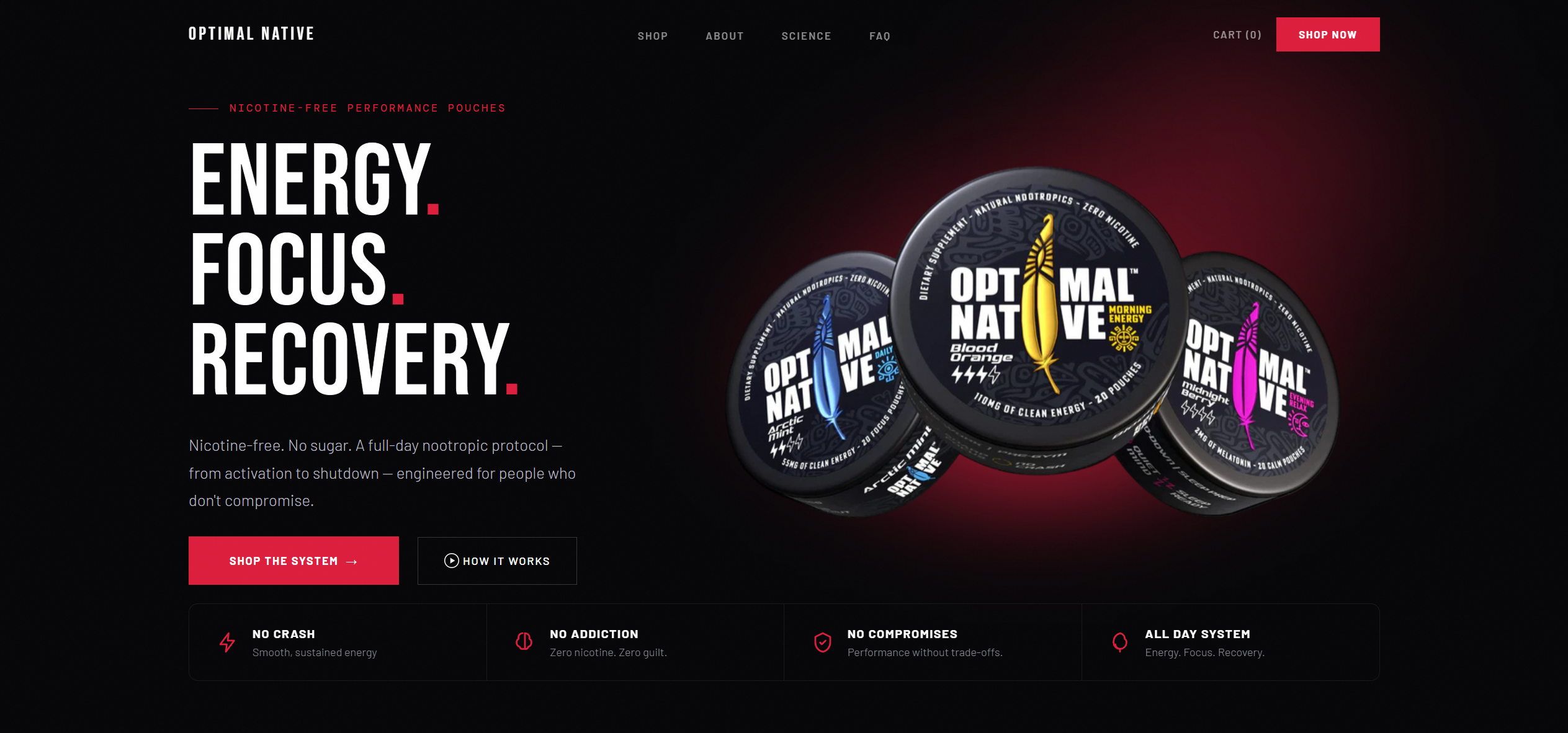
Optimal Native was built for exactly the scenario this article describes: professionals who need precise, discreet, sustained energy without the additive load or crash cycle of traditional energy drinks. The nicotine-free performance pouch system delivers a curated blend of nootropics and adaptogens that align with your body’s natural energy states rather than overriding them with stimulant spikes. With 4.9 out of 5 stars from over 300 verified reviews, users consistently report improved focus and zero jitter profile across demanding shifts. Explore the Optimal Native bundle for a complete shift fuel system, or lock in ongoing savings with a subscribe and save plan designed for the consistency that shift work demands.
FAQ
What can I use to replace energy drinks on night shift?
Caffeine tablets, black coffee, green tea, and matcha are the most effective substitutes. Pair any of these with an electrolyte drink after the two-hour mark to address both stimulant and hydration needs.
How much caffeine is safe during a 12-hour shift?
The recommended ceiling is 300 to 400 mg of total daily caffeine for shift workers, with the majority consumed in the first half of the shift. Doses after 3 to 4 a.m. disrupt post-shift sleep regardless of how tired you feel.
Are caffeine-free energy boosters effective on duty?
Yes, when the fatigue cause is dehydration rather than sleep pressure. Electrolyte drinks, protein-electrolyte blends, and L-theanine-based supplements address hydration and anxiety-related fatigue without adding stimulant load.
Why do energy drinks cause crashes on shift?
Energy drink crashes result from the combination of blood sugar spikes from added sugar and the rapid drop in caffeine plasma levels after peak absorption. Zero-sugar versions reduce the sugar component but do not eliminate the caffeine drop.
What is the most discreet energy supplement for on-duty use?
Caffeine tablets and performance pouches are the most discreet options. Both require no preparation, produce no odor, and can be used without interrupting active duty tasks.