

The Role of L-Theanine Quitting Nicotine Successfully
TL;DR:
- Quitting nicotine is challenging due to neurochemical withdrawal rather than lack of willpower. L-theanine, an amino acid in green tea, helps reduce anxiety and improve focus by modulating dopamine and GABA systems disrupted during withdrawal. It is safe, non-addictive, and most effective when paired with behavioral strategies, supporting a smoother transition through the multi-week recovery process.
Quitting nicotine is one of the hardest things you can do, and it’s not because you lack willpower. The role of l-theanine quitting nicotine has gained serious attention from researchers and high-performers alike, because withdrawal is a genuine neurochemical event, not a character flaw. Cravings, brain fog, irritability, and anxiety show up together, often at the worst possible times. L-theanine, a naturally occurring amino acid found in green tea, is now emerging as a practical, non-addictive option for softening those edges while keeping your focus sharp during the quit.
Table of Contents
- Key takeaways
- What nicotine withdrawal actually does to your brain
- How L-theanine works during nicotine withdrawal
- L-theanine vs. other quitting aids
- How to actually use L-theanine when quitting
- Clearing up common misconceptions
- My take on willpower vs. neurochemistry
- Support your quit with Optimal Native
- FAQ
Key takeaways
| Point | Details |
|---|---|
| Withdrawal peaks fast | Nicotine withdrawal symptoms typically peak at 2-3 days and begin resolving over 2-4 weeks. |
| L-theanine targets the brain | It modulates dopamine and GABA, two systems directly disrupted by nicotine dependence. |
| Dual action matters | L-theanine both reduces withdrawal anxiety and weakens the brain’s reward response to nicotine. |
| Not a standalone fix | Combining L-theanine with behavioral strategies and quit aids produces stronger, more sustained results. |
| Low risk, practical entry | L-theanine is non-addictive, well-tolerated, and can safely complement most quitting approaches. |
What nicotine withdrawal actually does to your brain
Most people go into quitting expecting a rough few days. What they get is a multi-week neurological reset that affects mood, memory, sleep, and the ability to feel pleasure. Understanding this is what changes the strategy.
Nicotine withdrawal symptoms typically include:
- Intense cravings that spike unpredictably, especially in response to triggers like stress, coffee, or routine
- Anxiety and irritability driven by a sudden loss of nicotine’s calming effect on the brain
- Difficulty concentrating, sometimes severe enough to affect work performance in the first week
- Sleep disruption, including vivid dreams and early waking
- Depressed mood, tied to disrupted dopamine signaling
Symptoms peak around days 2 and 3, then gradually ease over two to four weeks. But here’s what most guides leave out: recovery is not linear. Many people hit a secondary rough patch around week two, when the novelty of quitting wears off and the dopamine deficit still hasn’t resolved.
Nicotine doesn’t just hook into one receptor. It disrupts dopamine, GABA, serotonin, and glutamate systems simultaneously. That’s why withdrawal feels like it affects everything at once. And it’s exactly why a supplement that touches more than one of those systems has genuine potential.
Research also shows that e-cigarette withdrawal causes measurable hormonal changes, including shifts in adrenaline and beta-endorphin levels, reinforcing the point that this is a physiological process, not just a mental battle. Knowing that should remove some of the shame and redirect your energy toward strategy.
How L-theanine works during nicotine withdrawal
L-theanine (5-N-ethyl-L-glutamine) is the technical name for the compound. You may see it called “L-theanine” in supplements and “theanine” in research. Both refer to the same molecule. It’s found primarily in Camellia sinensis, the plant used to make green, black, and white tea. The concentration is highest in matcha and shade-grown green teas.
What makes L-theanine worth discussing seriously in the context of quitting is that it works on several of the same neurochemical pathways that nicotine hijacks. It promotes relaxation without drowsiness and has been shown to improve mental focus, which directly addresses two of the most disruptive withdrawal symptoms: anxiety and brain fog.
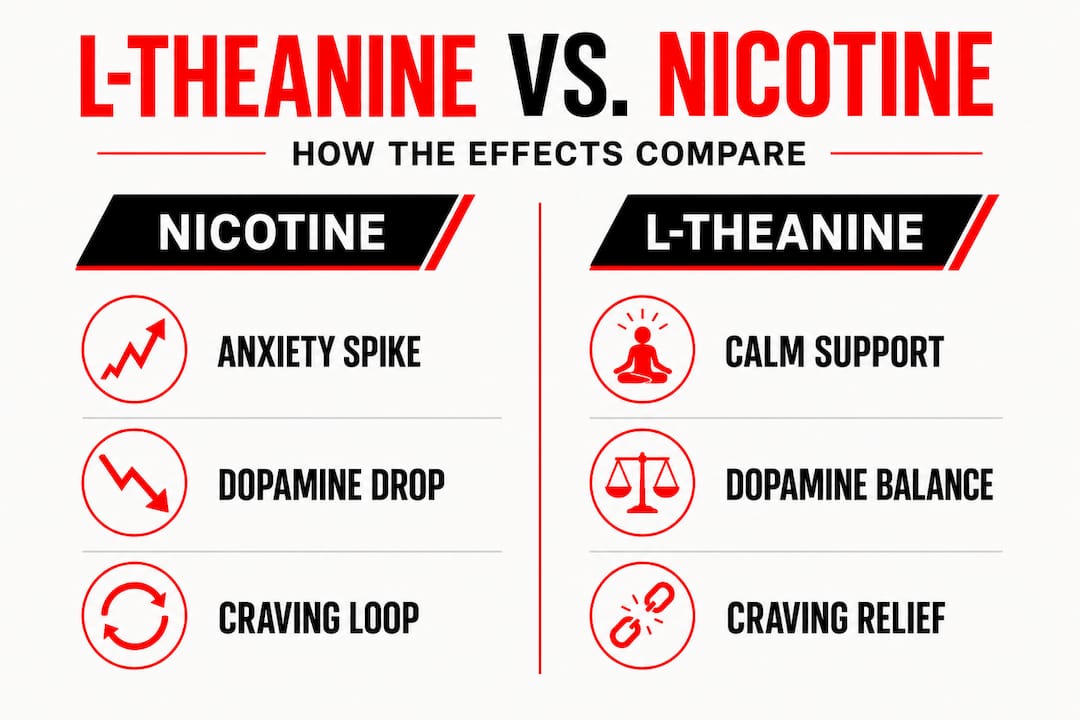
The science gets more specific. Animal studies found that L-theanine reduces nicotine reward and withdrawal signs in a dose-dependent way. Mice treated with L-theanine showed less conditioned place preference for nicotine, meaning the brain’s learned association between nicotine and reward was weakened. Separately, withdrawal anxiety behaviors were also reduced. That dual effect, less reward pull and less withdrawal distress, is not something most supplements can claim.
The mechanism runs through dopamine modulation and GABA activity. Nicotine withdrawal depletes dopamine and dysregulates GABA, creating a state of agitation with no ability to feel calm or focused. L-theanine gently supports both systems without binding to nicotine receptors directly, which is why it carries no addiction potential.
Pro Tip: Pair your L-theanine dose with a moment of intentional breathing or a short walk. The compound lowers physiological stress markers, and pairing it with a behavioral cue reinforces calm as a replacement habit for the nicotine ritual.
L-theanine vs. other quitting aids
Knowing where L-theanine fits among the options helps you use it smarter. Here’s how it compares to the most common approaches:
| Aid | Mechanism | Addiction risk | Cognitive benefit | Combination-friendly |
|---|---|---|---|---|
| Nicotine patch/gum | Replaces nicotine gradually | Low to moderate | None | Yes |
| Varenicline (Rx) | Blocks nicotine receptors | None | Minimal | With caution |
| Bupropion (Rx) | Dopamine/norepinephrine reuptake inhibition | None | Mood support | With caution |
| L-theanine | Modulates GABA, dopamine | None | Yes, focus and calm | Yes |
| Melatonin | Regulates sleep cycle | None | Sleep only | Yes |
The standout difference is the cognitive support. Patches and gums manage physical cravings but do nothing for the concentration and mood disruption that makes quitting brutal for high performers. L-theanine fills that gap specifically.
Where L-theanine shows real strength compared to other natural options:
- Non-addictive with no documented physical dependence, even at high doses
- Safely combined with nicotine replacement therapies for layered support
- No rebound anxiety, unlike some calming herbs such as valerian
- Backed by both human cognitive research and animal withdrawal studies
- Available without a prescription and generally affordable
For entrepreneurs and athletes who need to stay sharp while quitting, that list of practical benefits matters more than the theoretical ceiling of a prescription medication.
How to actually use L-theanine when quitting
Knowing the research is one thing. Applying it on the worst days of withdrawal is another. Here’s a practical framework.
-
Start your dose before quit day. Begin taking L-theanine two to three days before your quit date so baseline levels are established when withdrawal begins. This front-loading approach reduces the shock of the first 72 hours.
-
Use 100-200mg per dose. Most human studies and clinical use land in this range. Research on its calming effects suggests this dose supports focus reliably without sedation. Take it in the morning and again in the early afternoon when cravings and irritability typically spike.
-
Avoid mega-dosing. There is no evidence that taking 400mg does twice the job. L-theanine has a ceiling effect on relaxation. Stick to the effective range.
-
Add dietary sources. Matcha tea contains roughly 20-45mg per gram of powder, making it the highest food source available. A single matcha latte provides a meaningful dose on top of any supplement. Green tea’s natural L-theanine also comes paired with low caffeine, which sharpens the focus effect.
-
Track your withdrawal symptoms weekly. Write down anxiety levels, focus quality, and sleep on a simple 1-10 scale each day. This helps you see real progress even when it feels invisible, reducing relapse risk during the harder second week.
-
Pair with behavioral quit aids. L-theanine is most effective as part of a layered approach. Cognitive behavioral support, exercise, and structured sleep habits address withdrawal from the top down while L-theanine works from the bottom up.
Pro Tip: If anxiety spikes in the late afternoon, that’s often when nicotine blood levels would have been restored with a cigarette. A 100mg dose of L-theanine taken around 3-4 PM can blunt that specific window. Time it consistently for best results.
Clearing up common misconceptions
Several questions come up repeatedly when people consider L-theanine for quitting. Let’s address them directly.
-
Is L-theanine addictive? No. It has no known abuse potential, does not create dependence, and there are no withdrawal effects from stopping its use. This is supported by decades of use in Japan, where it has been consumed as a food ingredient for centuries.
-
Will it interact with my patch or gum? Research and clinical practice support that L-theanine pairs well with nicotine replacement by addressing the mood and cognitive side effects those therapies do not cover.
-
How fast will I notice results? Acute anxiety reduction is typically felt within 30-60 minutes of a dose. The deeper withdrawal symptom improvement builds over one to two weeks as your neurochemistry stabilizes. Do not judge it after day two.
-
Is the animal research relevant to humans? Animal studies are a starting point, not a guarantee. But the mechanisms identified in mouse withdrawal models are consistent with what human research shows about L-theanine’s effects on dopamine and GABA, making the connection scientifically reasonable.
My take on willpower vs. neurochemistry
I’ve spent years watching people fail at quitting not because they weren’t motivated, but because they were fighting a neurochemical battle with only motivational tools. The idea that quitting is “all mental” is one of the most damaging myths in this space.
What I’ve seen again and again is that withdrawal is multi-dimensional. It hits behavior, biochemistry, hormones, and cognitive function at the same time. You cannot willpower your way past a dopamine deficit any more than you can willpower your way past a broken leg.
L-theanine gets my respect because it’s honest. It doesn’t claim to replace nicotine or eliminate withdrawal. What it does is lower the neurochemical noise enough for you to think clearly, sleep better, and make better decisions during the hardest weeks. That’s exactly the kind of support that makes the difference between a failed attempt at week two and a genuine quit.
The people I see succeed consistently are the ones who treat quitting as a protocol, not a test of character. They stack behavioral habits, use low-risk supplements where the evidence supports them, and build systems for their hard days. L-theanine belongs in that stack.
— Optimal Native
Support your quit with Optimal Native
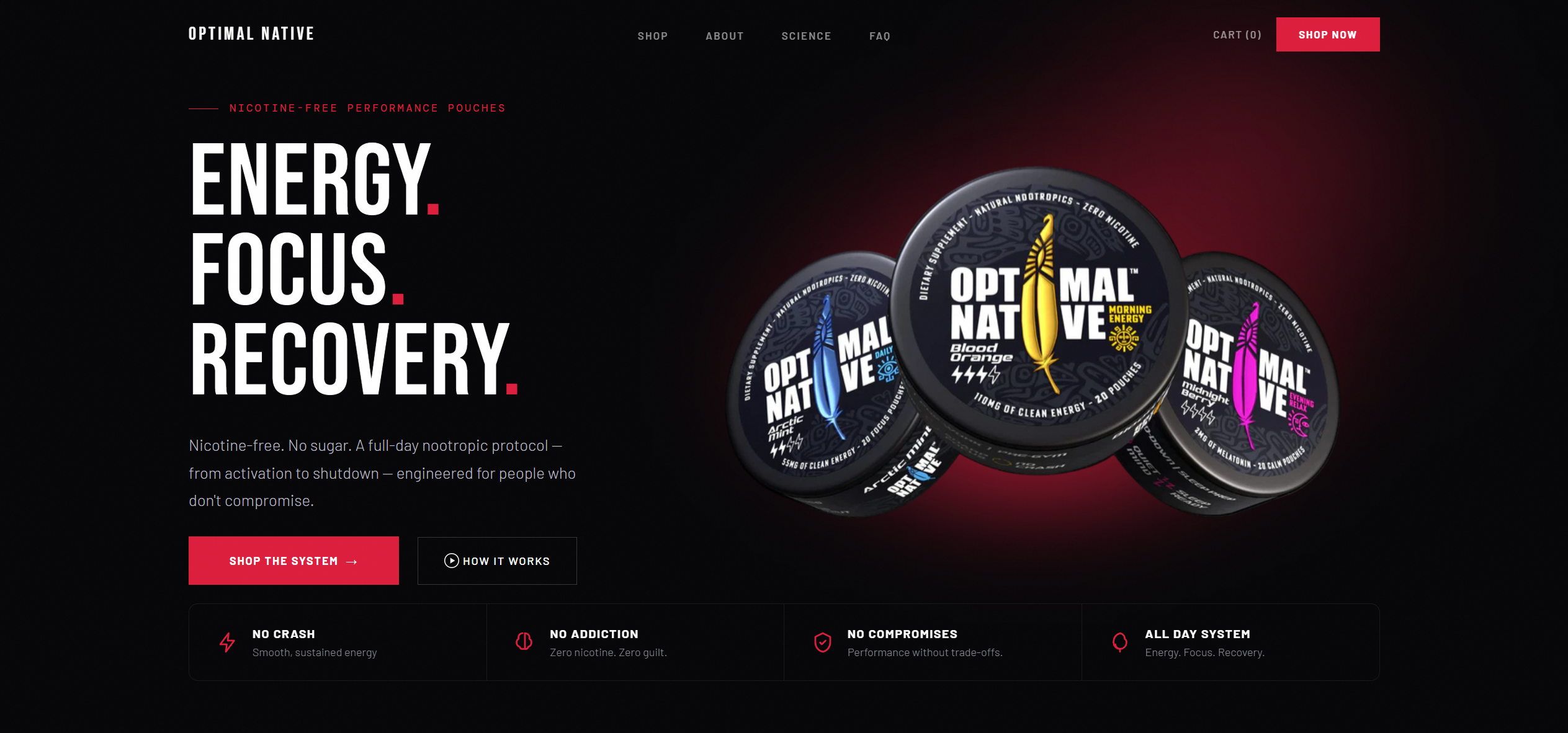
Quitting nicotine is a process, and your body deserves more than white-knuckling through it. Optimal Native’s performance pouches are built specifically for people who need to stay sharp while kicking the habit. Each formulation includes L-theanine alongside a blend of adaptogens and nootropics that support calm focus, clean energy, and recovery throughout the day without any nicotine, no jitters, and no crashes.
Over 300 users rate Optimal Native 4.9 out of 5 stars, and the most common feedback from those quitting nicotine is that the fog lifts faster and the anxiety spikes are noticeably less severe. If you want consistent daily support, check out the Subscribe and Save option for ongoing access at a lower cost. You can also explore the Optimal Native bundle to pair your L-theanine support with the full protocol.
FAQ
What is the role of L-theanine in quitting nicotine?
L-theanine supports nicotine cessation by modulating dopamine and GABA systems disrupted by withdrawal, reducing anxiety and improving focus during the quitting process without causing dependency.
How long does it take for L-theanine to help with withdrawal symptoms?
Acute calming effects appear within 30-60 minutes of a dose, while meaningful symptom improvement from nicotine withdrawal typically builds over one to two weeks of consistent use.
Can L-theanine reduce nicotine cravings directly?
Animal research shows L-theanine reduces the brain’s reward response to nicotine, which may weaken cravings over time, though it primarily addresses the anxiety and concentration symptoms that drive relapse behavior.
Is it safe to take L-theanine with a nicotine patch or gum?
Yes. L-theanine is non-addictive, well-tolerated, and compatible with nicotine replacement therapies, addressing mood and cognitive symptoms that patches and gums do not cover.
What dosage of L-theanine is recommended for nicotine cessation?
Most evidence supports 100-200mg per dose, taken one to two times daily, with timing aligned to peak withdrawal windows such as morning and mid-afternoon.