

How Caffeine Triggers Fight or Flight in Your Body
TL;DR:
- Caffeine activates the fight or flight response by blocking adenosine receptors, prompting adrenal hormone release. Its impact varies based on genetics, timing, and dose, influencing stress and anxiety levels. Strategic caffeine use, including delayed consumption and pairing with calming compounds, can optimize alertness while minimizing adverse effects.
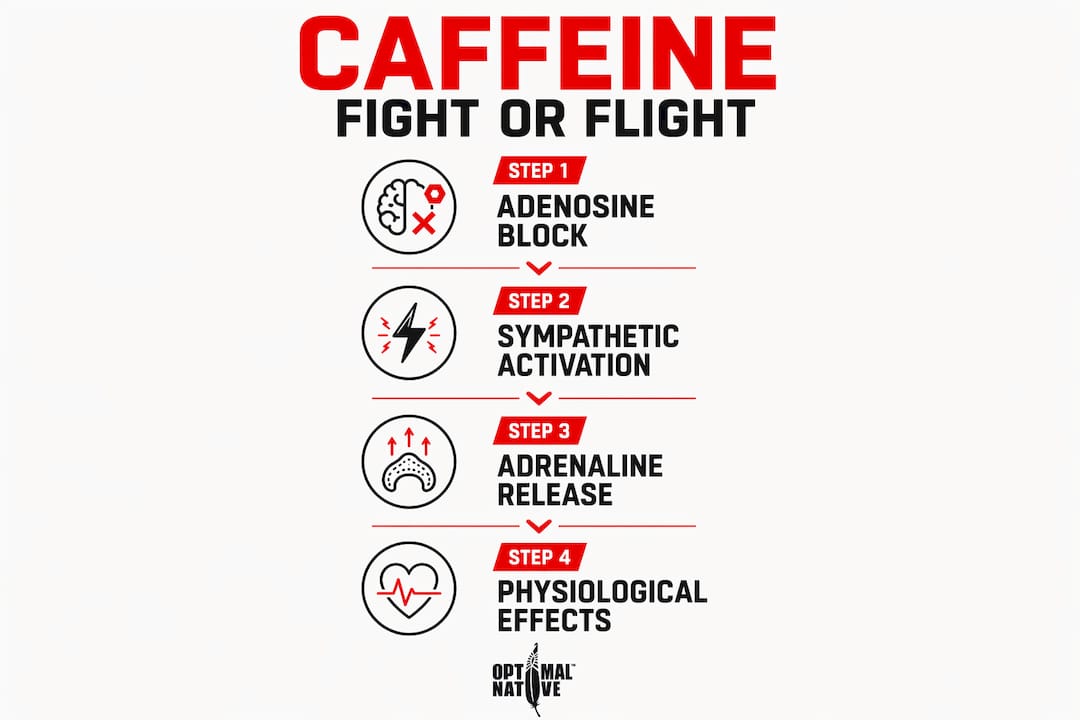
Caffeine is defined as an adenosine receptor antagonist that directly activates the body’s sympathetic nervous system, triggering the same fight or flight cascade your brain fires during a genuine threat. Understanding how caffeine triggers fight or flight is not just biochemistry trivia. It explains why your third cup of coffee leaves you scanning the room for danger that isn’t there. Caffeine blocks adenosine receptors, forcing the adrenal glands to release epinephrine (adrenaline) and cortisol, producing measurable increases in heart rate, pupil dilation, and blood glucose. A standard 8-ounce cup of coffee delivers 80 to 120 mg of caffeine, enough to initiate this hormonal chain reaction in most adults.
How caffeine triggers fight or flight: the biochemical mechanism
The fight or flight response is the sympathetic nervous system’s emergency protocol, evolved to prepare the body for immediate physical action. Caffeine hijacks this system not by mimicking a threat, but by removing the chemical brake that keeps it idle. Adenosine is the brain’s natural fatigue signal. It accumulates throughout the day and binds to receptors that slow neural activity, lower heart rate, and promote sleepiness.

Caffeine’s molecular structure is close enough to adenosine that it occupies those same receptors without activating them. The brain, now blind to its own fatigue signal, interprets the silence as an emergency and triggers the hypothalamic-pituitary-adrenal (HPA) axis. The adrenal glands respond by releasing adrenaline and cortisol into the bloodstream. The result is a textbook fight or flight state: elevated heart rate, heightened alertness, dilated pupils, and glucose released into the blood for fast energy.
This is not a metaphor. The physiological changes caffeine produces are consistent with fight or flight, including raised blood pressure and increased sympathetic nervous system output. The body cannot distinguish between the adrenaline released by a predator and the adrenaline released by your morning espresso. Both feel the same at the cellular level.
What research reveals about caffeine’s impact on cortisol and adrenaline
A 2026 study of 109 workers found a significant correlation between caffeine intake and stress (r=0.523) and anxiety (r=0.280). That stress correlation is not trivial. An r=0.523 means caffeine consumption explains a meaningful portion of reported stress levels, independent of work demands or life circumstances.
A dose of 250 mg of caffeine produces measurable cortisol spikes, particularly during periods of mental stress. This matters because most people consume caffeine precisely when they are already under cognitive load, compounding the hormonal effect. The HPA axis does not average out these inputs. It adds them.
| Beverage | Caffeine per 8 oz | Likely hormonal effect |
|---|---|---|
| Drip coffee | 80 to 120 mg | Moderate cortisol and adrenaline rise |
| Espresso (2 oz shot) | 60 to 75 mg | Acute but brief adrenal spike |
| Black tea | 40 to 70 mg | Mild HPA axis activation |
| Green tea | 20 to 45 mg | Low-level sympathetic stimulation |
| Energy drinks | 80 to 150 mg | High cortisol and adrenaline potential |
“The adrenaline released by caffeine acts like a turbo-boost, binding heart receptors indiscriminately even at rest, producing anxiety responses that mirror a primitive threat reaction.” — TheStartingPace
The dose-dependent nature of this response is the part most people underestimate. One cup of coffee activates the system. Three cups in a high-stress morning can keep cortisol elevated for hours, long after the perceived energy benefit has faded.
Why your genes determine how hard caffeine hits you
Not everyone experiences the same fight or flight intensity from the same dose of caffeine. Three genes explain most of the variation: CYP1A2, ADORA2A, and COMT.
- CYP1A2 controls how fast your liver metabolizes caffeine. Slow metabolizers keep caffeine in circulation longer, meaning the adenosine blockade and resulting adrenaline release persist well past the point where fast metabolizers have cleared the compound.
- ADORA2A codes for the adenosine A2A receptor itself. Variants in this gene directly affect how sensitive your receptors are to caffeine’s blocking action, which determines how forcefully the HPA axis responds.
- COMT governs the clearance of dopamine and adrenaline from the synapse. Approximately 25% of people with European ancestry carry a slow COMT variant, meaning stress chemicals linger in the system long after caffeine’s stimulant effect has worn off.
That last point is the one most people miss. For slow COMT carriers, the energy boost from caffeine fades on schedule, but the anxiety and residual adrenaline do not. The stimulant effect disappears while the fight or flight activation continues, creating a state of agitation without the accompanying alertness that made the caffeine feel worthwhile in the first place.
Serotonin transporter gene variants (SLC6A4) add another layer. Low serotonin activity amplifies the perceived threat response, making caffeine-induced adrenaline feel more alarming and harder to rationalize away. If you have ever noticed that caffeine makes you feel anxious rather than alert, your genetics are likely the explanation. Understanding your caffeine sensitivity factors is the first step toward using it intelligently.
Pro Tip: Consumer genetic testing services like 23andMe and SelfDecode include CYP1A2 and COMT variant reports. Knowing your metabolizer status takes the guesswork out of why two cups of coffee affects you differently than it affects the person next to you.
When you drink caffeine matters as much as how much you drink
The body already produces its highest cortisol output of the day in the first 30 to 45 minutes after waking. This is called the cortisol awakening response (CAR), and it is the brain’s built-in mechanism for transitioning from sleep to alertness. Introducing caffeine during this window does not add to your alertness. It disrupts the brain’s natural cortisol rhythm and amplifies adrenal output beyond what the body needs, producing an exaggerated fight or flight signal from a system that was already doing its job.
Here is the practical sequence that creates the most problems:
- Wake up. Cortisol peaks naturally. The brain is already activating the sympathetic system.
- Drink coffee immediately. Caffeine blocks adenosine receptors, triggering a second wave of adrenaline and cortisol on top of the natural peak.
- Experience a compounded stress response. Heart rate elevates, attention narrows, and the body interprets the combined hormonal load as a genuine threat signal.
- Energy crashes mid-morning. Adenosine rebounds as caffeine clears, and cortisol drops below baseline, creating fatigue that feels worse than before the coffee.
- Reach for another cup. The cycle repeats, each iteration making the wired but tired state harder to break.
Waiting 90 to 120 minutes after waking to consume caffeine allows the cortisol awakening response to complete naturally. Caffeine then fills in the gap as cortisol begins its normal mid-morning decline, producing clean alertness without the adrenal overload. This single timing adjustment is one of the most impactful changes a high-output person can make to their daily energy management.
Pro Tip: Pair your delayed morning caffeine with L-theanine at a 1:2 ratio (e.g., 100 mg caffeine to 200 mg L-theanine). L-theanine promotes alpha brainwave activity, which softens the adrenaline spike without blunting the cognitive benefits of caffeine. Read more about how L-theanine works for focus.
How caffeine compares to other stimulants that activate fight or flight
Caffeine is not unique in activating the sympathetic nervous system, but it is distinct in how it does so and at what threshold. Understanding where it sits relative to other stimulants clarifies why it is legal, widely used, and still capable of producing genuine physiological stress.
| Stimulant | Mechanism | Fight or flight intensity | Legal status |
|---|---|---|---|
| Caffeine | Adenosine receptor blockade | Mild to moderate | Legal, unregulated |
| Amphetamine | Dopamine and norepinephrine release | High | Controlled substance |
| Cocaine | Monoamine reuptake inhibition | Very high | Illegal |
| Nicotine | Nicotinic acetylcholine receptor activation | Moderate | Legal, regulated |
Caffeine mimics classic stimulants like amphetamine and cocaine in CNS activation and behavioral stimulation, though at significantly lower potency. The key distinction is that caffeine does not directly release dopamine or norepinephrine. It removes the inhibitory brake, and the body’s own stress system does the rest. This indirect mechanism is why caffeine feels more like heightened awareness than euphoria, and why the fight or flight activation it produces is often mistaken for external stress rather than recognized as a pharmacological effect.
Natural stress triggers like public speaking, deadlines, or physical danger activate the same HPA axis through a different pathway: the amygdala detects threat and signals the hypothalamus directly. Caffeine bypasses threat detection entirely and activates the output side of the system. The physiological result is nearly identical, which is why caffeine-induced symptoms can closely resemble anxiety or panic attacks in sensitive individuals. If you want to manage these effects without eliminating caffeine entirely, natural focus techniques offer practical strategies worth exploring.
Key takeaways
Caffeine triggers fight or flight by blocking adenosine receptors, forcing the adrenal glands to release adrenaline and cortisol regardless of whether any real threat exists.
| Point | Details |
|---|---|
| Adenosine blockade is the trigger | Caffeine occupies adenosine receptors, removing the fatigue signal and activating the HPA axis. |
| Dose determines cortisol impact | A 250 mg dose produces measurable cortisol spikes, especially during mental stress. |
| Genetics shape your response | Slow COMT and CYP1A2 variants prolong adrenaline and anxiety effects after caffeine clears. |
| Timing amplifies or reduces the effect | Drinking caffeine 90 to 120 minutes after waking avoids compounding the cortisol awakening response. |
| Caffeine mimics stimulant stress | The physiological fight or flight state caffeine produces is nearly identical to real threat responses. |
What most people get wrong about caffeine and stress
Most caffeine advice falls into two camps: either caffeine is fine in moderation, or it is a cortisol-spiking stressor you should eliminate. Both miss the point. The mechanism is not inherently harmful. It is context-dependent.
At Optimal Native, we work with entrepreneurs and athletes who consume caffeine daily without chronic anxiety or adrenal fatigue. The difference is not willpower or genetics alone. It is informed use. They know their metabolizer type, they time their intake strategically, and they pair caffeine with compounds like L-theanine or magnesium glycinate that moderate the adrenaline response without eliminating the cognitive benefit.
The people who suffer most from caffeine-induced fight or flight are not the heaviest consumers. They are the uninformed ones. Someone drinking two cups of coffee at 6:30 AM on an empty stomach while answering stressful emails is stacking every possible amplifier of the adrenal response. The caffeine is not the problem. The context is.
What I find most underappreciated is the COMT variant issue. Roughly one in four people of European descent will feel anxious from caffeine long after the energy benefit is gone, and most of them blame their personality or their stress levels rather than their genetics. That misattribution keeps them in a cycle of overconsumption and anxiety that a simple genetic test and a timing adjustment could largely resolve.
The goal is not to fear caffeine. It is to use it with enough precision that your body’s fight or flight system works for you, not against you.
— Optimal Native
Clean energy that works with your biology, not against it
If caffeine’s fight or flight activation is something you feel more than you want to, the solution is not necessarily less caffeine. It is smarter support around it.
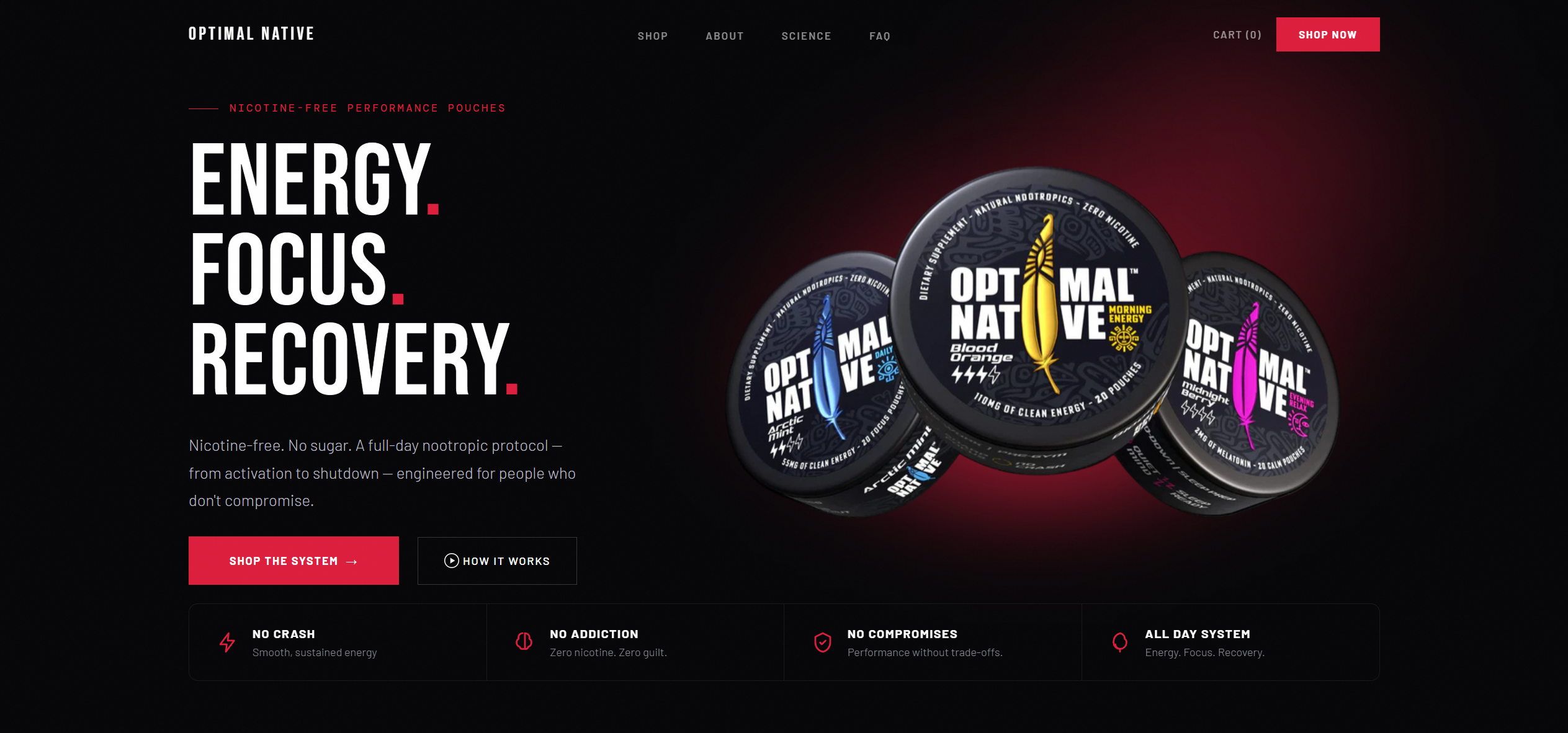
Optimal Native’s nicotine-free performance pouch system is built around nootropics and adaptogens that align with the body’s natural biochemical states rather than overriding them. Users report sustained focus and energy without the jitter-and-crash pattern that comes from unmanaged adrenal stimulation. With 4.9 out of 5 stars from over 300 reviews, the results speak clearly. Explore the Subscribe and Save options to build a daily protocol that keeps your energy consistent and your stress hormones where they belong.
FAQ
How does caffeine activate the fight or flight response?
Caffeine blocks adenosine receptors in the brain, which removes the natural fatigue signal and prompts the adrenal glands to release adrenaline and cortisol. These hormones raise heart rate, blood pressure, and blood glucose, producing the classic fight or flight state.
Can caffeine cause anxiety even in healthy people?
Yes. A 2026 study found a significant positive correlation (r=0.280) between caffeine intake and reported anxiety in workers with no diagnosed anxiety disorders. The effect is dose-dependent and stronger in individuals with slow COMT or CYP1A2 genetic variants.
What is the best time to drink coffee to avoid adrenal overload?
Waiting 90 to 120 minutes after waking allows the cortisol awakening response to complete before caffeine adds its own adrenal stimulus. Consuming caffeine during the natural cortisol peak compounds the hormonal load and increases the intensity of the fight or flight response.
Why does caffeine make some people anxious but not others?
Genetic differences in CYP1A2 (metabolism speed), ADORA2A (receptor sensitivity), and COMT (adrenaline clearance rate) determine how intensely and how long caffeine activates the sympathetic nervous system. Slow COMT carriers experience prolonged anxiety symptoms even after the stimulant effect fades.
Does pairing caffeine with L-theanine reduce fight or flight symptoms?
L-theanine at a 2:1 ratio relative to caffeine promotes alpha brainwave activity and moderates the adrenaline spike without reducing alertness. Magnesium glycinate serves a similar function by supporting the parasympathetic nervous system’s ability to counterbalance adrenal output.