

Melatonin Alternatives for Sleep: 7 Natural Options
A nurse gets home after a long shift, a traveler closes the hotel curtains, or a busy professional finally puts the laptop away. Melatonin seems like the obvious next step, yet the problem might be persistent insomnia, a disrupted body clock, stress, or a bedtime routine that no longer feels automatic.
The best melatonin alternatives for sleep depend on which problem needs solving. Clinical treatment, structured digital programs, supplements, relaxation techniques, and bedtime audio aren't interchangeable. For chronic insomnia, NCCIH's overview of melatonin and clinical guidelines explains why melatonin isn't an established first-line answer.
Ingredient labels matter, too. Optimal Native Evening Relax contains melatonin, so it isn't a melatonin-free alternative, although it remains relevant as a scheduled evening routine option. Supplements generally have less consistent sleep evidence than CBT-I, and medication interactions or medical conditions warrant professional review.
- Persistent insomnia: Prioritize treatment that addresses recurring sleep difficulties.
- Irregular schedules: Assess timing and circadian disruption rather than adding something calming.
- Difficulty unwinding: Consider a repeatable relaxation practice or audio routine.
The SleepHabits melatonin-free sleep tips provide additional routine ideas. The comparisons below distinguish clinical support from tools that mainly make winding down more practical.
Table of Contents
- 1. CBT-I with a qualified provider
- 2. Insomnia Coach
- 3. Sleepio
- 4. Insight Timer sleep meditations and audio
- 5. Headspace sleep content
- 6. Magnesium supplements
- 7. Progressive muscle relaxation or slow breathing
- 7 Melatonin Alternatives for Sleep: Side-by-Side Comparison
- Build a Routine That Survives Travel
1. CBT-I with a qualified provider
Best fit: persistent insomnia, especially when schedules or health concerns complicate self-management. Cognitive behavioral therapy for insomnia addresses thoughts and behaviors that can maintain sleep difficulties. Unlike a supplement, it gives a clinician a framework for investigating patterns and adjusting treatment.
The AASM patient guide to behavioral insomnia treatment gives multicomponent CBT-I a strong recommendation and describes treatment as typically requiring 4–8 sessions. Components include sleep-regulation education, cognitive strategies, stimulus control, sleep scheduling, and sometimes relaxation.
Why individual tailoring matters
A rotating-shift paramedic and an office worker with a stable schedule shouldn't automatically follow identical instructions. A qualified provider can assess whether standard scheduling strategies are workable, rather than asking someone to force a conventional bedtime around overnight duties.
Sleep diaries can also help make the appointment concrete. Recording sleep opportunities, awakenings, work shifts, and perceived next-day functioning gives the clinician more useful context than a general description of sleeping badly.
- Benefits: Strong guideline support, individualized assessment, and practical skills rather than reliance on a nightly product.
- Limitations: Trained providers can be difficult to find, treatment requires participation, and costs and insurance coverage vary.
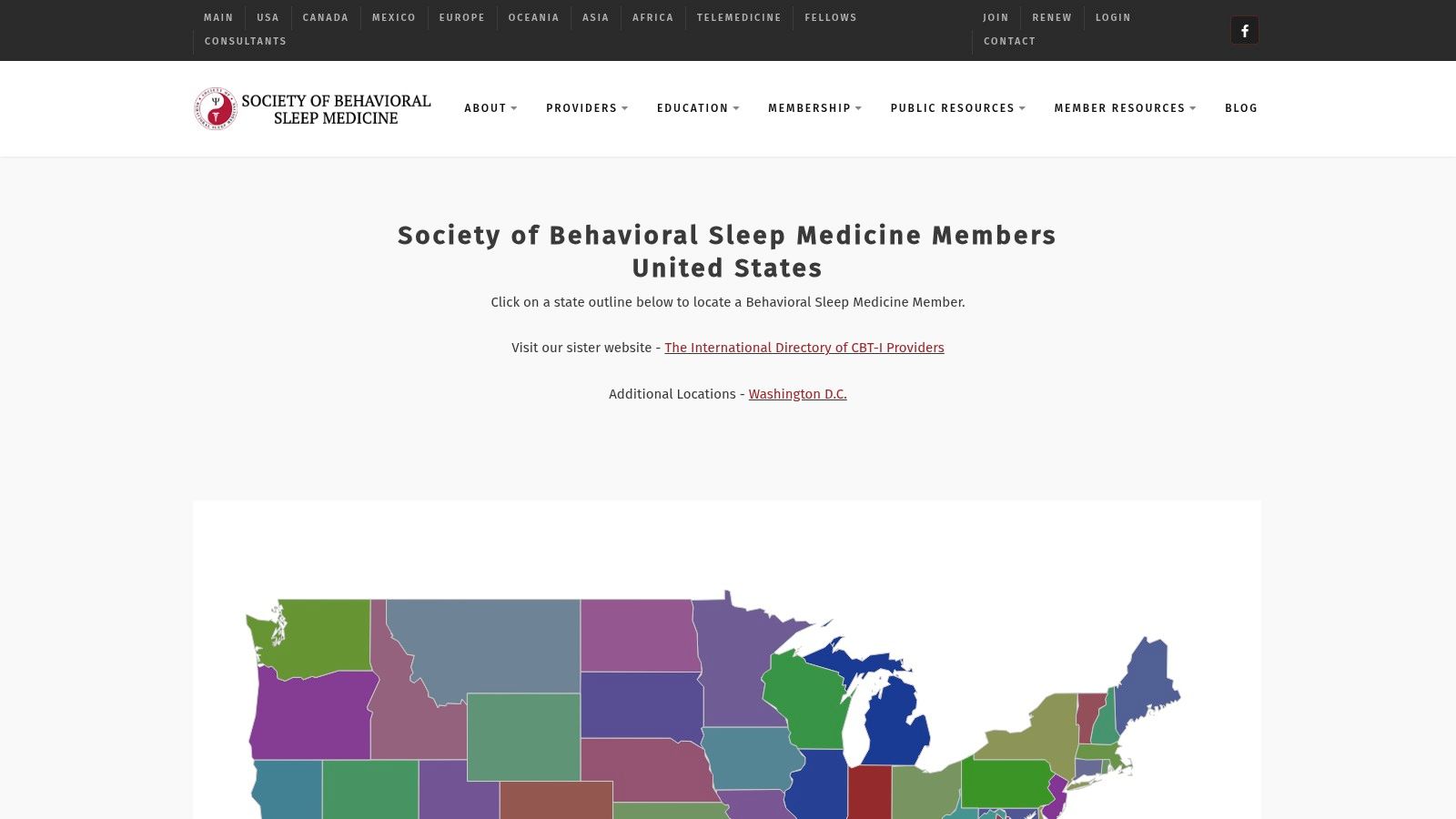
- Starting point: The Society of Behavioral Sleep Medicine provider directory can help locate practitioners.
Optimal Native's guide to winding down before bed can complement a clinician-led routine, not replace treatment. When hot flashes are part of the picture, resources on menopause hot flash sleep fixes may help identify issues to discuss during an appointment.
2. Insomnia Coach
Cost can prevent someone from starting a structured sleep program. Insomnia Coach offers a free, self-guided starting point, but its suitability depends on the user's schedule and health, not merely its accessibility.
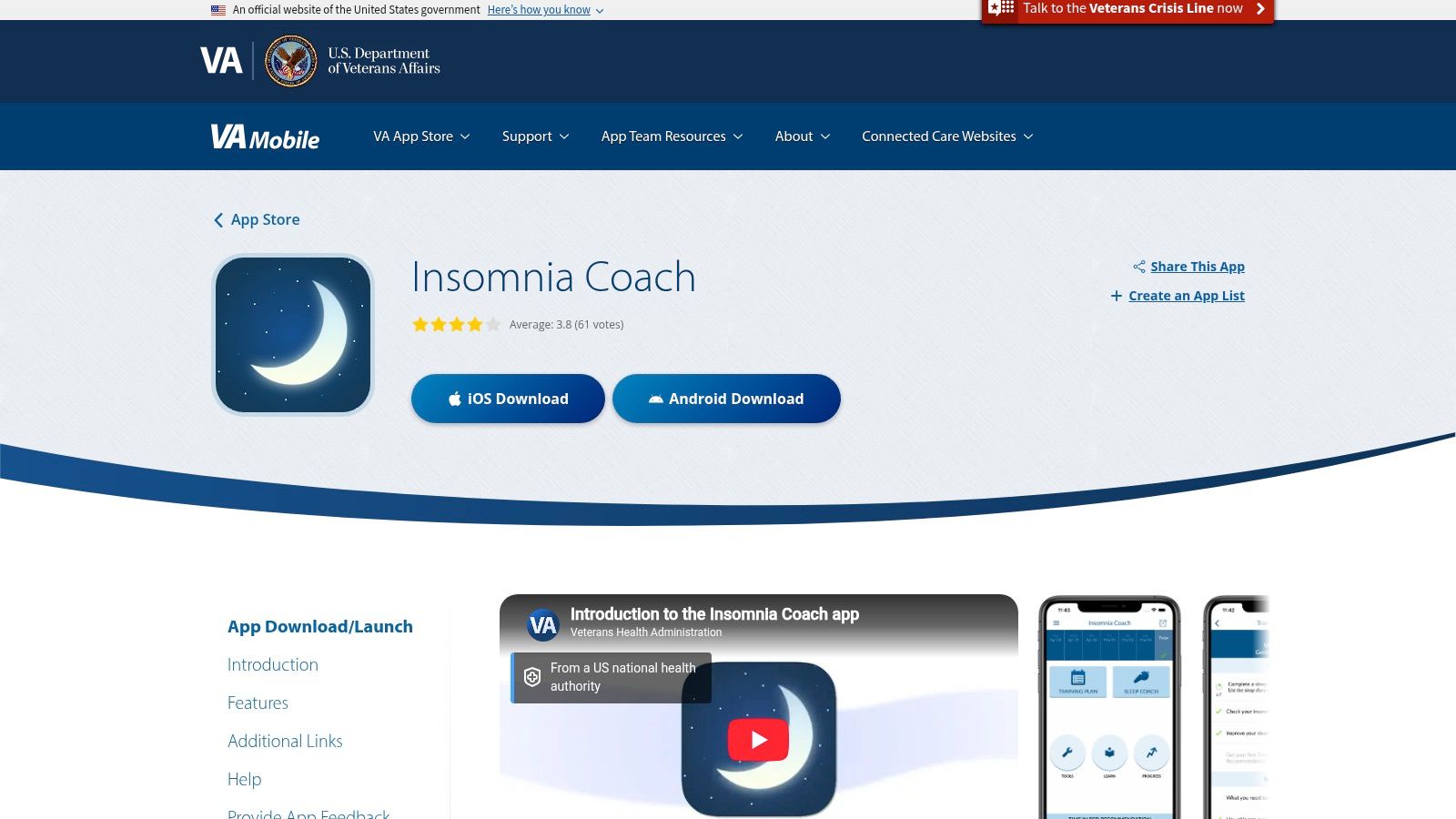
The VA's Insomnia Coach app provides a five-week training plan, an interactive sleep diary, sleep tips, personalized feedback, and relaxation tools on iOS and Android. Its main advantage over collecting disconnected sleep articles is structure: users can follow a plan and record patterns instead of repeatedly changing tactics.
The app doesn't provide individualized clinical care. The VA also cautions that it may not suit shift workers or people whose jobs require nighttime wakefulness, which is a substantial limitation for frontline professionals.
Scheduling rule: A free program isn't a good value if its assumptions conflict with the user's actual work schedule.
Who should pause before starting
The VA advises people with conditions including sleep apnea, bipolar disorder, seizure disorders, or excessive daytime sleepiness to consult a provider first. That caution matters particularly when someone is already struggling to stay alert during work or a commute.
- Cost: No subscription charge makes the app an accessible option for an appropriate user.
- Commitment: Diary entries and regular practice still require time and attention.
- Travel fit: A traveler should assess whether changing time zones will make following the standard plan impractical.
For someone with a relatively stable sleep opportunity who wants guided self-management, Insomnia Coach offers more direction than a generic relaxation recording. For a rotating-shift nurse, the better starting point may be professional advice about an adapted approach rather than trying to comply with a mismatched program.
3. Sleepio
Sleepio fits someone who wants a guided course without arranging recurring clinic visits. It occupies a different category from bedtime audio: the emphasis is a structured CBT-based program rather than a collection of calming tracks.
Sleepio's online program uses six weekly automated sessions, adapting steps to reported sleep difficulties and progress. It includes sleep tracking and relaxation audio, with access through a website or mobile app.
That structure can suit a frequent traveler who can complete online work but struggles to attend appointments consistently. However, digital access doesn't eliminate the need to participate, maintain diary entries, or assess whether the program fits changing sleep opportunities.
Compare access before comparing convenience
Sleepio access and payment arrangements can depend on employer benefits, health-plan coverage, or other eligibility. Prospective users should establish what access includes before assuming that an available app means an immediately available treatment course.
- Compared with Insomnia Coach: Eligibility and payment may be less straightforward, so access deserves an early check.
- Compared with clinician-led CBT-I: Automated guidance doesn't provide individualized care from a live practitioner.
- Compared with meditation apps: The program offers a more structured approach to sleep-related thoughts and behaviors.
For irregular-schedule workers, the deciding question isn't whether the sessions can be opened after work. It's whether the recommendations can accommodate the person's actual sleep schedule without creating an unrealistic routine.
Sleepio is therefore most appealing when structured online participation is feasible and access is confirmed. Someone facing persistent daytime impairment, complicated medical concerns, or a rapidly rotating schedule shouldn't assume that an automated course provides the same assessment as a qualified clinician.
4. Insight Timer sleep meditations and audio
A hotel guest who feels tired but mentally occupied may need a familiar wind-down cue rather than another supplement. Insight Timer is best understood as a portable audio library, not a treatment program for chronic insomnia.
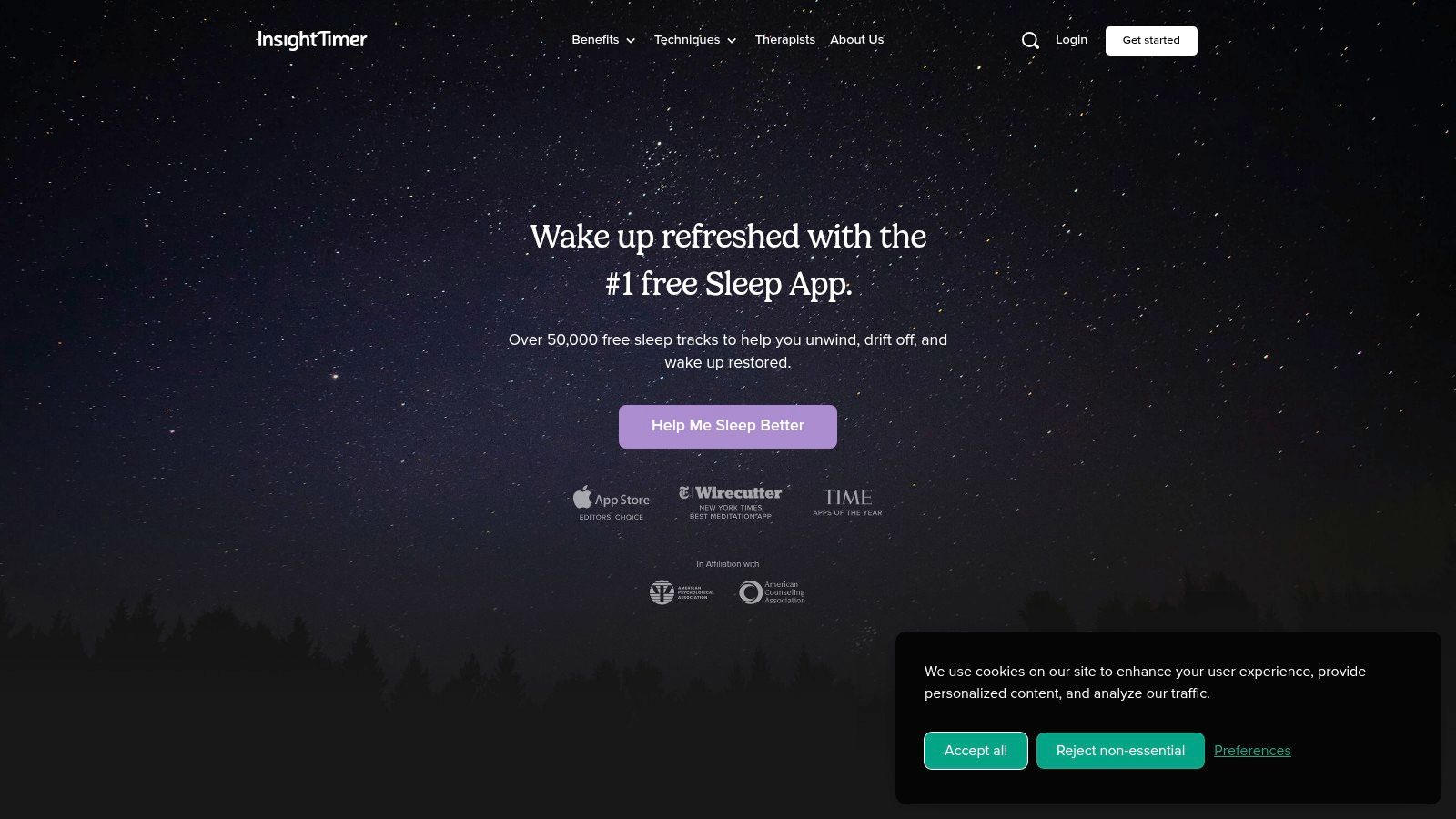
Insight Timer's sleep collection includes guided meditations, sleep music, ambient sounds, bedtime stories, and a sleep sound mixer. A large free library allows users to explore different formats, while an optional paid membership adds features.
Its flexibility is useful when someone dislikes a particular narrator or finds stories more comfortable than formal meditation. The same variety can become a drawback if choosing content turns into another prolonged bedtime activity.
Make the library smaller in practice
A practical approach is to select a preferred recording before the intended sleep period. A traveler can then repeat the same routine in different rooms, while a shift worker can use it before daytime sleep without pretending that the clock says evening.
- Benefits: Many free choices, varied formats, and a routine that doesn't require carrying supplements.
- Limitations: Audio doesn't assess sleep disorders or address every cause of insomnia.
- Cost decision: Paid features should solve a specific need; the free library offers room to evaluate preferences first.
A familiar recording can serve as a repeatable wind-down cue. It shouldn't become a test that the listener must pass by falling asleep before the audio ends.
The strongest reason to choose Insight Timer is practical fit: the user wants accessible relaxation content and enjoys choosing among formats. Persistent insomnia still calls for assessment, even when a recording makes bedtime feel calmer.
5. Headspace sleep content
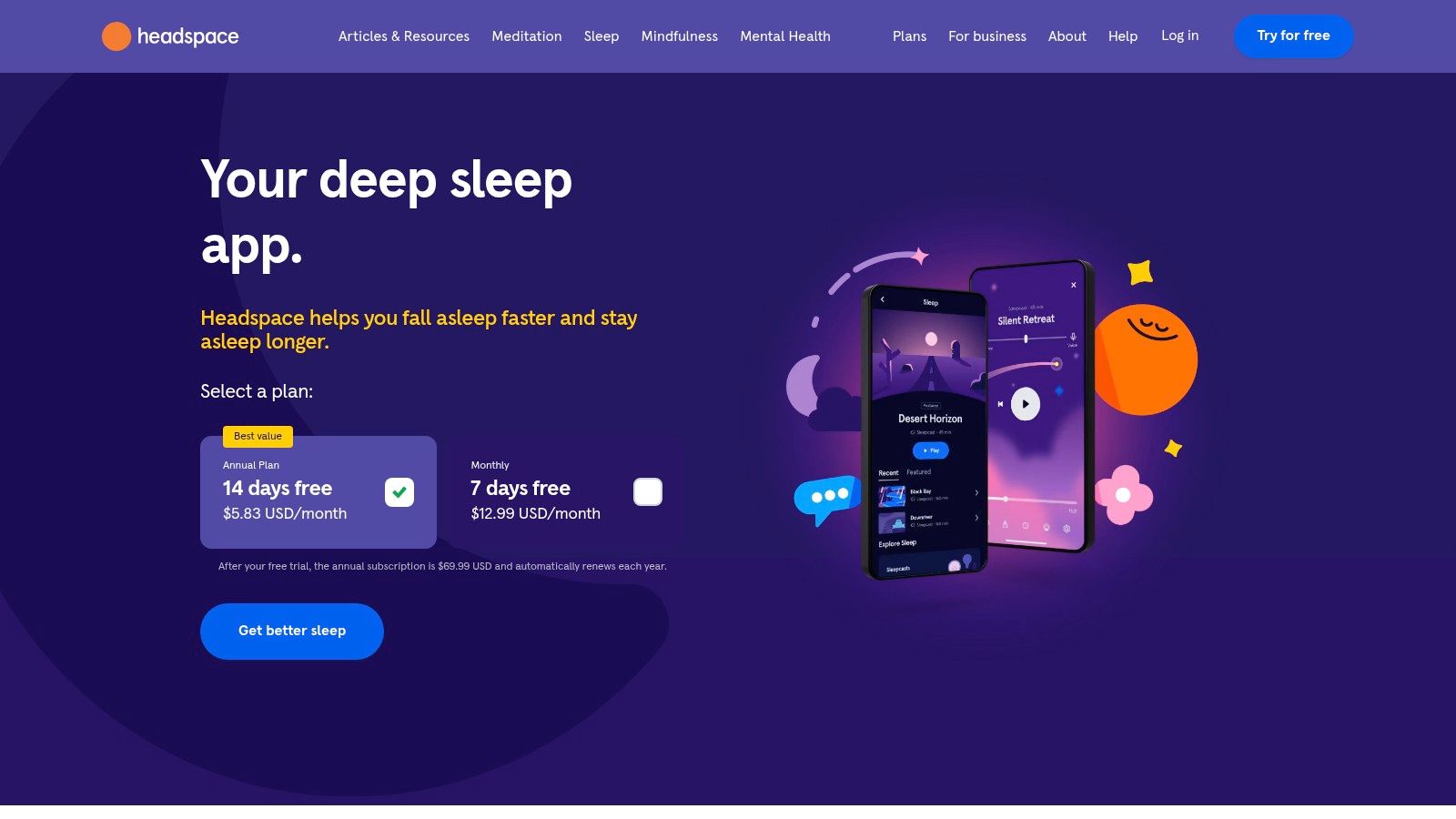
Headspace suits someone who prefers a curated wellness app to a large open-ended audio catalogue. Its sleepcasts, soundscapes, bedtime meditations, and broader stress-management resources offer different ways to build a repeatable pre-sleep routine.
The Headspace sleep app lists a 14-day annual-plan trial, an annual plan at $69.99, and a monthly plan at $12.99. Offers and current terms should be checked before subscribing.
The relevant comparison with Insight Timer isn't a demonstrated difference in insomnia treatment outcomes. It's whether the person prefers Headspace's organization and content enough to justify an ongoing subscription.
Evaluate the routine, not just the catalogue
During a trial, a traveler could assess whether a preferred sleepcast remains appealing across different accommodation and work settings. A professional whose main difficulty is switching off after demanding work could also evaluate the daytime meditation resources, rather than judging the service solely by bedtime audio.
- Strength: Curated sleep and stress content may make choosing a routine simpler.
- Trade-off: Subscription costs continue after the trial unless the plan is cancelled under its terms.
- Boundary: The app doesn't diagnose sleep problems, and its audio isn't a substitute for CBT-I when insomnia persists.
A useful purchasing test is whether the user repeatedly chooses and practices with the content. An extensive library has little practical value if browsing replaces winding down.
For shift workers, the content should follow the intended sleep period rather than a conventional nighttime schedule. Headspace can accompany a transition from work to rest, but it shouldn't be expected to correct circadian misalignment or establish whether a sleep disorder is present.
6. Magnesium supplements

Magnesium is a mineral, not a sedative or a direct substitute for melatonin. Its most sensible place in this comparison is nutritional assessment, especially when low intake or deficiency is a concern, rather than automatic treatment for insomnia.
The NIH Office of Dietary Supplements magnesium guide explains food sources, supplement forms, elemental magnesium labeling, and safety considerations. Nuts, seeds, legumes, and leafy greens provide dietary options; supplements include forms such as glycinate and citrate.
The sleep evidence doesn't justify assuming that a popular form will reliably solve sleep difficulties. A review of nutraceuticals and sleep describes uneven evidence and cautions against extrapolating ingredient findings into confidence about combinations.
Compare labels before marketing claims
The relevant label detail is the amount of elemental magnesium, not the prominence of the ingredient name. Products also differ in additional ingredients, so a magnesium-containing formula isn't necessarily melatonin-free.
- Potential fit: A clinician identifies nutritional intake or deficiency as an issue worth addressing.
- Safety limits: Gastrointestinal side effects, kidney disease, and medication interactions require attention.
- Cost consideration: Recurring supplement purchases are difficult to justify solely on uncertain sleep benefits.
Optimal Native's explanation of melatonin and magnesium for sleep offers context for distinguishing the ingredients. Neither a combined label nor a convenient format establishes that the finished product treats insomnia.
For travelers and shift workers, adding magnesium also doesn't answer the timing question. Someone sleeping after a night shift still needs an appropriate sleep opportunity and, where necessary, assessment of circadian disruption rather than an assumption that another nutrient will reset the schedule.
7. Progressive muscle relaxation or slow breathing
A tense jaw, tight shoulders, or persistent work-related thoughts can make the transition to rest uncomfortable. Progressive muscle relaxation and slow breathing offer no-pill practices that can accompany a wind-down routine without requiring a supplement purchase.
Progressive muscle relaxation involves deliberately tensing and releasing muscle groups. Slow breathing and guided imagery provide other options, and the NCCIH overview of complementary sleep approaches discusses relaxation alongside the limitations of complementary sleep evidence.
The AASM behavioral insomnia guidance gives relaxation therapy a conditional recommendation as a standalone approach. That distinction matters: a relaxation exercise isn't equivalent to a complete CBT-I program.
Keep the technique portable
A shift worker could choose a comfortable breathing practice before the planned sleep period, whether that occurs after sunset or after a morning commute. A traveler could practice the same muscle-release sequence in a hotel room instead of assembling a new supplement routine.
- Benefits: Low cost, no supplement interactions, and no need for a prescription.
- Limitations: Practice takes patience, effects vary, and relaxation doesn't treat sleep apnea or circadian rhythm disorders.
- Audio support: Insight Timer or Headspace can guide practice when verbal instructions are helpful.
Useful distinction: Feeling less tense is a worthwhile outcome, but it doesn't establish that the underlying sleep problem has been treated.
The Pain and Sleep Therapy Center breathing tips offer further technique ideas. Optimal Native's discussion of sleep-support supplements can also help frame the difference between adding a product and practicing a behavioral skill.
7 Melatonin Alternatives for Sleep: Side-by-Side Comparison
| Option | Implementation and resources | Expected outcome | Ideal use case | Key advantages |
|---|---|---|---|---|
| CBT-I with a qualified provider | Moderate commitment; typically 4–10 sessions, sleep diaries, and regular practice; cost and coverage vary | Strong evidence for chronic insomnia; skills may remain useful after treatment | Ongoing insomnia or complex circumstances needing tailored care | Clinician guidance; can address sleep habits and thoughts |
| Insomnia Coach | Low cost (free); self-guided five-week app plan and sleep diary | Structured CBT-I-based guidance and sleep tracking; not a substitute for clinical care | People seeking a free, self-guided starting point with a regular schedule | Convenient and more structured than general sleep tips |
| Sleepio | Moderate commitment; six online sessions, tracking, and diary entries; access and pricing vary | Guided CBT-based sleep improvement without scheduled clinic visits | People who want a structured online program | Adaptive program; no weekly clinic appointments |
| Insight Timer sleep meditations and audio | Low to moderate cost; large free library, with optional paid membership; requires choosing content | May support relaxation and a bedtime routine; not a chronic-insomnia treatment | People who want varied audio for winding down | Many free formats and flexible session lengths |
| Headspace sleep content | Moderate cost; paid app, sometimes with a trial; subscription pricing may change | May support relaxation and routine-building; does not treat persistent insomnia | People whose main difficulty is stress or winding down | Curated sleep and daytime relaxation content |
| Magnesium supplements | Low to moderate cost; over-the-counter products vary in elemental magnesium; check safety and interactions | Sleep benefits are uncertain and may depend on nutritional status | People discussing low intake or deficiency with a clinician | Widely available; dietary sources are also an option |
| Progressive muscle relaxation or slow breathing | Low cost; can be practiced at home, with optional guided audio; requires practice | May reduce tension before bed; may be insufficient for chronic insomnia | People seeking a simple, drug-free wind-down technique | Easy to try; avoids supplement interactions |
Build a Routine That Survives Travel
The most useful decision isn't which product sounds most natural. It's whether the chosen approach addresses persistent insomnia, provides structured support, fills an identified nutritional need, or makes winding down easier.
Clinician-led CBT-I is the strongest starting point for persistent insomnia. A structured digital program may suit someone who can participate independently and whose schedule fits its recommendations. Magnesium belongs behind a nutritional and safety check, while breathing exercises, muscle relaxation, and audio are practical options when tension or difficulty disengaging is the main barrier.
Preserve the sequence, adapt the timing
For travelers and shift workers, consistency needn't mean copying a rigid bedtime across incompatible schedules. A practical routine can preserve the same sequence before the intended sleep period: stop work-related tasks, prepare the sleeping space, and use a familiar relaxation technique or recording.
- After a night shift: Place the wind-down routine before the planned daytime sleep opportunity, not automatically in the evening.
- During rotating work: Seek advice about adapting CBT-I rather than imposing fixed-wake-time instructions that don't fit the roster.
- During travel: Relate the routine to the intended destination sleep period and seek individualized guidance when repeated time-zone changes cause difficulties.
Circadian management is a separate decision from choosing calming content. The AASM's draft shift-work-disorder guidance considers timed bright-light therapy while emphasizing limited evidence certainty. It shouldn't be interpreted as a universal light schedule for every rotating or permanent night worker.
The key distinction is that a routine can support preparation for sleep without correcting every reason sleep is difficult. Frequent travelers and frontline professionals should judge an approach by its fit with their actual sleep opportunities, not by whether its packaging says evening.
Persistent sleep problems, suspected sleep apnea, or severe daytime sleepiness warrant professional consultation. A clinician or pharmacist should also review potential supplement and medication interactions before another sleep product is added, particularly when alertness is essential for driving, patient care, or safety-sensitive work.
Optimal Native offers nicotine-free oral pouches organized around morning energy, daytime focus, and evening relaxation. Its Evening Relax formula contains melatonin, so it isn't a melatonin-free alternative or a treatment for insomnia. Those comparing scheduled routine products can visit Optimal Native to review ingredients and usage guidance before discussing suitability with a clinician or pharmacist.