

Energy Without Jitters Studying: Your 2026 Guide
You sit down to study, crack open an energy drink, and within an hour you’re either buzzing too hard to concentrate or crashing into a fog. Sound familiar? Getting energy without jitters studying is one of the most underrated challenges students face, and the usual caffeine-first approach often makes focus worse, not better. This guide covers the actual foundations of sustained study energy: sleep timing, food choices, workflow habits, and smart supplement use. No crashes. No shaky hands. Just the kind of steady, clear-headed focus that lets you actually retain what you read.
Table of Contents
- Key Takeaways
- Energy without jitters studying: the biological foundations
- Nutrition strategies for sustained study energy
- Practical focus techniques to enhance concentration
- Evaluating supplements and energy boosters
- My honest take on studying without stimulants
- Steady energy for your study sessions
- FAQ
Key Takeaways
| Point | Details |
|---|---|
| Sleep timing beats sleep quantity | Consistent sleep and wake times improve attention, impulse control, and working memory more than extra hours in bed. |
| Protein anchors your energy | A 20–30g protein breakfast stabilizes blood sugar and prevents the mid-morning energy dip that kills study sessions. |
| Workflow habits reduce stimulant need | Time-boxed work cycles like Pomodoro refresh mental resources and reduce the urge to reach for caffeine. |
| Hydration is a focus tool | Even mild dehydration at 2% body water loss significantly increases brain fog and perceived effort. |
| Supplements layer on top of habits | Nootropics and adaptogens work best when sleep, nutrition, and routine are already solid. |
Energy without jitters studying: the biological foundations
Before any supplement or snack can help, your body’s core systems need to be working for you. The three biggest levers are sleep consistency, morning light exposure, and hydration. Most students get these wrong in ways that make caffeine feel necessary when it isn’t.
Sleep is not just about hours. Consistent sleep timing improves attention, impulse control, and working memory even when total sleep stays the same. That means going to bed and waking up at the same time every day, including weekends, matters more than trying to “catch up” on Sunday. The target range is 7 to 9 hours, but the regularity of the schedule is what trains your brain to be alert when you need it.
Morning sunlight is one of the most underrated tools in a student’s focus toolkit. 10 to 15 minutes of direct sunlight within the first hour of waking triggers vitamin D production and resets your circadian clock, which directly determines how alert and focused you feel during your study blocks. This is free, takes no extra time if you walk to class or eat breakfast outside, and has no jitter risk whatsoever.
Hydration is the one most students ignore until it’s too late. 2% dehydration significantly increases brain fog and makes cognitive tasks feel harder than they are. You don’t need a fancy drink. Water, consumed consistently throughout the day, keeps your neurons firing at full capacity.
- Aim for 7 to 9 hours of sleep on a consistent schedule, not just on weekdays
- Get outside within the first hour of waking for at least 10 minutes of natural light
- Drink at least 2 liters of water across the day, not all at once before studying
- Avoid screens for 30 to 60 minutes before bed to protect sleep quality and next-day alertness
Pro Tip: Set your alarm for the same time every day for two weeks straight, even on weekends. Most students notice a meaningful improvement in morning alertness without changing anything else.
Nutrition strategies for sustained study energy
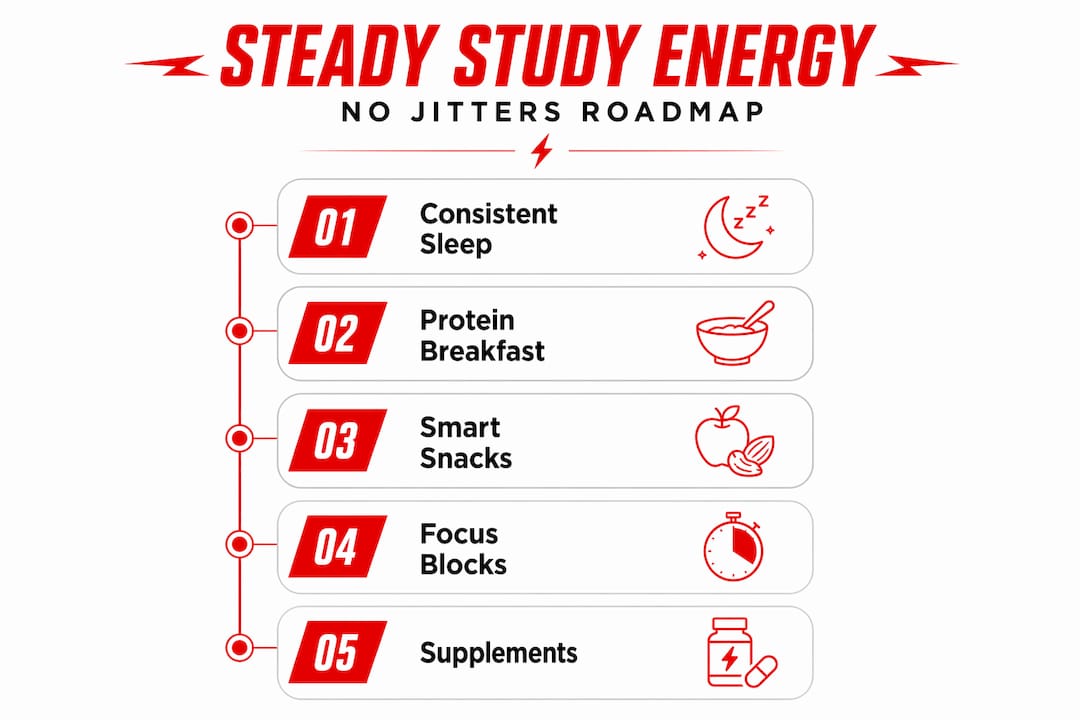
What you eat before and during a study session has a direct effect on how long your focus lasts. The goal is stable blood sugar. Spikes and crashes from sugary snacks or skipped meals are one of the main reasons students reach for a second or third coffee.
A protein-rich breakfast is the single highest-leverage nutrition move you can make. 20 to 30 grams of protein at breakfast stabilizes blood sugar, supports amino acid availability for neurotransmitter production, and reduces cravings later in the day. Eggs, Greek yogurt, cottage cheese, or a quality protein shake all work. Compare that to a bagel or sugary cereal, which will spike your glucose and leave you sluggish within 90 minutes.

Research on protein supplementation over 90 days found it reduced low-energy periods by 25% in healthy adults. That’s not a minor effect. It means the food you eat at 7 a.m. is still influencing how sharp you feel at 2 p.m.
Best study snacks for focus without a crash
The best study snacks share two traits: they contain protein or healthy fat, and they have minimal added sugar. Here are options that actually hold up during long sessions.
| Snack | Why it works |
|---|---|
| Hard-boiled eggs | High protein, portable, no sugar spike |
| Mixed nuts and seeds | Healthy fats plus magnesium for calm focus |
| Apple with almond butter | Fiber slows glucose release; protein sustains energy |
| Greek yogurt (plain) | Protein and probiotics support gut-brain connection |
| Dark chocolate (70%+) | Small amounts of theobromine offer mild, smooth alertness |
| Hummus with veggies | Fiber, protein, and complex carbs for slow fuel release |
Processed snacks, energy bars loaded with sugar, and anything with high-fructose corn syrup will give you a short burst followed by a hard drop. That drop is what makes you feel like you need more caffeine. Breaking that cycle starts with what’s on your desk.
Pro Tip: Prep your study snacks the night before so you’re not making food decisions when you’re already tired or hungry. Decision fatigue is real, and it hits hardest when your blood sugar is already low.
Practical focus techniques to enhance concentration
Even with perfect sleep and nutrition, you can still feel mentally drained if your study habits create unnecessary cognitive load. The way you structure your work time has a bigger impact on sustained focus than most students realize.
The Pomodoro technique is the most well-documented workflow tool for this. Short work cycles with breaks refresh mental resources and reduce cognitive overload. The standard format is 25 minutes of focused work followed by a 5-minute break, with a longer 15 to 20 minute break every four cycles. The key is treating the break as a real break, not a chance to scroll social media, which just swaps one form of mental drain for another.
Here’s a practical focus protocol you can start today:
- Set a single task per work block. Before you start the timer, write down exactly what you’re working on. Vague intentions like “study for bio” create decision overhead that eats into your focus.
- Remove your phone from the room. Not face-down on the desk. Out of the room. Even the presence of a phone reduces available cognitive capacity, according to multiple attention studies.
- Take movement breaks, not screen breaks. Stand up, walk around, do 10 jumping jacks. Physical movement increases blood flow to the prefrontal cortex and resets your attention span more effectively than sitting still.
- Use a sensory cue to signal focus mode. This could be a specific scent, a particular playlist, or even a specific desk lamp. Your brain learns to associate the cue with concentration, which shortens the ramp-up time at the start of each block.
- End each session with a written note. Jot down where you left off and what comes next. This closes the mental loop and prevents the low-grade anxiety of unfinished tasks from draining your energy between sessions.
Breathing exercises before a study block reduce stress and sharpen attention without any stimulant effect. Box breathing (4 counts in, hold 4, out 4, hold 4) takes under two minutes and measurably lowers cortisol, which is one of the main drivers of that scattered, anxious feeling that makes concentration feel impossible.
Pro Tip: If you find yourself checking your phone or drifting during a Pomodoro block, don’t reset the timer. Just note the distraction on a piece of paper and return to work. Tracking distractions without judging them is one of the fastest ways to reduce them.
Evaluating supplements and energy boosters
Once your sleep, nutrition, and workflow habits are solid, supplements become genuinely useful rather than a crutch. The distinction matters. Focus is the output of sleep timing, circadian cues, and metabolic stability. Supplements are one layer, not the foundation.
That said, certain compounds have real evidence behind them for natural energy for studying and focus without caffeine.
| Supplement | Mechanism | Evidence level |
|---|---|---|
| L-Theanine | Promotes calm alertness; pairs well with low-dose caffeine | Strong |
| Ashwagandha | Adaptogen that reduces cortisol and stress-related fatigue | Moderate to strong |
| Creatine | Supports cellular ATP production; reduces mental fatigue | Moderate |
| Rhodiola rosea | Adaptogen that improves endurance and reduces burnout | Moderate |
| Lion’s mane mushroom | Supports nerve growth factor and cognitive function | Emerging |
One finding worth knowing: neither caffeine nor acute aerobic exercise clearly prevents mental fatigue after demanding cognitive tasks. That’s a significant finding. It means the conventional wisdom of “just drink coffee and push through” is not as reliable as students assume, especially for long study sessions.
What actually works is layering. Start with the biological foundations, add structured workflow habits, then use targeted supplements to sharpen the edge. This approach gives you energy drinks without jitters because you’re not relying on a single stimulant to carry the whole load.
- L-Theanine (100 to 200mg) taken with a small amount of caffeine reduces jitter intensity while preserving alertness
- Adaptogens like ashwagandha work best taken consistently over weeks, not as an acute fix
- Creatine (3 to 5g daily) is one of the most researched and underused cognitive supplements among students
- Avoid stacking multiple stimulants, which multiplies jitter risk without proportionally improving focus
My honest take on studying without stimulants
I’ve watched a lot of students go through the same cycle. They rely on caffeine to power through, it stops working as well, they increase the dose, and eventually they’re anxious, sleep-deprived, and wondering why they can’t concentrate even with three cups of coffee in them. The caffeine isn’t the problem. The habits underneath it are.
What I’ve found is that caffeine often masks poor study habits. When you remove it, the inefficiencies in your workflow become obvious. The constant task-switching, the lack of clear goals per session, the irregular sleep. Those are the real focus killers. Caffeine just papers over them temporarily.
In my experience, the students who make the most dramatic improvements in sustained focus are the ones who treat it as a systems problem, not a willpower problem. They fix their sleep schedule first. Then their meals. Then their workflow. Then, if needed, they add targeted supplements. That order matters more than any single product or technique.
The transition off stimulants is uncomfortable for about two weeks. After that, most people report cleaner, more stable energy than they ever got from caffeine. The goal isn’t to never use caffeine. It’s to not need it to function.
— Optimal
Steady energy for your study sessions
If you’re ready to move beyond the caffeine-and-crash cycle, Optimalnative was built for exactly this. Their nicotine-free performance pouch system combines nootropics and adaptogens designed to work with your body’s natural energy states, not against them. With over 300 reviews averaging 4.9 out of 5 stars, students and professionals consistently report clean, sustained focus without the jitters or crashes that come from traditional energy products.
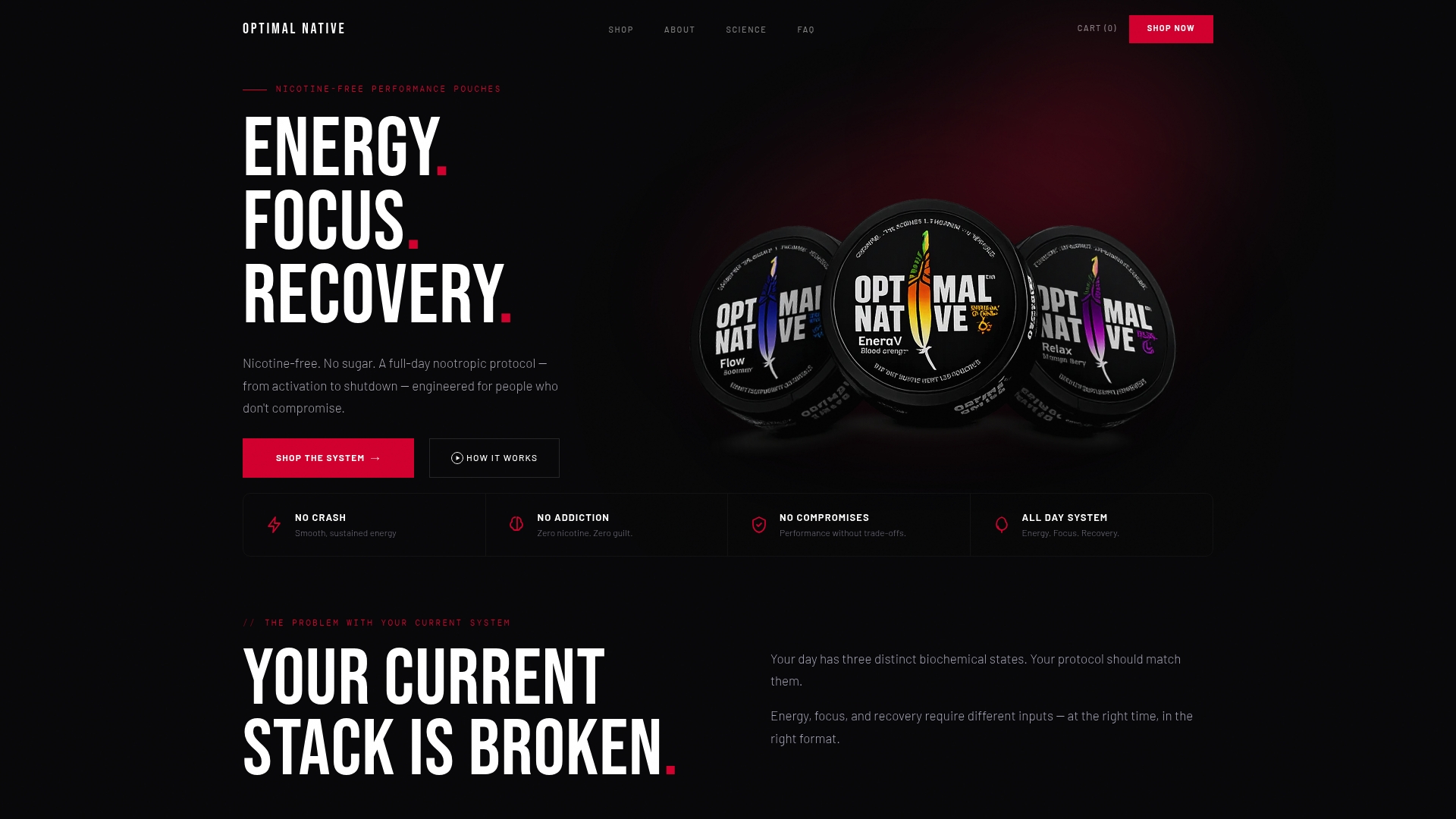
The morning energy pouch is designed to support steady alertness from the first hour of your day, pairing well with the lifestyle strategies covered in this guide. If you want to try multiple formulas and find what works best for your study schedule, the mix and match bundle lets you do exactly that. For the best value and consistent supply, the subscribe and save option keeps your routine uninterrupted without paying full price each time.
FAQ
What is energy without jitters when studying?
Energy without jitters studying refers to achieving sustained mental alertness and focus through methods that don’t trigger anxiety, shakiness, or crashes. This includes sleep optimization, stable nutrition, structured workflows, and targeted supplements like L-Theanine or adaptogens.
How can I get a study energy boost without caffeine?
A protein-rich breakfast, consistent sleep timing, morning sunlight exposure, and structured work cycles like Pomodoro provide reliable focus without caffeine. Adaptogens like ashwagandha and rhodiola also support natural energy for studying over time.
What are the best study snacks for sustained energy?
The best study snacks combine protein and healthy fat with minimal sugar. Hard-boiled eggs, mixed nuts, Greek yogurt, and apple with almond butter all provide slow-release fuel that prevents the blood sugar crashes that kill concentration.
Do energy drinks without jitters actually work?
Some formulations using L-Theanine, adaptogens, and low-dose caffeine can reduce jitter intensity while maintaining alertness. However, research shows that neither caffeine nor exercise reliably prevents mental fatigue from demanding cognitive tasks, so lifestyle habits remain the primary driver of sustained focus.
How long does it take to improve focus without stimulants?
Most students notice meaningful improvements in sustained energy studying within two to three weeks of consistent sleep timing, hydration, and structured workflow habits. The first two weeks off caffeine are the hardest, but baseline focus typically improves significantly after that adjustment period.